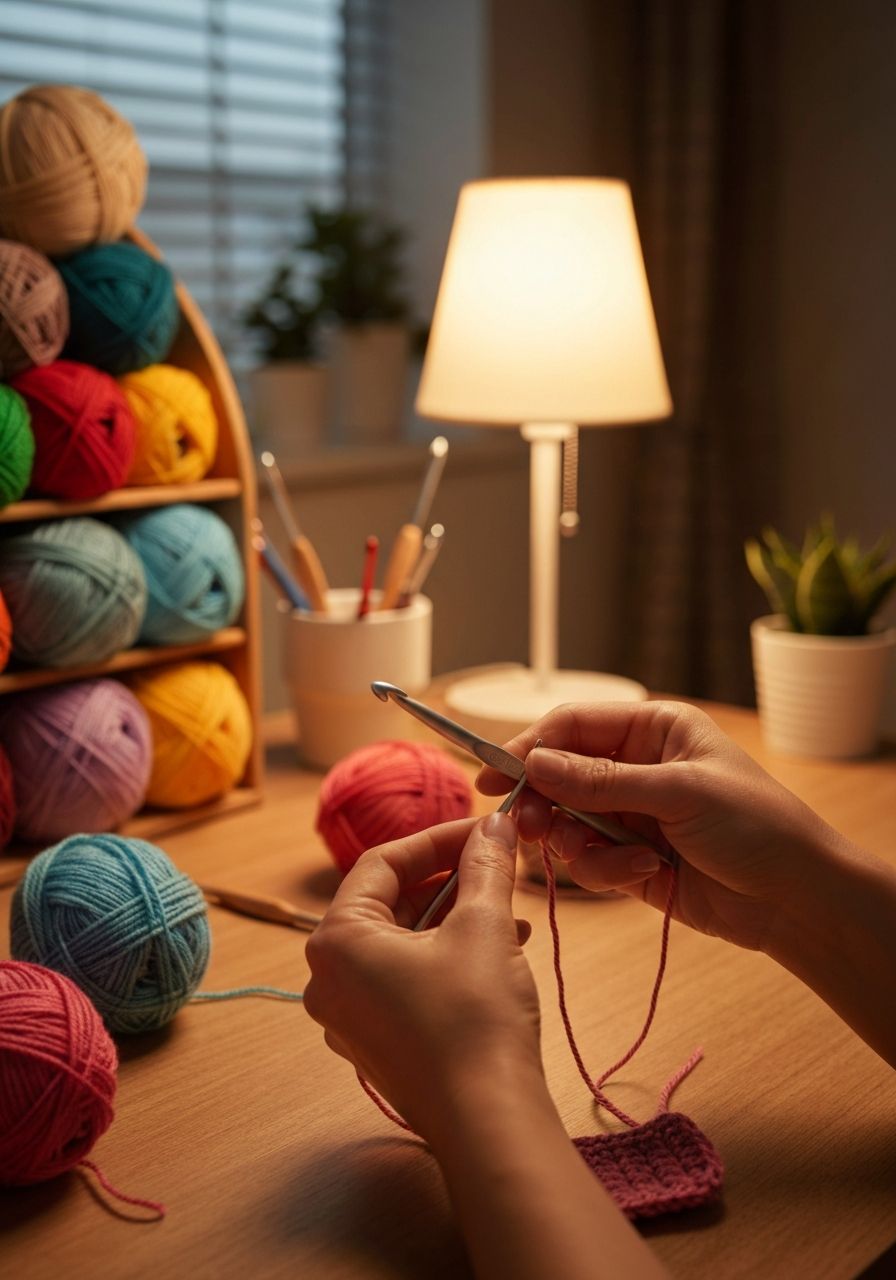
Imagine pouring hours of love into a beautiful crocheted blanket, only to find it's either a stiff, unyielding board or a flimsy, hole-ridden mess. Or perhaps you've envisioned a delicate lace shawl, but your yarn choice results in something heavy and clunky. The secret to avoiding these heartbreaking project failures and unlocking a world of successful, satisfying crochet lies in understanding one fundamental concept: Crochet Yarn Weight Guide. This guide isn't just about numbers; it's about translating your creative vision into tangible, beautiful reality, ensuring every stitch contributes to the perfect drape, texture, and feel you've dreamed of.
As a beginner crocheter, the vast array of yarn options can feel overwhelming. You walk into a craft store, faced with shelves upon shelves of colors, textures, and labels that seem to speak a foreign language. But fear not! This comprehensive guide will demystify the world of yarn weights, empowering you to confidently choose the right yarn for your projects, understand pattern requirements, and achieve professional-looking results every single time. Let's unravel this essential topic together!
Why It Matters: The Impact of Yarn Weight
Understanding yarn weight is not just a suggestion; it's a cornerstone of successful crocheting. Here's why it's so critical:
- Gauge and Sizing: Yarn weight directly influences your 'gauge' – the number of stitches and rows per inch. If your gauge is off, your project's final size will be too. A sweater might end up too small or a hat too large, even if you follow the pattern perfectly.
- Drape and Texture: The weight of your yarn dictates how your fabric will feel and hang. A bulky yarn will create a stiff, cozy fabric perfect for blankets, while a lace weight yarn will yield a delicate, flowing drape ideal for shawls. Using the wrong weight can ruin the intended texture and drape of a design.
- Hook Compatibility: Each yarn weight has a recommended range of hook sizes. Using a hook that's too small for your yarn will create a dense, stiff fabric, while a hook that's too large will result in a loose, open fabric with gaps. Matching yarn to hook is key for a harmonious fabric.
- Yarn Consumption: Thicker yarns consume more yardage (or meters) to cover the same area as thinner yarns. Substituting a heavier yarn for a lighter one without adjusting the pattern or yarn quantity can leave you with too little yarn or an unexpectedly massive project.
- Project Suitability: Certain projects lend themselves better to specific yarn weights. Amigurumi (stuffed toys) often requires a tighter fabric, usually achieved with DK or worsted weight, to prevent stuffing from showing. Delicate garments need fine yarns, while quick, cozy projects shine with bulky weights.
What You Need to Know: Decoding Yarn Labels
The Craft Yarn Council (CYC) developed a standardized yarn weight system, which is now widely adopted across North America and beyond. This system assigns a number from 0 to 7 to each yarn weight, making it easier to identify and compare yarns regardless of brand or specific name. You'll find this number, along with other crucial information, on the yarn label – your best friend in the yarn store!
Here’s what to look for on a typical yarn label:
- Yarn Weight Symbol: A small skein icon with a number (0-7) inside. This is your primary indicator.
- Recommended Hook Size: Usually listed in both metric (mm) and US letter/number sizes.
- Fiber Content: What the yarn is made of (e.g., wool, acrylic, cotton, blend).
- Care Instructions: How to wash and dry your finished project.
- Dye Lot: A number that ensures all skeins from the same dye batch have consistent color. Always buy enough yarn from the same dye lot!
- Yardage/Meterage: The total length of yarn in the skein.
- Wraps Per Inch (WPI): While not always on the label, WPI is a method to measure yarn weight. You tightly wrap yarn around a ruler for an inch and count the number of wraps. This is especially useful for identifying unlabeled or vintage yarns.
Yarn Weight Categories Explained: From Gossamer to Giant
Let's dive into each category, explore its characteristics, and practice a tiny swatch to get a feel for how it behaves.
0 - Lace (Cobweb, Thread)
- WPI: 20-30+
- Recommended Hook: 1.5 - 2.25mm (US B-1)
- Characteristics: Extremely fine, delicate, creates airy and open fabrics.
- Typical Projects: Intricate doilies, fine lace shawls, delicate garments, bead crochet.
- Simple Instruction: To feel the delicate nature of lace, try this: Ch 15, then single crochet (sc) in the 2nd chain from hook and in each chain across (14 sc). Turn, ch 1, sc in each stitch across. Repeat for 1 more row. Notice how airy and fine this fabric is.
1 - Fingering (Super Fine, Sock, Baby)
- WPI: 14-18
- Recommended Hook: 2.25 - 3.5mm (US B-E)
- Characteristics: Fine, lightweight, excellent for detailed stitch work and lightweight garments.
- Typical Projects: Socks, baby clothes, lightweight sweaters, intricate colorwork, delicate accessories.
- Simple Instruction: For a touch of lightness: Ch 12, then half double crochet (hdc) in the 2nd chain from hook and in each chain across (11 hdc). Turn, ch 1, hdc in each stitch across. Repeat for 2 more rows. This creates a soft, flowing fabric.
2 - Sport (Fine, Baby)
- WPI: 12-15
- Recommended Hook: 3.5 - 4.5mm (US E-G)
- Characteristics: A step up from fingering, still fine but with more body. Good for garments that need a bit more structure.
- Typical Projects: Sweaters, blankets, baby items, scarves, accessories, lightweight shawls.
- Simple Instruction: Experience the versatility of Sport weight: Ch 10, then double crochet (dc) in the 3rd chain from hook and in each chain across (9 dc). Turn, ch 2 (counts as 1st dc), dc in each stitch across. Repeat for 1 more row. This yarn creates a balanced, medium-density fabric.
3 - DK (Light Worsted)
- WPI: 11-14
- Recommended Hook: 4.5 - 5.5mm (US G-I)
- Characteristics: 'Double Knitting' weight. A popular choice, offering a good balance of warmth and drape without being too heavy.
- Typical Projects: Sweaters, scarves, blankets, amigurumi, baby blankets, everyday garments.
- Simple Instruction: To see DK in action, let's make a small circle: Create a magic ring. Ch 2 (does not count as a stitch). Work 10 half double crochet (hdc) stitches into the ring. Pull the tail to close the ring. Slip stitch (sl st) to the first hdc to join. This yarn is excellent for solid, structured pieces.
4 - Worsted (Medium, Aran, Afghan)
- WPI: 9-11
- Recommended Hook: 5.5 - 6.5mm (US I-K)
- Characteristics: The most common and versatile weight. Works up relatively quickly and creates a sturdy, warm fabric.
- Typical Projects: Blankets, scarves, hats, sweaters, dishcloths, amigurumi, almost anything!
- Simple Instruction: The classic Worsted weight: Ch 8, then single crochet (sc) in the 2nd chain from hook and in each chain across (7 sc). Turn, ch 1, sc in each stitch across. Repeat for 3 more rows. This forms a sturdy, dense square, perfect for many projects.
5 - Bulky (Chunky, Craft, Rug)
- WPI: 7-8
- Recommended Hook: 6.5 - 9mm (US K-M/N)
- Characteristics: Thick and warm, works up very quickly. Creates a cozy, substantial fabric.
- Typical Projects: Quick blankets, heavy sweaters, warm accessories like cowls and hats, bags, home decor.
- Simple Instruction: Feel the quick progress of Bulky yarn: Ch 6, then half double crochet (hdc) in the 2nd chain from hook and in each chain across (5 hdc). Turn, ch 1, hdc in each stitch across. Repeat for 2 more rows. You'll notice how fast your project grows with this weight!
6 - Super Bulky (Super Chunky, Roving)
- WPI: 5-6
- Recommended Hook: 9 - 15mm (US N/P-Q)
- Characteristics: Very thick, works up extremely fast. Creates a very chunky, plush fabric.
- Typical Projects: Very fast blankets, chunky scarves, statement garments, baskets, home decor.
- Simple Instruction: Experience the speed of Super Bulky: Ch 4, then double crochet (dc) in the 3rd chain from hook and in each chain across (3 dc). Turn, ch 2 (counts as 1st dc), dc in each stitch across. Repeat for 1 more row. A few stitches here make a significant impact!
7 - Jumbo (Roving, Extreme)
- WPI: Less than 4
- Recommended Hook: 15mm+ (US Q+)
- Characteristics: The thickest yarn available, often used for arm knitting/crochet. Creates enormous stitches and extremely plush fabric.
- Typical Projects: Giant blankets, oversized throws, extreme home decor, specialty fashion.
- Simple Instruction: For the ultimate chunky feel: Ch 3, then single crochet (sc) in the 2nd chain from hook and in each chain across (2 sc). This single row demonstrates the incredible thickness of Jumbo yarn, often used for minimal-stitch projects.
Common Mistakes to Avoid
Even with the right knowledge, it's easy to fall into common beginner traps. Here’s how to steer clear:
- Ignoring Gauge: This is the biggest pitfall. Always, always make a gauge swatch if your pattern calls for it. It might seem like an extra step, but it saves hours of frustration later.
- Using the Wrong Hook Size: While yarn labels suggest a range, don't blindly pick one. Your personal tension (how tightly or loosely you crochet) plays a huge role. Swatch with different hooks within the recommended range to find what works for you and the pattern's gauge.
- Not Checking Yarn Labels: Don't just grab a pretty skein. Read the label! It contains all the vital information about weight, fiber, care, and recommended hook size.
- Assuming All 'Worsted' (or any weight) Yarns Are Identical: Even within the same weight category, yarns can vary. A worsted weight wool might behave differently than a worsted weight cotton. Pay attention to fiber content and feel.
- Mixing Dye Lots: If your project requires more than one skein, ensure all skeins have the same dye lot number to avoid noticeable color variations in your finished piece.
Pro Tips for Confident Crocheting
- Always Swatch: We can't say it enough. A 4x4 inch swatch allows you to check your gauge, experiment with different hooks, and see how the yarn behaves with the intended stitch pattern. It's your project's roadmap!
- Read Your Pattern Carefully: Before you even pick up your hook, read through the entire pattern. Identify the required yarn weight, hook size, and any special stitches.
- Understand WPI (Wraps Per Inch): If you find an unlabeled skein or want to substitute, WPI is your secret weapon. Wrap the yarn snugly (but not stretched) around a ruler for one inch and count the wraps. Compare this number to a WPI chart online to estimate its weight category.
- Don't Be Afraid to Experiment (with Swatches!): Want a denser fabric? Try a smaller hook. Want more drape? Go up a hook size. Swatching is your low-risk playground for creativity.
- Substituting Yarn: If you must substitute yarn, aim for the same weight category, similar fiber content, and make sure your gauge matches the pattern's. Always buy extra if you're unsure.
FAQ: Your Quick Questions Answered
Can I use any yarn with any hook?
Technically, yes, you *can*, but the results might not be what you expect! Using a very small hook with a very thick yarn will be difficult and create a dense, stiff fabric. A very large hook with a fine yarn will create a loose, open, often floppy fabric. For best results, always refer to the yarn label's recommended hook size and make a gauge swatch.
What is 'ply' and how does it relate to yarn weight?
'Ply' refers to the number of individual strands twisted together to make a single yarn strand. While historically, more plies often meant thicker yarn, this is no longer a reliable indicator of yarn weight, especially with modern spinning techniques. A 2-ply bulky yarn can be thicker than a 10-ply fingering yarn. Always rely on the standardized yarn weight number (0-7) or WPI, not just the ply count.
How do I substitute yarn for a pattern?
To substitute yarn, first, identify the original yarn's weight category (0-7) and fiber content. Choose a new yarn that falls into the same weight category and has a similar fiber composition (e.g., acrylic for acrylic, wool for wool). Most importantly, make a gauge swatch with your chosen substitute yarn and the recommended hook. Adjust your hook size until your swatch matches the pattern's specified gauge. If you can't match the gauge, the substitute isn't suitable, or your project's size will be altered.
Congratulations, you've just taken a massive leap forward in your crochet journey! Understanding yarn weights is like learning the secret language of your craft – it empowers you to make informed choices, troubleshoot problems, and ultimately, create more beautiful and successful projects. Keep practicing, keep exploring, and most importantly, keep having fun with your hooks and yarn. Your crochet creations are waiting to come to life, perfectly weighted and wonderfully made!