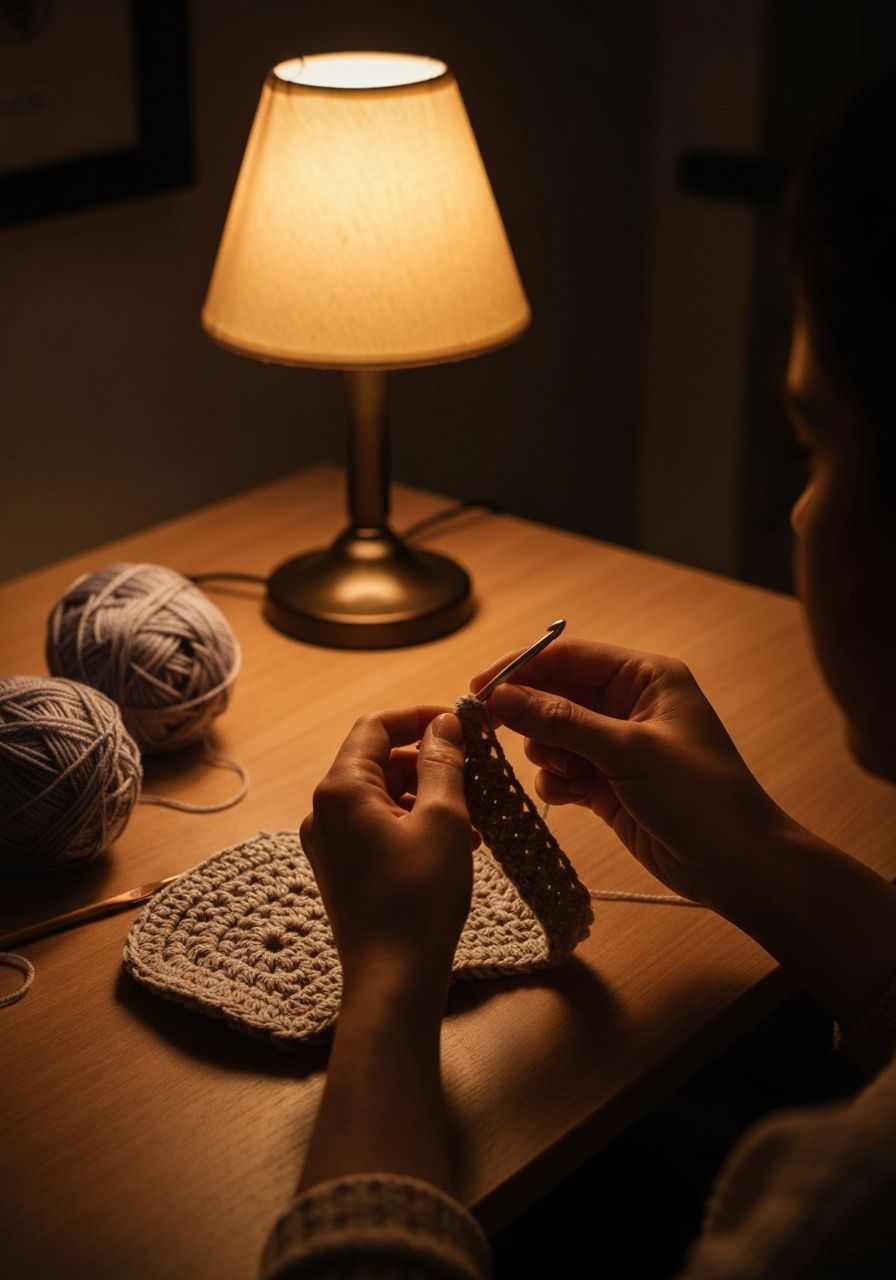
Imagine the pure joy of discovering a stunning crochet pattern, only to find the recommended yarn is discontinued, too expensive, or simply not to your taste. Don't let that deflate your creative spirit! What if you could confidently pick a different yarn and still achieve a beautiful result, perfectly tailored to your preferences? That's the empowering magic of mastering Crochet Yarn Substitution. It's a skill that unlocks a world of color, texture, and personalized projects, transforming you from a pattern-follower into a true crochet artist.
As a beginner crocheter, the idea of deviating from a pattern might feel daunting. Patterns often specify exact yarn types and colors, and it's natural to assume that any change will lead to disaster. However, with a little knowledge and practice, substituting yarn can become one of your most valuable crochet superpowers. This guide will walk you through everything you need to know to confidently choose alternative yarns for any project, ensuring your finished piece is exactly what you envisioned.
Why It Matters
Learning to substitute yarn isn't just about problem-solving; it's about embracing creative freedom and practicality in your crochet journey. Here's why this skill is a game-changer:
- Cost Savings: The recommended yarn might be out of your budget. Substituting allows you to use more affordable alternatives or even yarns from your existing stash, saving you money.
- Availability: Yarns get discontinued, or perhaps the specific brand isn't available in your local craft store. Substitution ensures you can still make the project you love.
- Customization: Maybe you want a different fiber for a specific purpose – a warmer blanket, a cooler summer top, or a softer baby item. Substituting lets you personalize the project's feel, drape, and performance.
- Allergy/Sensitivity Concerns: If you or the recipient of your crochet creation have allergies (e.g., to wool), substituting for a hypoallergenic fiber like acrylic or cotton is essential.
- Stash Busting: Have a growing collection of leftover skeins? Yarn substitution is an excellent way to use up your stash and reduce waste.
- Personal Style: Choose colors and textures that truly reflect your aesthetic, making every project uniquely yours.
What You Need to Know
Before you dive into swapping yarns, there are a few fundamental concepts you need to understand. These are the building blocks of successful substitution:
- Yarn Weight (WPI/CYC Standards): This is arguably the most critical factor. Yarn weight refers to its thickness. The Craft Yarn Council (CYC) developed a standardized numbering system (0-7) that you'll find on most yarn labels.
- 0 (Lace): Very fine, often used for delicate items.
- 1 (Super Fine/Fingering): Thin, good for socks, shawls.
- 2 (Fine/Sport): Slightly thicker, good for garments, baby items.
- 3 (Light/DK): Common for garments, accessories.
- 4 (Medium/Worsted/Aran): The most common weight, versatile for almost anything.
- 5 (Bulky/Chunky): Thicker, works up quickly, good for blankets, scarves.
- 6 (Super Bulky): Very thick, fast projects.
- 7 (Jumbo): Extremely thick, for arm knitting or giant projects.
- Fiber Content: The material the yarn is made from dramatically affects its properties.
- Acrylic: Affordable, durable, easy to care for, wide color range, good for beginners.
- Wool: Warm, elastic, good drape, but can be scratchy or require hand washing.
- Cotton: Breathable, absorbent, no stretch, good for summer items, dishcloths.
- Blends: Combine properties of different fibers (e.g., wool/acrylic for warmth and easy care).
- Yardage/Meterage: This tells you how much yarn is on a skein/ball. Patterns specify the total yardage needed. If your substitute yarn comes in different-sized skeins, you'll need to calculate how many you need to match the pattern's total yardage. Always buy a little extra to be safe!
- Gauge/Tension: This is the number of stitches and rows per inch (or 4 inches) using a specific hook size. It's listed on the pattern and often on the yarn label. Your personal tension varies, so making a gauge swatch is absolutely essential to ensure your project turns out the correct size.
- Texture: Yarns can be smooth, fuzzy, bumpy (bouclé), or variegated. Consider how the texture will affect the stitch definition and the overall look of your project. A highly textured yarn might obscure intricate stitch patterns.
Aim to substitute with a yarn of the same weight category first. Another way to gauge thickness is WPI (Wraps Per Inch), though less common on labels. You wrap the yarn snugly (but not stretched) around a ruler for an inch and count the wraps.
Consider how the fiber will impact the final project's drape, warmth, washability, and feel.
Step-by-Step Guide to Yarn Substitution
Ready to try it? Follow these steps for successful yarn substitution:
-
1. Understand the Original Yarn
Look at the pattern's recommended yarn. Note its weight category (e.g., Worsted/4), fiber content (e.g., 100% Acrylic), and the total yardage/meterage required. Also, note the recommended hook size.
-
2. Choose Your Substitute Yarn
Head to your stash or a yarn store. Prioritize finding a yarn in the same weight category as the original. Next, consider the fiber content. Do you want something similar (e.g., acrylic for acrylic) or something different (e.g., cotton for wool)? Keep in mind the characteristics of the fiber you choose.
-
3. Check the Yardage
Compare the total yardage required by the pattern to the yardage of your chosen substitute yarn. If the pattern calls for 800 yards and your substitute yarn skeins have 200 yards each, you'll need 4 skeins. Always err on the side of caution and buy an extra skein if you're close to the edge, especially since dye lots can vary.
-
4. MAKE A GAUGE SWATCH (CRITICAL!)
This is the most important step! Using your chosen substitute yarn and the hook size recommended in the pattern (or one you think might work), crochet a swatch larger than the required gauge measurement. For example, if the gauge is 16 stitches and 10 rows in a 4-inch square, make a swatch that's at least 20 stitches wide and 15 rows tall.
Example Swatch Instructions (for Double Crochet):
- Chain 17 stitches.
- Row 1: Dc in the 3rd ch from hook and in each ch across. (15 dc)
- Row 2: Ch 2 (does not count as a stitch), turn. Dc in each st across. (15 dc)
- Repeat Row 2 for a total of 15 rows.
Block your swatch (if the project will be blocked). Then, lay it flat and measure the stitches and rows over a 4-inch (or specified) section, ignoring the edge stitches. If your swatch has more stitches per inch than the pattern, your tension is too tight; try a larger hook. If it has fewer stitches, your tension is too loose; try a smaller hook. Keep adjusting your hook size and re-swatching until your gauge matches the pattern as closely as possible.
-
5. Evaluate the Fabric
Once your gauge matches, examine your swatch. Does the fabric have the desired drape, texture, and feel for the project? Does it look good? For example, if you're making a cozy blanket, you want a soft, pliable fabric. If you're making a structured bag, you might prefer something stiffer. If you've changed fiber content, consider if the new properties (e.g., stretch, warmth) are appropriate for the final item.
-
6. Proceed with Confidence (or Adjust)
If your swatch passes the gauge and fabric tests, congratulations! You've successfully substituted yarn. If not, don't despair. Try a different hook size, a different substitute yarn, or even accept a slight difference in the final project size (especially for non-garment items like blankets).
Common Mistakes to Avoid
Even with a step-by-step guide, it's easy to fall into common pitfalls. Be mindful of these:
- Ignoring Yarn Weight: Trying to swap a bulky yarn for a lace weight yarn will drastically alter the project size and look, even if you adjust the hook. Stick to the same weight category as much as possible.
- Skipping the Gauge Swatch: This is the number one mistake! Without a swatch, you have no idea if your project will turn out the correct size. Even slight differences in tension can result in a huge difference in a finished garment or blanket.
- Not Considering Fiber Content: Substituting wool for cotton without thinking about the project's purpose can lead to disappointment. A warm winter hat made from cotton won't be as insulating, and a drapey summer top made from a stiff acrylic might not hang correctly.
- Underestimating Yardage: Running out of yarn mid-project, especially if it's a specific dye lot that you can't repurchase, is incredibly frustrating. Always calculate carefully and buy extra.
- Choosing Highly Textured Yarn for Intricate Stitches: A very fuzzy or boucle yarn might obscure the beautiful detail of a complex lace or cable stitch pattern. Smooth yarns generally show stitch definition better.
Pro Tips
- Keep Yarn Labels: Always save the label from your substitute yarn. It contains vital information like fiber content, weight, recommended hook size, and care instructions.
- Buy Extra: As mentioned, it's better to have a little extra yarn than to run short, especially if dye lots are a concern. You can always use leftovers for small projects or future scraps.
- Don't Be Afraid to Experiment: The more you practice yarn substitution, the more confident and intuitive it becomes. Your first few attempts might not be perfect, but each one is a learning experience.
- Consider the Project Type: Forgiveness varies. A blanket or scarf is generally more forgiving of slight gauge differences than a fitted sweater or a precisely sized amigurumi toy.
- Online Resources: Websites like Ravelry and Yarnsub.com are excellent tools. Ravelry allows you to see what yarns other crocheters have used for a specific pattern, and Yarnsub.com helps you find similar yarns based on weight, fiber, and other characteristics.
FAQ
Q: Can I really swap any yarn?
A: While you can't swap *any* yarn and expect the same result, you can successfully substitute most yarns within the same weight category, especially if you meticulously check your gauge. Radical changes in weight or fiber will significantly alter the outcome, but with careful planning, even those can lead to interesting, intentional results.
Q: What if I can't match the gauge exactly?
A: For items where size isn't critical (like blankets, scarves, or dishcloths), a slight gauge difference might be acceptable, resulting in a slightly larger or smaller project. For fitted garments or amigurumi, matching gauge is crucial. If you've tried adjusting your hook size and still can't match, you might need to accept a different finished size or choose a different substitute yarn.
Q: How do I know if I have enough yarn?
A: Check the pattern for the total yardage (or meterage) required. Then, look at your substitute yarn's label to see how much yardage is in one skein. Divide the total pattern yardage by the yardage per skein to find out how many skeins you need. For example, if a pattern needs 1000 yards and your yarn has 250 yards per skein, you need 1000 / 250 = 4 skeins. Always add a buffer of about 10-15% or buy one extra skein to be safe.
Mastering crochet yarn substitution is truly liberating. It means you're no longer bound by specific yarn recommendations but empowered to make every project uniquely yours. With a little practice, a keen eye for yarn weights, and the essential step of making a gauge swatch, you'll soon be confidently swapping yarns and creating stunning, personalized crochet pieces. So grab your hook, choose a beautiful yarn, and embark on your next creative adventure!