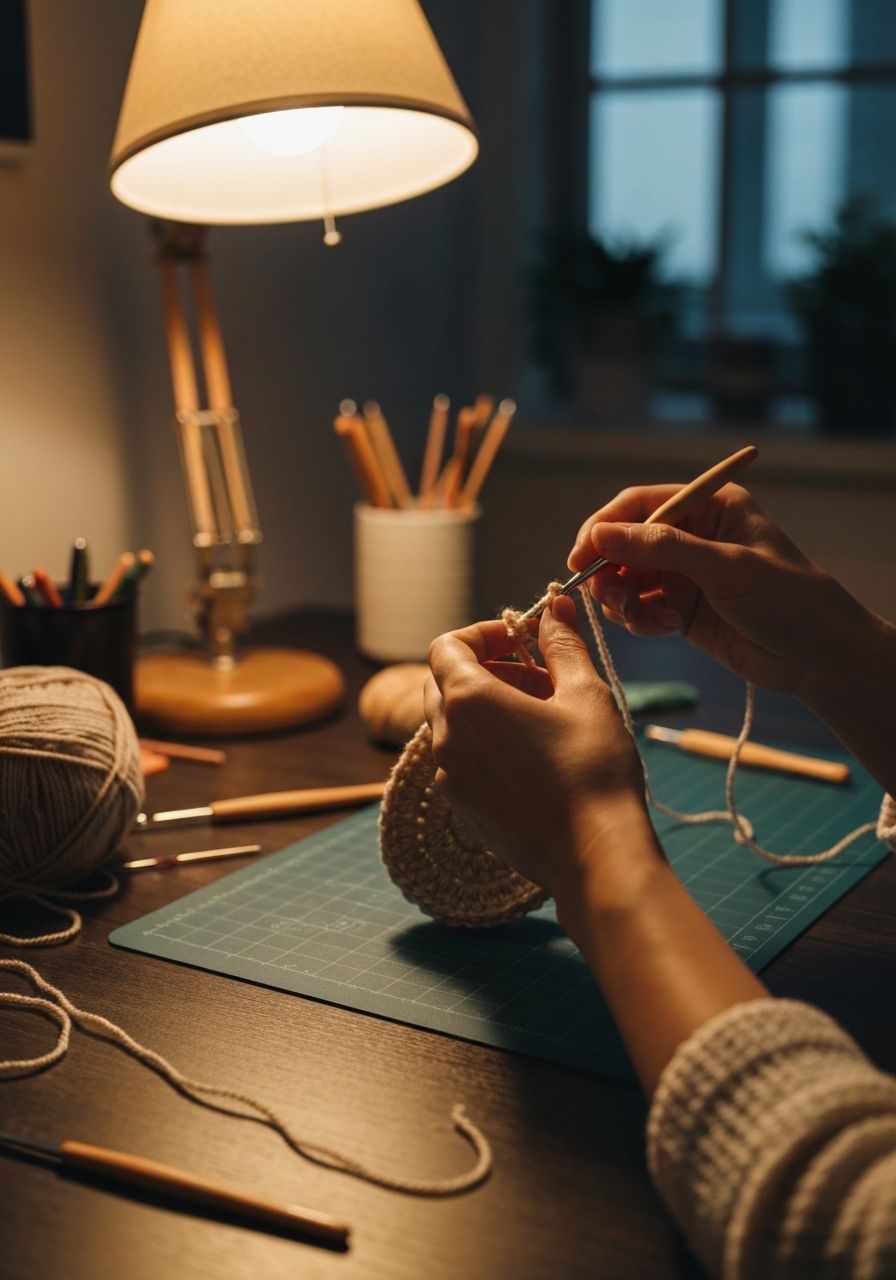
Imagine creating a crochet fabric that drapes like a dream, light as air, and grows seemingly before your eyes. Picture elegant shawls, breezy garments, or large, cozy blankets that finish faster than you ever thought possible. That magic, that incredible feeling of bringing substantial projects to life with speed and grace, starts right here with mastering the Crochet Treble Stitch (often abbreviated as 'tr'). It's a foundational stitch that adds significant height and beautiful texture, and once you learn it, a whole new world of design possibilities will unfurl before your very hook!
Welcome, budding crocheter! If you've dipped your toes into the delightful world of single crochet (sc) and double crochet (dc), you're perfectly poised to elevate your skills to the next level. The treble stitch is the elegant older sibling in the basic stitch family, offering a taller, more open fabric that's both stylish and practical. This comprehensive guide is designed to walk you through every step, from understanding its anatomy to working it into a beautiful swatch, ensuring you gain the confidence to incorporate this versatile stitch into all your future projects.
Why the Treble Stitch Matters for Every Crocheter
While single crochet offers a dense, sturdy fabric and double crochet provides a good balance of height and closeness, the treble stitch brings unique advantages to your crochet arsenal:
- Unmatched Height: The treble stitch is significantly taller than both single and double crochet, making your projects grow much faster. This is a huge bonus for large items like blankets, afghans, or long scarves.
- Beautiful Drape and Airiness: Due to its height, the treble stitch creates a more open fabric with excellent drape. This makes it ideal for garments that need to flow, such as cardigans, shawls, wraps, or lightweight throws.
- Lacy Texture: The spaces created by the taller stitches lend themselves beautifully to lace-like patterns without requiring complex stitch combinations. It's perfect for creating openwork designs.
- Yarn Economy: While it might seem counterintuitive, because the stitches are so tall and open, you often use less yarn per square inch compared to denser stitches, depending on the pattern.
- Foundation for Advanced Stitches: Many more complex and textured stitches, such as cluster stitches or certain cable designs, build upon the height and structure of the treble crochet. Mastering 'tr' opens the door to a wealth of advanced techniques.
What You Need to Know Before You Begin
Before diving into the treble stitch itself, let's ensure you have the basics covered and your materials ready:
Prerequisites:
- Chain Stitch (ch): The fundamental building block of almost all crochet projects.
- Single Crochet (sc): You should be comfortable inserting your hook and pulling up loops.
- Double Crochet (dc): Familiarity with the double crochet is particularly helpful, as the treble stitch is an extension of its technique.
- Yarn Over (YO): Understanding how to 'yarn over' (wrap the yarn over your hook) is crucial.
- Basic Tension Control: Knowing how to hold your yarn and hook to maintain an even stitch size. Don't worry if it's not perfect; practice makes progress!
Materials:
For practice, keep it simple:
- Worsted Weight Yarn: A smooth, light-colored worsted weight (or Aran weight) acrylic or cotton yarn is perfect. It's easy to see your stitches and forgiving for beginners. Avoid dark or fuzzy yarns for learning new stitches.
- Crochet Hook: A size H/5.0mm or I/5.5mm hook is generally recommended for worsted weight yarn. Choose one that feels comfortable in your hand.
- Scissors: For cutting your yarn.
- Tapestry Needle: For weaving in ends (after your practice swatch, of course!).
Step-by-Step Guide: Mastering the Treble Stitch (tr)
The treble stitch is essentially a double crochet with an extra yarn over at the beginning and an extra pull-through step. Once you grasp this, it becomes quite intuitive!
Understanding the Treble Stitch's Anatomy:
A treble stitch stands about four chains tall. This means your turning chain at the beginning of a row will typically be 4 chains, which counts as your first treble stitch.
Let's Create a Practice Swatch:
We'll start with a foundation chain and work a few rows of treble stitches.
- Make a Slip Knot and Foundation Chain:
- Create a slip knot on your hook.
- Chain (ch) 16 stitches. This will give you a good width for practice.
- Working the First Treble Stitch into the Foundation Chain:
- Yarn over (YO) twice: Wrap the yarn over your hook, then wrap it over again. You should have three loops on your hook (the original loop + two yarn overs).
- Insert hook: Count 5 chains from your hook. Insert your hook into the center of the 5th chain. The first 4 chains will act as your turning chain (and first treble stitch).
- Yarn over (YO) and pull up a loop: Wrap the yarn over your hook and pull it through the chain stitch. You should now have four loops on your hook.
- Yarn over (YO) and pull through 2 loops: Wrap the yarn over your hook and pull it through the first two loops on your hook. You should now have three loops remaining on your hook.
- Yarn over (YO) and pull through 2 loops: Wrap the yarn over your hook and pull it through the next two loops on your hook. You should now have two loops remaining on your hook.
- Yarn over (YO) and pull through final 2 loops: Wrap the yarn over your hook and pull it through the last two loops on your hook. You should now have one loop remaining on your hook.
- Congratulations! You've made your first treble stitch.
- Working Across the Row (Row 1):
- Continue to YO twice, insert hook into the next chain, YO and pull up a loop, YO and pull through 2, YO and pull through 2, YO and pull through 2, for each remaining chain stitch across the row.
- When you reach the end of the row, including your turning chain, you should have 13 treble stitches.
- Starting the Next Row (Row 2):
- Chain 4 (ch 4): This chain of 4 stitches counts as the first treble stitch of your new row.
- Turn your work: Rotate your work so the back of the previous row is facing you, and you're ready to work into the top of the stitches you just made.
- Work your first treble into the second stitch: Skip the very first stitch (which your ch-4 turning chain is counting for). YO twice, insert your hook into the top of the *second* treble stitch from the previous row.
- Complete the treble stitch as you did before.
- Continue to work one treble stitch into the top of each stitch across the row.
- Don't forget the last stitch! The last stitch of the row will be worked into the top of the turning chain from the previous row (the very first ch-4 you made). It can sometimes be a bit tricky to find, but it's important to work into it to keep your edges straight.
- Count your stitches. You should again have 13 treble stitches.
- Continue Practicing: Repeat Row 2 for several more rows until you feel comfortable with the stitch and your tension is becoming more even.
Common Mistakes to Avoid
Even experienced crocheters can occasionally make these blunders. Learning to spot and correct them will save you frustration!
- Incorrect Turning Chain: Using too few or too many chains for your turning chain will cause your edges to be uneven or your stitch count to be off. For treble crochet, it's almost always ch 4.
- Missing the Last Stitch: This is arguably the most common mistake for beginners. Forgetting to work into the top of the turning chain from the previous row will cause your work to narrow on one side. Always count your stitches!
- Working into the First Stitch: If your turning chain counts as the first stitch, you should skip the first actual stitch of the row. Working into both will add an extra stitch.
- Incorrect Number of Yarn Overs: Accidentally yarning over once (making a double crochet) or three times (making a double treble) instead of twice will change the height of your stitch and make your fabric uneven.
- Inconsistent Tension: Some stitches might be too tight, others too loose, leading to a bumpy or wavy fabric. This improves with practice.
Pro Tips for Treble Stitch Success
- Counting Loops is Key: In the beginning, consciously count the loops on your hook at each step: 1 (original), 3 (after YO twice), 4 (after pulling up a loop), 3 (after first pull-through), 2 (after second pull-through), 1 (after final pull-through).
- Use a Stitch Marker: Place a stitch marker in the top of your turning chain on each row. This makes it much easier to identify where to place your last stitch when you come back across.
- Practice with Different Yarns: Once you're comfortable, try the treble stitch with different weights of yarn (e.g., a finer sport weight or a bulky weight). You'll see how dramatically the fabric changes!
- Read Patterns Carefully: Always check the pattern's instructions for the turning chain. While ch 4 is standard, some designers might use ch 3 and count it differently, or instruct you not to count the turning chain as a stitch.
- Blocking is Your Friend: Because the treble stitch creates a more open fabric, it benefits immensely from blocking. This process evens out your stitches, opens up the lace, and helps your project achieve its intended shape and drape.
FAQs About the Treble Stitch
What's the main difference between treble and double crochet?
The primary difference lies in their height and the number of yarn overs. A double crochet (dc) starts with one yarn over, and you pull through two loops three times. A treble crochet (tr) starts with two yarn overs, and you pull through two loops four times. This extra yarn over and pull-through step makes the treble stitch significantly taller, creating a more open and lacy fabric compared to the denser double crochet.
When should I choose to use the treble stitch in a project?
You should use the treble stitch when you want to create a project that grows quickly, has an airy or lacy texture, and boasts excellent drape. It's perfect for lightweight blankets, openwork shawls, summer garments, scarves where you want a less dense fabric, or for intricate stitch patterns that build on taller stitches, like certain shell or fan stitches.
How do I increase or decrease with treble stitches?
Increasing with treble stitches (tr inc) is straightforward: simply work two or more treble stitches into the same stitch. This adds extra height and width. To decrease (tr dec, sometimes called tr2tog for treble two together), you work two treble stitches together into one stitch. You would YO twice, insert hook into the first stitch, YO pull up a loop, YO pull through 2, YO pull through 2 (leaving 2 loops on hook). Then, without finishing the stitch, YO twice again, insert hook into the next stitch, YO pull up a loop, YO pull through 2, YO pull through 2 (leaving 3 loops on hook). Finally, YO and pull through all 3 remaining loops on your hook. This effectively turns two treble stitches into one, reducing your stitch count.
You've taken a significant step forward in your crochet journey! The treble stitch is a beautiful, versatile stitch that will open up a world of new possibilities for your projects. Don't be discouraged if your first few attempts aren't perfect; every stitch is a step toward mastery. Keep practicing, enjoy the rhythm of your hook and yarn, and soon you'll be creating stunning, airy fabrics with confidence. Happy hooking!