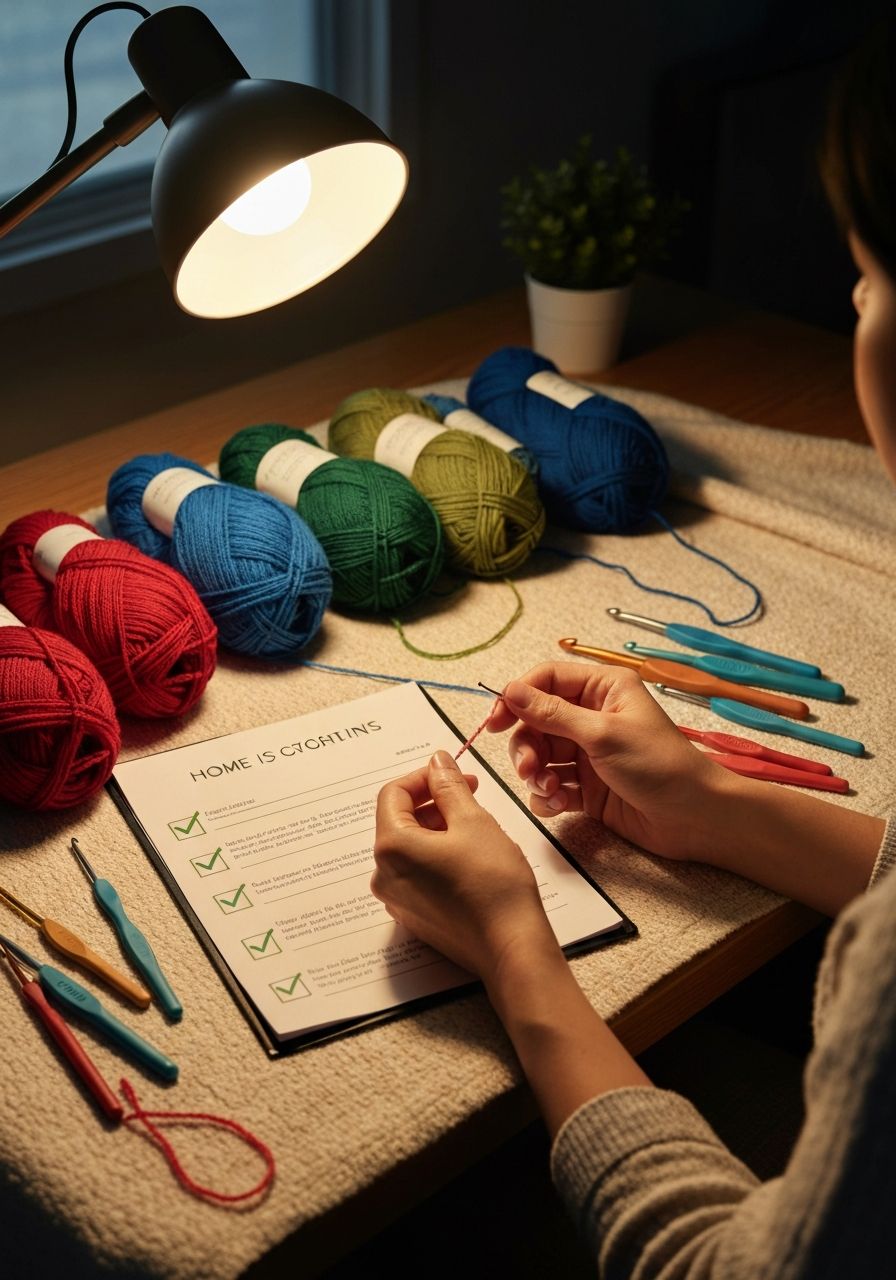
Imagine the cozy warmth of a handmade blanket draped over your shoulders, the satisfying crunch of a perfectly formed amigurumi toy, or the vibrant splash of a custom-designed scarf. These aren't just dreams; they're tangible creations waiting to spring from your fingertips! But before you can dive into the magical world of yarn and stitches, every aspiring crocheter needs the right gear. Don't worry, building your essential toolkit doesn't have to be overwhelming. This comprehensive Crochet Tools Checklist is your passport to transforming creative visions into beautiful, touchable realities, setting you up for success from your very first loop.
Welcome, fellow yarn enthusiast! If you're just starting your crochet journey, the sheer volume of hooks, yarns, and accessories can seem daunting. But fear not! This guide is designed to demystify the essential tools you'll need to confidently embark on your first projects. We'll break down each item, explain its purpose, and even walk you through a small practice swatch to see how these tools come to life. Let's get hooked!
Why It Matters: The Right Tools for a Smooth Start
Think of crochet like building a house. You wouldn't try to build a sturdy home with a spoon and a butter knife, would you? Similarly, using the wrong tools in crochet can lead to frustration, uneven stitches, dropped projects, and ultimately, a less enjoyable experience. The right tools:
- Prevent Frustration: Smooth hooks glide effortlessly through yarn, making stitching easier and faster.
- Improve Stitch Quality: Correct hook sizes and yarn weights ensure your stitches are consistent and your finished object looks polished.
- Boost Confidence: When your tools work with you, not against you, you're more likely to tackle new challenges and feel proud of your progress.
- Save Time and Money: Investing in good quality essentials upfront means less replacing broken items and less redoing work due to unsuitable tools.
- Enhance Ergonomics: Comfortable hooks can prevent hand strain, allowing you to crochet for longer periods without discomfort.
What You Need to Know: Your Essential Crochet Toolkit
1. Crochet Hooks
This is your primary instrument! Hooks come in various sizes, materials, and handle designs. Each size is designated by a letter (in the US) and a corresponding millimeter (mm) measurement. The larger the number/letter, the larger the hook and the looser your stitches will be.
- Materials: Aluminum (smooth, affordable), plastic (lightweight, good for chunky yarn), bamboo/wood (warm, good grip, less slick). For beginners, a smooth aluminum hook is often recommended as yarn glides well.
- Sizes: Start with a medium-sized hook, like an H/5.0mm or I/5.5mm. These are versatile and work well with common worsted weight yarn. A good starter set often includes sizes from G/4.0mm to K/6.5mm.
- Ergonomic Handles: While not strictly necessary for beginners, an ergonomic handle can significantly reduce hand fatigue, especially if you plan to crochet for extended periods.
2. Yarn
The soul of your project! Yarn comes in countless fibers, weights, and colors. For beginners:
- Fiber: Acrylic is highly recommended. It's affordable, widely available, durable, easy to care for, and doesn't split easily. Cotton is also a good option, though it can be less forgiving. Avoid slippery fibers like silk or tricky ones like alpaca until you're more comfortable.
- Weight: Look for 'worsted weight' (also called 'medium' or '4'). This is the most common weight and pairs well with your beginner H/5.0mm or I/5.5mm hook. It's thick enough to see your stitches clearly but not so bulky that it's difficult to handle.
- Color: Choose a light, solid color. Variegated or very dark yarns can make it hard to see individual stitches, which is crucial when you're learning.
3. Scissors
Any sharp pair will do! You'll need these for cutting yarn tails, finishing off projects, and trimming. Small embroidery scissors are popular for their precision.
4. Tapestry Needle (or Yarn Needle)
These are blunt-tipped, large-eyed needles used for weaving in yarn ends. Unlike sewing needles, their blunt tip prevents splitting the yarn fibers, making for a neater, more secure finish. You'll use this on almost every project.
5. Stitch Markers
These are invaluable! Small plastic clips or rings that you attach to a stitch to mark its location. They're essential for:
- Marking the first stitch of a round when working in continuous spirals (like for amigurumi).
- Keeping track of specific stitches or pattern repeats.
- Helping you count rows or rounds.
Seriously, don't skip these. They prevent so much headache!
6. Measuring Tape/Ruler
Crucial for checking your gauge (the number of stitches and rows per inch), ensuring your finished project will be the correct size, and measuring your work as you go. A flexible measuring tape is most versatile.
7. Row Counter (Optional, but Recommended)
A small clicker device or a digital app that helps you keep track of how many rows or rounds you've completed. This is a game-changer for larger projects or patterns with many repetitions, freeing your mind to focus on your stitches.
Putting Your Tools to Work: A Practice Swatch Walkthrough
Let's use our basic tools to create a simple swatch, demonstrating how each piece of equipment comes into play. For this, grab your H/5.0mm hook, some worsted weight acrylic yarn in a light color, a stitch marker, scissors, and a tapestry needle.
- Getting Started (Hook, Yarn): Begin with a slip knot and then chain (ch) 10 stitches. This forms your foundation chain.
- Row 1: Single Crochet (sc) & Turning (Hook, Yarn, Counting): Turn your work. Sc in the 2nd ch from the hook and in each ch across (9 sc). This establishes your first row of stitches.
- Row 2: Half Double Crochet (hdc) & Stitch Marker Use (Hook, Yarn, Stitch Marker): Ch 2 (counts as 1 hdc), turn. Hdc in the first stitch and in each stitch across (9 hdc). Place your stitch marker in the top of the turning chain (the second chain you made) to easily identify the end of your row for future reference.
- Row 3: Double Crochet (dc) (Hook, Yarn): Ch 3 (counts as 1 dc), turn. Dc in the first stitch and in each stitch across (9 dc).
- Row 4: Slip Stitch (sl st) (Hook, Yarn): Ch 1, turn. Sl st in the first stitch and in each stitch across (9 sl st). Notice how this stitch is much flatter!
- Row 5: Increasing (inc) (Hook, Yarn): Ch 1, turn. Sc in the first stitch. *2 sc in next stitch (inc)*, sc in next stitch. Repeat from * across. You should now have more than 9 stitches (e.g., if you repeat 4 times, 9+4=13 sts). This demonstrates how to add stitches.
- Row 6: Decreasing (dec) (Hook, Yarn): Ch 1, turn. Sc in the first stitch. *Sc2tog (single crochet 2 together, a decrease)*, sc in next stitch. Repeat from * across. You should now have fewer stitches than in Row 5. This demonstrates how to reduce stitches.
- Finishing (Scissors, Tapestry Needle): When your swatch is complete, cut your yarn, leaving about a 6-inch tail. Yarn over and pull the tail completely through the loop on your hook to fasten off. Thread your tapestry needle with the yarn tail and weave it through several stitches on the back of your work to secure it neatly. Repeat for any starting tails.
Common Mistakes to Avoid
- Buying a "Fancy" Hook Set Immediately: While tempting, you don't know your preferred hook material or handle style yet. Start with a few basic hooks.
- Ignoring Yarn Weight & Hook Size Recommendations: Patterns usually suggest a specific yarn weight and hook size. Deviating too much can drastically alter your project's size and drape.
- Skipping Stitch Markers: Especially when working in the round, not marking your first stitch is a recipe for losing count and uneven work.
- Using Dark or Fuzzy Yarn as a Beginner: It's incredibly difficult to see your stitch definition with these, leading to frustration. Save them for when you're more experienced.
- Not Weaving in Ends Properly: Loose ends can unravel your beautiful work. Take the time to secure them well with your tapestry needle.
Pro Tips for Your Beginner Toolkit
- Invest in Quality (When You Know What You Like): While starting cheap is fine, once you discover your favorite hook material and style, investing in a good quality version will make your crochet experience much more enjoyable.
- Keep Your Tools Organized: A small craft bag, pencil case, or dedicated box will keep your hooks, markers, and needles from getting lost.
- Swatch, Swatch, Swatch!: Always make a small swatch before starting a project, especially if gauge is important. This helps you confirm your hook and yarn choice for the desired fabric.
- Don't Be Afraid to Experiment (Later): Once you're comfortable, try different yarn fibers, hook materials, and project types. That's where the real fun begins!
- Watch Tutorials: Visual learners will benefit immensely from watching video tutorials for basic stitches and techniques.
FAQ
Do I need every tool on this list to start?
You absolutely need a hook, yarn, and scissors. A tapestry needle and stitch markers are highly, highly recommended and will save you a lot of trouble. A measuring tape is useful, and a row counter is a nice-to-have convenience. Start with the absolute essentials and add others as your budget and projects demand.
What's the best hook material for beginners?
Smooth aluminum hooks are often recommended for beginners. They are affordable, durable, and allow yarn to glide easily without being too slick or too sticky. Once you gain experience, you might prefer the warmth of wood or the lightness of plastic.
How do I choose the right yarn for my first project?
For your very first project, choose a light-colored, smooth, worsted-weight acrylic yarn. It's affordable, easy to work with, and easy to see your stitches. Avoid anything fuzzy, dark, or slippery until you've mastered the basics.
Armed with this comprehensive Crochet Tools Checklist, you are now ready to confidently step into the wonderful world of crochet. Don't be afraid to make mistakes; every dropped stitch is a lesson learned, and every finished piece, no matter how imperfect, is a testament to your growing skill. Grab your hook, pick your yarn, and let the magic begin. Happy crocheting!