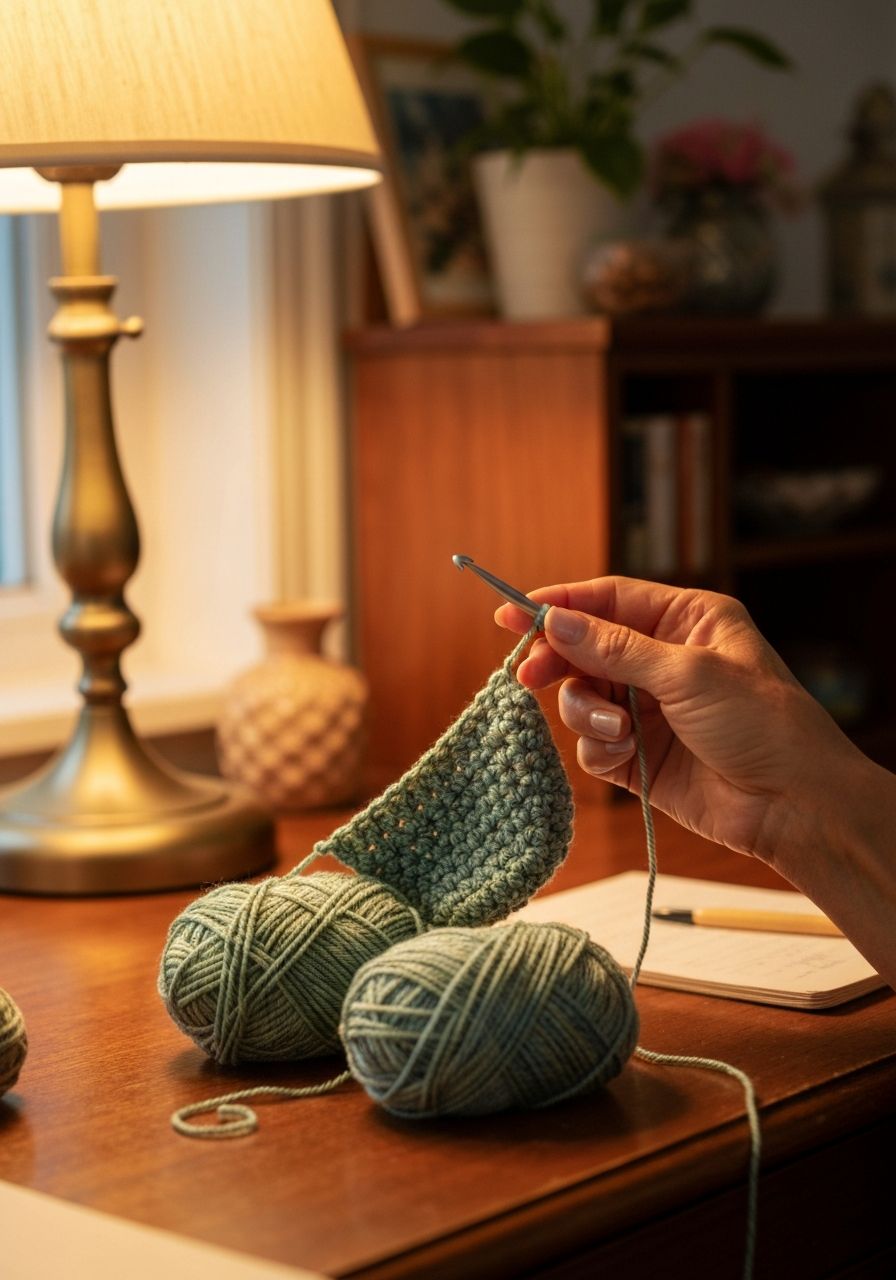
Do you ever find yourself staring at a growing pile of unfinished projects, feeling a pang of guilt or overwhelm instead of the peaceful joy crochet usually brings? Imagine instead, the satisfaction of consistently making progress on your beautiful creations, finishing them with pride, and always knowing what to work on next, all without feeling rushed or stressed. This dream is entirely within reach with effective Crochet Time Management – a skill that transforms your crafting journey from a chaotic collection of WIPs (Works In Progress) into a well-organized, deeply rewarding experience, even if you only have a few minutes a day.
Welcome, fellow fiber artist! If you're new to crochet, or even if you've been hooking for a while but struggle to complete projects, this guide is for you. We'll explore practical, beginner-friendly strategies to help you make the most of your precious crafting time. Forget the idea that you need hours of uninterrupted time; we'll show you how to weave crochet seamlessly into your life, one mindful stitch at a time.
Why It Matters
You might wonder why time management is even necessary for a hobby meant for relaxation. The truth is, without a little structure, even the most enjoyable activities can become sources of stress. For beginners, this can be particularly disheartening. Here’s why a thoughtful approach to your crochet time can make all the difference:
- Finish More Projects: This is perhaps the most obvious benefit. By managing your time, you'll see your projects through to completion, giving you a wonderful sense of accomplishment and a beautiful item to show for your efforts.
- Reduce Stress and Overwhelm: A mountain of unfinished projects can feel daunting. Breaking tasks into smaller, manageable chunks reduces anxiety and makes the entire process more enjoyable.
- Consistent Progress: Even short, regular sessions are more effective than infrequent, long ones. Consistency builds muscle memory, improves your skills faster, and keeps your momentum going.
- Enhanced Enjoyment: When you're not worried about when you'll next get to crochet or how far behind you are, you can truly relax and savor each stitch.
- Better Skill Development: Regular practice, even in small doses, solidifies your understanding of stitches and techniques, making you a more confident crocheter.
What You Need to Know
Before we dive into specific techniques, let's understand a few foundational concepts about managing your crochet time:
- It's Not About Speed, It's About Consistency: You don't need to crochet faster. You need to crochet smarter, and more consistently. Small, regular efforts yield significant results over time.
- Identify Your "Crochet Prime Time": When are you most alert and free from distractions? Is it early morning with a cup of coffee, during a lunch break, or late at night once the house is quiet? Knowing this helps you schedule effectively.
- The Power of "Snack-Sized" Crochet: Not every crochet session needs to be an hour long. Many tasks can be completed in 5, 10, or 15 minutes. Embrace these mini-sessions!
- Preparation is Key: Having your yarn, hook, pattern, and accessories (stitch markers, scissors, tapestry needle) ready to go eliminates wasted time scrambling for supplies.
- Project Planning: Even for beginners, thinking ahead about your project (what it is, what stitches it uses, what materials you need) saves time and prevents frustration later on.
Your Step-by-Step Guide to Efficient Crochet Time Management
Let's put these concepts into practice. Here’s a structured approach to managing your crochet time, including a practical example to illustrate how to break down tasks.
Step 1: Assess Your Time & Energy
Take a realistic look at your schedule. When do you genuinely have pockets of time? Be honest about your energy levels during these times. A 15-minute window after work might be perfect for simple stitches, but not for learning a complex new technique.
- Example Small Tasks for Short Bursts (5-15 mins):
- Practicing a new stitch (e.g., 10 rows of hdc to get the feel).
- Completing a few rounds of a small amigurumi head or a single granny square.
- Working on a simple scarf or blanket panel.
- Weaving in a few ends.
Step 2: Break Down Your Project
This is arguably the most crucial step. Instead of seeing a huge, intimidating project, break it into tiny, achievable goals. For instance, instead of "make a blanket," think "make 3 granny squares today."
Example Mini-Project: The "Focus Square" Practice Swatch
This simple square is perfect for practicing foundation chains and basic stitches (sc, hdc, dc) in short, manageable bursts. Let's break down its creation into five 5-10 minute sessions:
- Session 1 (5-10 mins): Foundation Chain & First Row (Single Crochet)
- Ch 16.
- Sc in 2nd ch from hook and in each ch across. (15 sc). Ch 1, turn.
- Session 2 (5-10 mins): Row 2 (Single Crochet)
- Sc in each st across. (15 sc). Ch 1, turn.
- Session 3 (5-10 mins): Row 3 (Half Double Crochet)
- Hdc in each st across. (15 hdc). Ch 2, turn.
- Session 4 (5-10 mins): Row 4 (Double Crochet)
- Dc in each st across. (15 dc). Ch 3, turn.
- Session 5 (5-10 mins): Row 5 (Slip Stitch) & Finish
- Sl st in each st across. (15 sl st). Fasten off, weave in ends.
This "Focus Square" demonstrates how a seemingly small project can be divided into even smaller, bite-sized tasks. Each session is short, achievable, and builds upon the last. You can apply this same logic to any larger project: "today I will complete 5 rows of my scarf," or "this week I'll make two more squares for my blanket."
Step 3: Set Realistic Goals
Avoid setting yourself up for disappointment. Don't aim to finish a complex garment in a weekend if you're a beginner. Instead, set small, daily or weekly goals that you know you can realistically achieve, like "today I will work on my project for 20 minutes" or "by Friday, I will have completed the first panel."
Step 4: Create a Dedicated Crochet Space (or Kit)
Having a designated spot, even if it's just a small basket or bag, where all your current project's materials are kept together, reduces setup and cleanup time. This makes it easier to spontaneously pick up your hook for those "snack-sized" sessions.
Step 5: Track Your Progress
Seeing how far you've come is incredibly motivating! Use stitch markers to count rows or rounds, make notes in a small notebook, or even take photos. Celebrating small victories keeps you inspired and shows you that your time management efforts are paying off.
Common Mistakes to Avoid
Even with the best intentions, it's easy to fall into common time-wasting traps:
- Starting Too Many WIPs: It's tempting to start a new project every time you see a pretty yarn or pattern, but a huge pile of unfinished items can be paralyzing. Try to focus on 1-2 projects at a time.
- Not Reading the Pattern Thoroughly: Skimming a pattern can lead to mistakes, which means frogging (undoing your work) and redoing, costing you precious time. Read through the entire pattern before you even pick up your hook.
- Underestimating Project Time: Beginners often underestimate how long a project will take. Be generous with your time estimates, especially when learning new stitches or techniques.
- Comparing Yourself to Others: Everyone crochets at their own pace. Don't let someone else's speed or output make you feel inadequate. Your journey is unique.
- Crocheting When Tired or Distracted: If you're exhausted or trying to focus on too many things at once, you're more prone to mistakes and less likely to enjoy the process. Save your crochet for times when you can give it your full (or at least mostly full) attention.
Pro Tips for Sustained Crochet Success
- The "Crochet Pomodoro": Adapt the famous Pomodoro Technique. Set a timer for 25 minutes of focused crochet, then take a 5-minute break. This can boost concentration and prevent burnout.
- Batch Similar Tasks: If you have multiple pieces to seam or many ends to weave in, save them up and do them all at once. This can be more efficient than tackling them one by one.
- Listen While You Work: Audiobooks, podcasts, or your favorite music can make time fly and enhance your crochet experience, especially during repetitive sections.
- Always Have a Portable Project: Keep a small, simple project (like a washcloth, a granny square, or a simple scarf) in a project bag ready to go. You never know when you'll have an unexpected 10-15 minutes of downtime.
- Don't Be Afraid to Take Breaks or Frog: Sometimes, stepping away from a project for a day or two can give you a fresh perspective. And if you make a mistake, don't fear the frog! It's better to undo a few rows than to live with a mistake you'll always see.
Frequently Asked Questions About Crochet Time Management
How do I make time for crochet when I'm so busy?
Start small! Look for those 10-15 minute pockets in your day – while waiting for water to boil, during your lunch break, or before bed. Prioritize your crochet sessions, even if they're short. These "micro-sessions" add up surprisingly quickly and keep your projects moving forward without feeling like a major time commitment.
What if I get bored with a project?
It happens to everyone! To combat boredom, try having a "palate cleanser" project – something small and quick that's completely different from your main WIP. Alternatively, set a very small, achievable goal for your current project (e.g., "I'll just do one more row") to reignite interest and maintain momentum. Sometimes, a short break is all you need.
How can I speed up my crochet?
For beginners, the focus should always be on consistency and accuracy, not speed. Speed will naturally increase with practice and muscle memory. To gently encourage faster stitching, pay attention to how you hold your hook and yarn; try different grips to find what's most comfortable and efficient for you. Regular, short practice sessions will build your dexterity faster than sporadic long ones.
Embracing effective crochet time management isn't about rushing your hobby; it's about making your crafting journey more enjoyable, less stressful, and ultimately, more fulfilling. By breaking down projects, setting realistic goals, and utilizing even small pockets of time, you'll transform your crochet experience. Start with one tip today, celebrate every stitch, and watch your beautiful creations come to life with newfound ease and joy!