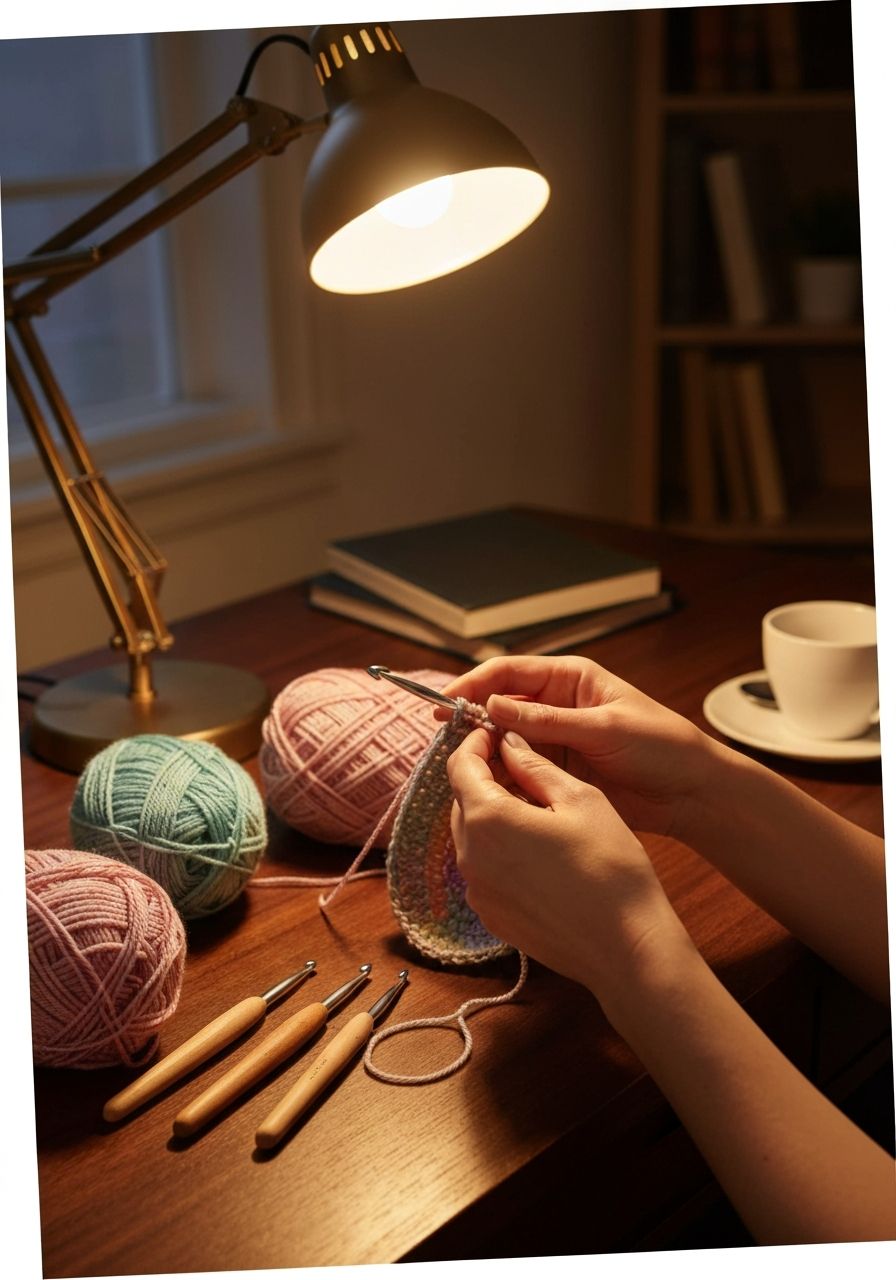
Imagine creating a gorgeous blanket that drapes perfectly, or a cute amigurumi toy with perfectly even stitches that stand up straight and proud. Now, imagine the frustration of a project that’s too stiff, too floppy, or worse, completely the wrong size despite following the pattern to a T. The secret to bridging that gap between aspiration and flawless execution lies in one crucial skill: mastering your crochet tension. It's the invisible thread that connects your hands to your hook, dictating the very soul of your finished fabric. Get ready to transform your crochet journey from inconsistent struggles to consistent, joyful success!
Crochet tension refers to how tightly or loosely you work your stitches. It's the amount of give or pull you apply to your yarn as you form each loop and complete each stitch. While it might sound like a minor detail, tension is foundational to achieving professional-looking results in your crochet projects. It directly impacts the size, drape, texture, and overall appearance of your finished work, making it a vital skill for every beginner to understand and practice.
Why It Matters
Understanding and controlling your crochet tension isn't just about perfectionism; it's about the practical success and enjoyment of your craft. Here's why it's so important:
- Achieving Consistent Stitch Size: Even tension means all your stitches will be uniform in height and width. This creates a smooth, appealing fabric that looks polished and professional, rather than lumpy or distorted.
- Meeting Gauge: Almost every pattern includes a 'gauge' section, which tells you how many stitches and rows should fit into a specific measurement (e.g., 4 inches x 4 inches). Matching this gauge is critical for ensuring your finished project is the correct size. If your tension is off, your scarf might be too narrow, or your sweater might not fit!
- Fabric Drape and Feel: Loose tension often results in a soft, airy, and flexible fabric, perfect for garments or blankets. Tight tension creates a dense, sturdy fabric, ideal for bags, baskets, or amigurumi that needs to hold its shape. Your tension directly dictates the 'hand' or feel of your crochet.
- Yarn Usage: Inconsistent tension can lead to using more or less yarn than the pattern specifies. Too tight, and you might run out of yarn prematurely; too loose, and you'll have a lot left over, potentially wasting material or making it difficult to match future skeins.
- Preventing Hand Strain: Crocheting with overly tight tension can lead to hand cramps, wrist pain, and fatigue. Learning to relax your grip and maintain comfortable tension is crucial for ergonomic crocheting and long-term enjoyment of your hobby.
What You Need to Know
Several factors influence your crochet tension. Becoming aware of these elements will empower you to identify and adjust your tension when needed:
- Yarn Hold (Yarn Over Technique): This is perhaps the most significant factor. How you wrap the yarn around your fingers, how much slack you give, and how you tension it as you pull through loops will dramatically affect your stitch size. There isn't one 'right' way, but finding a consistent method is key.
- Hook Size: Your hook size directly impacts the size of your loops. A larger hook generally creates looser stitches, while a smaller hook creates tighter stitches. Patterns specify a recommended hook size to help you achieve the correct gauge.
- Stitch Type: Different stitches inherently have different heights and densities. A single crochet (sc) is much shorter and denser than a double crochet (dc), even with the same tension and hook size. Being mindful of the stitch you're working will help you anticipate how it will contribute to your fabric's overall tension.
- Yarn Type and Fiber: The characteristics of your yarn play a big role. Slippery yarns (like silk or highly mercerized cotton) can make stitches looser, while grippy yarns (like wool) might feel tighter. Elastic fibers (like acrylic or superwash wool) can give more bounce and affect drape.
- Your Unique Grip: Everyone holds their hook and yarn slightly differently. Your personal grip, how much pressure you apply, and even your mood can influence your tension. It's a very personal aspect of crocheting!
Mastering Your Crochet Tension: A Step-by-Step Guide
Understanding Yarn Hold
Your yarn hold is where your tension journey truly begins. Experiment to find what feels natural and allows for consistent control.
- The "Knife" Grip vs. "Pencil" Grip: These are the two primary ways to hold your hook. The 'knife' grip involves holding the hook like a knife, overhand. The 'pencil' grip involves holding it like a pencil, underhand. Neither is superior; choose what feels most comfortable and stable for you.
- Yarn Wrap Methods: There are many ways to wrap the working yarn around your non-dominant hand to create tension. Some common methods include:
- Wrapping the yarn once or twice around your pinky finger, then over your ring and middle fingers, and finally over your index finger.
- Weaving the yarn between your fingers (e.g., under pinky, over ring, under middle, over index).
- Simply draping the yarn over your index finger, using your other fingers to gently control it.
- Finding Your Sweet Spot: Practice with different holds and wraps. The goal is to find a way that allows the yarn to move freely enough for you to work stitches without constant tugging, yet with enough resistance to keep the stitches even. Your index finger usually acts as the primary tension control, lifting or lowering to feed more or less yarn.
The Gauge Swatch: Your Best Friend
The gauge swatch is not just for patterns; it's your personal tension monitor and adjustment tool. Never skip it!
- What is a Gauge Swatch? A small square of crochet fabric, typically 4x4 inches (10x10 cm), made using the specified yarn, hook, and stitch from your pattern. Its purpose is to check if your personal tension matches the designer's tension.
- How to Make a Swatch: Always make a swatch larger than the required measurement (e.g., make it 6x6 inches if the gauge is 4x4 inches) to get an accurate measurement away from the potentially distorted edges.
- Let's make a simple single crochet swatch:
ch 22(This allows for 21 sc stitches, plus a few extra stitches on the edges for accurate measuring).Row 1: sc in 2nd ch from hook and in each ch across. (21 sc)Row 2: ch 1, turn, sc in each sc across. (21 sc)Repeat Row 2 for 20 rows total.
- Once completed, lay your swatch flat and measure your stitches per inch/cm and rows per inch/cm within the central 4x4 inch (or specified) area. Count your stitches horizontally across and your rows vertically.
- Let's make a simple single crochet swatch:
- Adjusting Tension Based on Swatch:
- If your swatch has TOO MANY stitches/rows in 4 inches (your stitches are too small/tight): Your tension is too tight. Go up a hook size (e.g., from 5.0mm to 5.5mm) or try to consciously loosen your yarn hold.
- If your swatch has TOO FEW stitches/rows in 4 inches (your stitches are too large/loose): Your tension is too loose. Go down a hook size (e.g., from 5.0mm to 4.5mm) or try to consciously tighten your yarn hold.
Practicing Consistent Tension
Like any skill, consistency comes with practice and awareness.
- Relaxation is Key: Tense shoulders, arms, and hands will inevitably lead to tight, uneven stitches. Take deep breaths, relax your grip, and consciously release tension in your body.
- Find Your Rhythm: As you crochet, try to find a steady, fluid rhythm. Each 'yarn over' and 'pull through' should feel consistent. Avoid abrupt movements or sudden changes in your grip.
- Visual Cues: Periodically stop and look at your stitches. Are they all the same size? Do they look uniform? Early detection of inconsistencies allows for quicker correction.
- Regular Breaks: Even if you're relaxed, prolonged crocheting can lead to fatigue and a gradual tightening or loosening of tension. Take short breaks to stretch your hands and rest your eyes.
Common Mistakes to Avoid
Even experienced crocheters can fall into these traps occasionally. Being aware helps you steer clear!
- Ignoring Gauge: This is the number one mistake! Skipping the swatch inevitably leads to projects that don't fit or look right.
- Gripping Too Tightly: A death grip on your hook or yarn not only causes pain but also makes your stitches rock hard and difficult to work into. Loosen up!
- Inconsistent Yarn Wraps: If you're sometimes wrapping the yarn once around your finger and sometimes twice, or changing the path of the yarn, your tension will be all over the place.
- Not Practicing Enough: Tension control is a muscle memory skill. It takes time and repetition to develop a consistent hand.
- Comparing Yourself Harshly: Every crocheter has a unique tension. Don't get discouraged if your stitches don't look exactly like the pattern photo. Focus on your own consistency.
Pro Tips for Perfect Tension
- Use Stitch Markers: Especially for beginners, marking the first stitch of each round/row can help you keep track and notice if your stitches are growing or shrinking.
- Work in Good Lighting: Being able to clearly see your stitches helps you maintain consistency and catch errors.
- Experiment with Hook Materials: Different hook materials (aluminum, wood, plastic, ergonomic handles) can feel different in your hand and impact your comfort, which in turn affects tension.
- Practice with Scrap Yarn: Don't feel you always have to be working on a 'project.' Grab some inexpensive scrap yarn and just practice making rows of single crochet or double crochet to focus solely on your tension.
- Listen to Your Body: If your hands or wrists start to ache, stop! Take a break, stretch, and reassess your grip and tension.
- Don't Be Afraid to Frog! Frogging (ripping out stitches) is a natural part of crocheting. If you see a section where your tension went awry, frog it back and re-do it. It's how you learn and improve!
Frequently Asked Questions About Crochet Tension
Q: Why are my stitches too tight?
A: Your stitches are likely too tight because you're holding your yarn or hook with too much pressure, or you might be using too small a hook for your natural tension. Try consciously relaxing your grip, letting the yarn flow more freely, and going up one hook size for your next swatch or project.
Q: Why are my stitches too loose?
A: Loose stitches usually mean you're not applying enough tension to your yarn, or your hook size is too large. Experiment with wrapping the yarn around your fingers to create a bit more resistance, and try going down one hook size to see if that helps tighten up your fabric.
Q: Does tension change with different stitches?
A: Yes, absolutely! Even with the same hook and yarn, a single crochet stitch will naturally be tighter and denser than a double crochet stitch because of its shorter height and fewer yarn overs. Always make a gauge swatch in the specific stitch called for in your pattern to accurately assess your tension for that particular stitch.
Mastering your crochet tension is a journey, not a destination. It’s a skill that refines with every stitch you make and every project you complete. Don't be discouraged by initial inconsistencies; instead, embrace each uneven stitch as a valuable lesson. With patience, practice, and the tips shared here, you'll soon be crocheting with confidence, creating beautiful, consistent fabrics that you’ll be proud to show off. Happy crocheting!