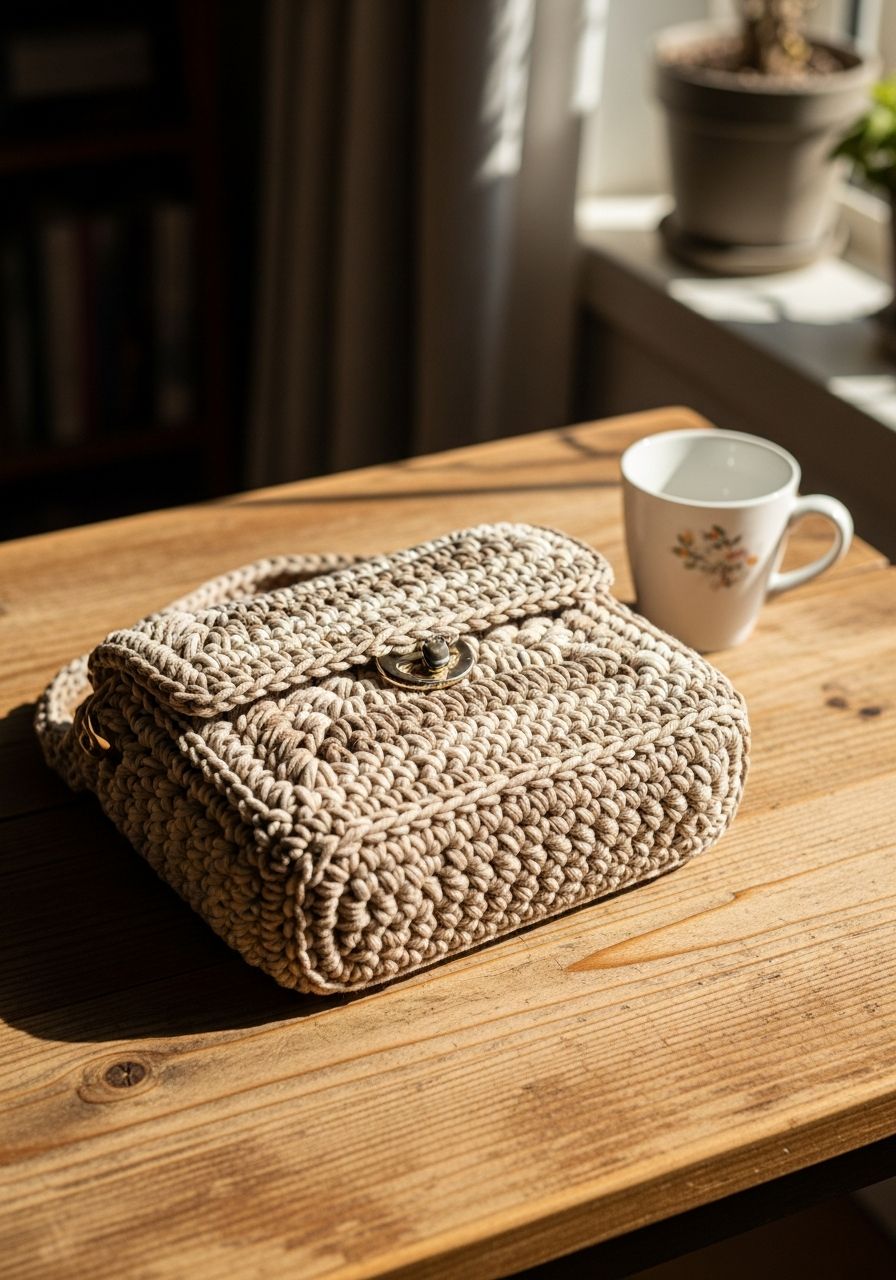
Imagine stepping out with a sophisticated, handmade accessory that perfectly holds its shape, reflecting your unique style and skill. No more slouchy, shapeless bags – today, you’re going to master the art of creating a stunning, sturdy Crochet Structured Bag that looks store-bought but carries the priceless touch of your own hands. Get ready to transform yarn into a fashion statement you'll be proud to carry everywhere!
Introduction
Welcome, fellow fiber artists! If you've ever admired those beautifully defined handbags in boutiques and wished you could crochet one that stands tall and proud, your wish is about to come true. This comprehensive guide and free pattern will walk you through every stitch, technique, and secret to crafting a structured bag that not only looks incredible but also offers practical durability. Whether you’re an experienced crocheter looking for a new challenge or an adventurous beginner ready to level up, this project is designed to empower you to create a high-quality, functional piece that will turn heads and become a staple in your wardrobe.
Why You'll Love This Pattern
- Sophisticated Style: This pattern results in a polished, modern bag that rivals commercially made accessories, adding a touch of elegance to any outfit.
- Impressive Durability: Learn techniques to ensure your bag maintains its shape and stands up to daily use, making it a truly functional piece.
- Skill-Building Adventure: Discover new tricks for creating firmness, attaching hardware, and achieving a professional finish, expanding your crochet repertoire.
- Customization Potential: The clean design serves as a perfect canvas for personalization. Experiment with different yarn colors, hardware, or even add embellishments to make it uniquely yours.
- Ultimate Satisfaction: There’s nothing quite like the pride of carrying a handcrafted item that you poured your love and skill into. Prepare for compliments!
Materials Needed
- Yarn: Approximately 400-500 yards of a sturdy, non-stretchy yarn. Recommended options include macrame cord (3mm-5mm), T-shirt yarn, mercerized cotton, or a strong cotton/acrylic blend in a worsted to chunky weight. The amount will vary slightly depending on your chosen yarn and tension.
- Crochet Hook: Size H/8 (5.0mm) or I/9 (5.5mm), or the size recommended for your yarn to achieve a tight fabric.
- Bag Stiffener (Optional but Recommended): Plastic canvas sheets (7-mesh is ideal) for the base and sides, or a sturdy bag bottom insert.
- Lining Fabric (Optional but Recommended): About 1/2 yard of sturdy cotton or canvas fabric for a professional finish and added durability.
- Bag Hardware:
- Two 1-inch D-rings
- One magnetic snap closure or a zipper (7-9 inches)
- Bag strap (either a purchased leather/chain strap or materials to crochet your own)
- Notions: Scissors, tapestry needle, stitch markers, fabric glue (for stiffener), sewing needle, matching thread (for lining/hardware).
Gauge & Sizing
Achieving a tight, dense fabric is crucial for a structured bag. Your gauge should be firm, with minimal gaps between stitches.
Gauge: 14 single crochet (sc) stitches and 16 rows = 4 inches (10 cm) using recommended yarn and hook, worked tightly.
To check your gauge: Chain 17. Sc in 2nd ch from hook and across (16 sc). Ch 1, turn. Work 15 more rows of sc. Measure your swatch. If it's too large, go down a hook size. If it's too small, go up a hook size. Adjust until you achieve the desired density.
Finished Bag Dimensions (Approximate): 9 inches wide x 6 inches tall x 3 inches deep (23 cm x 15 cm x 7.5 cm).
Abbreviations
- ch: Chain
- sl st: Slip Stitch
- sc: Single Crochet
- hdc: Half Double Crochet
- dc: Double Crochet
- inc: Increase (work 2 sc in the same stitch)
- dec: Decrease (sc2tog – single crochet 2 together)
- Rnd: Round
- st(s): Stitch(es)
- BLO: Back Loop Only
- FO: Fasten Off
Step-by-Step Pattern
Part 1: The Bag Base
We'll create a sturdy oval base, working in continuous rounds to minimize seams.
- Rnd 1: Ch 21. Sc in 2nd ch from hook and in next 18 ch, 3 sc in last ch. Working along the opposite side of the chain, sc in next 18 ch, 2 sc in last ch. (42 sts)
- Rnd 2: 2 sc in first st, sc in next 18 sts, 2 sc in next 3 sts, sc in next 18 sts, 2 sc in next 2 sts. (48 sts)
- Rnd 3: Sc in first st, 2 sc in next st, sc in next 18 sts, (sc in next st, 2 sc in next st) 3 times, sc in next 18 sts, (sc in next st, 2 sc in next st) 2 times. (54 sts)
- Rnd 4: (Sc in next 2 sts, 2 sc in next st), sc in next 18 sts, (sc in next 2 sts, 2 sc in next st) 3 times, sc in next 18 sts, (sc in next 2 sts, 2 sc in next st) 2 times. (60 sts)
- Rnd 5: Sl st in BLO around for the entire round. This creates a crisp edge for the sides to build upon. (60 sts). Do NOT turn, continue working in a spiral for the sides.
Part 2: The Bag Sides
Working upwards from the base, using a dense stitch to maintain structure.
- Rnd 6: Working in both loops again, sc in each st around. (60 sts)
- Rnd 7-25 (or to desired height): Sc in each st around. Continue working in a spiral. Use a stitch marker to mark the beginning of each round. For a bag 6 inches tall, approximately 20 rounds of single crochet will be needed after the foundation round. (60 sts per round)
- Finishing the sides: After your final round, sl st in the next 2-3 stitches to create a smooth transition. FO, weave in ends.
Part 3: The Flap
This flap is designed to cover the top opening and can be customized.
- Row 1: Ch 26. Sc in 2nd ch from hook and across. (25 sc)
- Row 2-20: Ch 1, turn. Sc in each st across. (25 sc)
- Optional Shaping (for a rounded flap): On the final row, work 3 sc in the corners of the short edge as you sc across.
- Edging: Ch 1, turn. Work a round of sc evenly around the entire flap edge, working 3 sc in each corner for a neat finish. Join with a sl st to first sc. FO, leaving a long tail for sewing.
Part 4: D-Ring Tabs (Make 2)
- Row 1: Ch 6. Sc in 2nd ch from hook and across. (5 sc)
- Row 2-8: Ch 1, turn. Sc in each st across. (5 sc)
- FO, leaving a long tail for sewing.
Part 5: Assembly and Finishing
- Attach D-Ring Tabs: Fold each tab in half and thread a D-ring through the fold. Position these tabs on the inside top edge of the bag, centered on the short sides. Using your tapestry needle and the long tail, securely sew them in place.
- Attach Flap: Position the flap on the back of the bag (opposite the front opening). Using the long tail from the flap, sew it securely to the top back edge of the bag. Ensure it’s centered.
- Insert Stiffeners (if using):
- Cut plastic canvas to fit the base of the bag perfectly. Apply a thin layer of fabric glue to one side and press it firmly to the inside bottom of the bag.
- Cut plastic canvas pieces to fit snugly against the long sides and short sides of the bag. Insert them, using fabric glue if desired, to adhere them to the inside walls.
- Install Magnetic Snap: Locate the center of the front of the bag, about 1 inch down from the top edge. Mark the position for the male part of the snap. Install it according to package directions. Close the bag flap to mark the corresponding position for the female part of the snap on the underside of the flap. Install.
- Add Lining (if using):
- Measure the interior dimensions of your bag (width, depth, height).
- Cut fabric pieces for the bottom, front/back, and sides, adding 1/2 inch seam allowance to all edges.
- Sew the fabric pieces together to create a fabric "bag" that fits snugly inside your crochet bag.
- Hem the top edge of the fabric lining.
- Carefully insert the lining into the crochet bag, aligning the seams. Hand-sew the top edge of the lining to the inside top edge of the crochet bag using a whip stitch and matching thread.
- Attach Strap: Clip your chosen bag strap to the D-rings.
- Weave in all remaining ends securely.
Pro Tips for a Professional Finish
- Choose Your Yarn Wisely: The yarn choice is paramount for structure. Avoid super-soft, stretchy yarns. Opt for fibers with good memory and density like cotton, jute, or specialized bag yarns.
- Work Tightly: Use a hook one or two sizes smaller than typically recommended for your yarn to create a very dense, firm fabric that helps the bag hold its shape.
- Consider a Bag Base: A pre-made bag bottom (leather or sturdy plastic) or a custom-cut plastic canvas insert for the base provides immediate, excellent structure.
- Add Side Stiffeners: For truly rigid sides, cut plastic canvas panels to fit the interior of each side and sew or glue them in place before adding a lining.
- Lining is Key: A well-sewn fabric lining not only hides the stiffeners and yarn tails but also adds another layer of structure and durability to your bag.
- Block Strategically: While traditional blocking might soften some crochet, for structured bags, consider steam blocking to set the shape, especially if using cotton or natural fibers. Alternatively, a stiffening spray can be applied after the bag is complete.
- Practice Your Seams: Invisible seams and neat joining techniques contribute significantly to a polished final look. Take your time with assembly!
Frequently Asked Questions
What kind of yarn is best for a structured bag?
For optimal structure, choose yarns that are firm and have minimal stretch. Excellent choices include macrame cord, T-shirt yarn, mercerized cotton, jute, or strong cotton/acrylic blends. Avoid very soft, fluffy, or highly elastic yarns like chenille or some superwash wools, as they tend to slouch. A worsted to chunky weight yarn is usually best for creating a substantial bag.
How do I make my crochet bag truly stand up straight?
Several strategies work together to achieve a truly structured bag. First, work with a smaller hook than recommended for your yarn to create a very tight, dense fabric. Second, use a sturdy yarn type as mentioned above. Third, incorporate stiffening materials: a plastic canvas base and side inserts are highly effective. Finally, adding a tightly sewn fabric lining provides an extra layer of support and helps the bag maintain its form.
Can I customize the size of this bag?
Absolutely! The beauty of crochet is its adaptability. To customize the width and depth of the bag, adjust the initial chain length and the number of increase rounds in the base. For example, a longer initial chain will create a wider bag, and more increase rounds will make it deeper. To adjust the height, simply work more or fewer single crochet rounds for the sides (Part 2). Remember to adjust the flap size accordingly to match your new bag dimensions.
You've now got all the tools and knowledge to create a truly magnificent, structured crochet bag. This isn't just a project; it's an opportunity to create a lasting accessory that showcases your skill and personal style. Take your time, enjoy the process, and don't hesitate to make it your own. We can't wait to see your stunning creations!