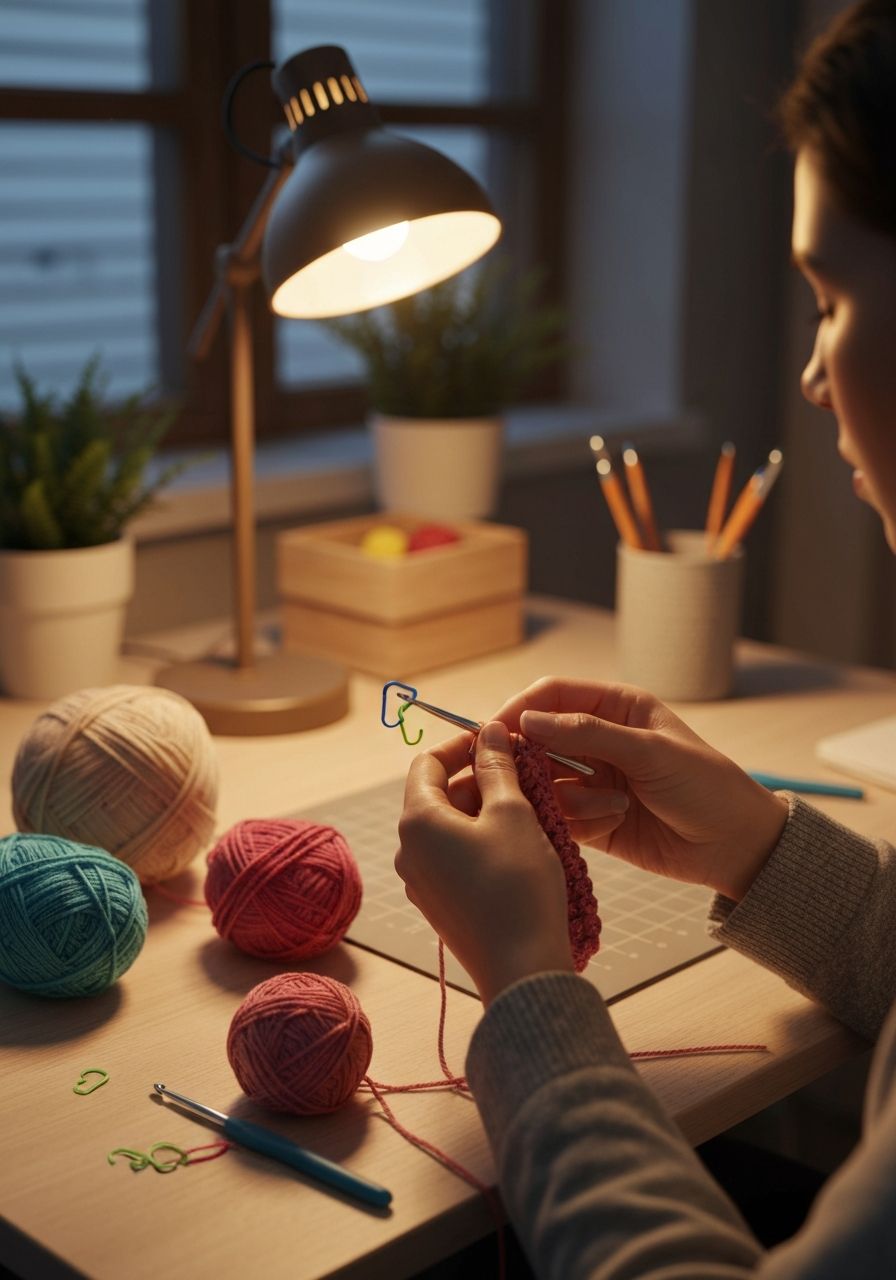
Imagine the crushing disappointment of reaching the end of a beautiful crochet project, only to find one side is shorter than the other, or your lovely amigurumi is lopsided. That sinking feeling of having to unravel hours of work, simply because a stitch was missed or added somewhere along the way, is a pain every crocheter knows. But what if I told you there’s a simple, magical tool that can banish that frustration forever, making your stitches perfect, your edges straight, and your projects consistently beautiful? Enter crochet stitch markers – your new best friend in the world of yarn, transforming your beginner journey from daunting to delightfully confident!
Stitch markers are small, often colorful, clips or rings that you attach to your crochet fabric to keep track of specific stitches or sections. They are an indispensable tool for crocheters of all skill levels, but for beginners, they are particularly crucial. They eliminate the guesswork, prevent errors, and build a strong foundation for accurate stitch counting, which is the cornerstone of successful crochet.
Why It Matters
You might be thinking, "Do I really need another tool? Can't I just count?" While counting is essential, stitch markers are your silent, ever-vigilant assistants. Here’s why they are an absolute game-changer:
- Unwavering Counting Accuracy: The most fundamental use of a stitch marker is to mark the first (or last) stitch of a row or round. This prevents you from accidentally skipping stitches or adding extra ones, ensuring your stitch count remains consistent throughout your project. No more uneven edges or warped shapes!
- Effortless Round/Row Identification: In projects worked in the round, especially spiral patterns like amigurumi, it's incredibly easy to lose track of where one round ends and the next begins. A marker clearly indicates the start of your round, allowing you to seamlessly transition and maintain your pattern.
- Highlighting Special Stitches: Many patterns involve increases (inc), decreases (dec), color changes, or specific pattern repeats. Placing a marker at these crucial points helps you identify them quickly on subsequent rows, ensuring you execute the pattern correctly without constantly re-reading or recounting.
- Saving Precious Time and Frustration: Imagine crocheting for an hour, only to realize you've miscounted 20 stitches back. That's a lot of "frogging" (unraveling yarn, because "rip it, rip it" sounds like a frog!). Stitch markers drastically reduce the need for frogging, saving you time, yarn, and your sanity.
- Building Confidence: For beginners, successfully completing a project without errors is a huge confidence booster. Stitch markers empower you to focus on learning new stitches and techniques, knowing that your foundational counting is secure.
What You Need to Know
Before you dive into using them, let's get acquainted with the different types of stitch markers and when to deploy them.
Types of Stitch Markers
- Locking Stitch Markers: These are the most common and highly recommended for beginners. They resemble tiny safety pins and clip securely into a stitch, preventing them from falling out. They are fantastic for marking the beginning of a round or specific stitches you absolutely don't want to lose track of.
- Split Ring Stitch Markers: These are open, flexible rings that you slide onto a stitch. They are easy to insert and remove, making them ideal for marking stitches you'll need to access frequently. However, they can sometimes slip out if your yarn is very smooth or loosely worked.
- Coilless Safety Pins / Bulb Pins: Often confused with locking markers, these are more like small pear-shaped safety pins without the coil. They are gentle on yarn and good for temporary marking, but not as secure as true locking markers.
- Scrap Yarn: The ultimate budget-friendly, always-available stitch marker! Simply loop a contrasting piece of yarn through a stitch and tie it loosely. It's secure, won't damage your yarn, and you likely already have some on hand.
When to Use Them
- Beginning of a Round: Always! Especially in spiral rounds where there's no visible seam.
- First/Last Stitch of a Row: Helps maintain straight edges and ensures you're always working into the correct stitch for the next row.
- Specific Stitch Counts: If a pattern requires you to work a certain number of stitches before a repeat, or if you're working a large number of stitches, mark every 10th or 20th stitch to help with counting.
- Special Stitches: Mark the location of increases, decreases, color changes, cable turns, or any other critical stitch in your pattern.
- Joining Points: When joining pieces together, markers can hold sections in place temporarily, making it easier to sew or crochet them together evenly.
How to Insert and Remove
For locking markers, simply open the clasp, slide the pin portion under both loops of the stitch you want to mark, and close the clasp. To remove, open the clasp and pull it out. For split rings, gently pull the opening apart and slide the ring under both loops of the stitch, then release. To remove, simply slide it off.
Step-by-Step: Mastering Your Markers
Let's walk through some practical examples of how to use stitch markers in common crochet scenarios. We'll create a simple flat circle, a staple in many amigurumi projects, and then look at marking a straight edge.
Using a Marker for the Beginning of a Round (Spiral Method)
This is crucial for projects like amigurumi where you work continuously in a spiral without joining rounds with a slip stitch.
- Start with a Magic Ring: Create a magic ring. Chain 1 (does not count as a stitch). Work 6 single crochet (sc) stitches into the magic ring. Pull the tail to close the ring. You now have 6 stitches.
- Round 1 (First Stitch): Insert your hook into the first sc you made (the one closest to your working loop). Yarn over and pull up a loop. Before completing the sc, grab a locking stitch marker.
- Place Marker: Place the locking stitch marker into the loop currently on your hook, then complete the sc (yarn over, pull through both loops). Alternatively, you can complete the sc, and then place the marker directly into the 'V' of the top of that first sc you just created. This stitch is now marked as the *first stitch of Round 1*.
- Continue Round: Work 1 sc into each of the remaining 5 stitches. When you reach your marked stitch, you've completed Round 1. (6 stitches total).
- Round 2 (Increase Round): Remove the stitch marker. Work 2 sc into the stitch where the marker was (this is the first stitch of the previous round).
- Replace Marker: Immediately place your stitch marker into the *first* sc of the two sc stitches you just made. This marks the *new* beginning of Round 2.
- Continue Round: Work 2 sc into each remaining stitch around. When you reach your marked stitch again, you've completed Round 2. You should have 12 stitches.
- Round 3 (Sc, Inc Repeat): Remove the stitch marker. Work 1 sc into the stitch where the marker was.
- Replace Marker: Place your stitch marker into this first sc you just made. This marks the beginning of Round 3.
- Continue Round: *Work 2 sc into the next stitch, then 1 sc into the next stitch.* Repeat from * to * around until you reach your marked stitch. You should have 18 stitches.
By consistently moving your marker to the *first stitch of the new round*, you'll always know exactly where each round begins, ensuring perfect circles!
Using Markers for Straight Edges in Rows
For projects worked in rows, marking the first and last stitch can prevent uneven edges.
- Foundation Chain: Chain 10.
- Row 1: Single crochet (sc) in the 2nd chain from the hook and in each chain across. (You should have 9 sc).
- Mark First Stitch: Chain 1, turn your work. Work 1 sc into the first stitch of the row. Immediately place a locking stitch marker into the top of this sc.
- Mark Last Stitch: Work sc in the next 7 stitches across. Work 1 sc into the very last stitch. Place a second locking stitch marker into the top of this last sc. (You now have markers at both ends).
- Row 2: Chain 1, turn your work. Remove the marker from the first stitch. Work 1 sc into the now-unmarked first stitch. Place your marker back into this new first sc.
- Continue Row: Work sc in each stitch across. When you reach the second marker, remove it, work 1 sc into that stitch, and replace the marker in the new last sc you just made.
This method ensures you always crochet into the correct first and last stitch, leading to beautifully straight edges every time.
Common Mistakes to Avoid
Even with such a simple tool, there are a few pitfalls beginners often encounter:
- Not Using Them At All: The most common mistake! Don't underestimate their power. Even for simple projects, they provide invaluable peace of mind.
- Placing in the Wrong Spot: Always place your marker under *both* loops of the top of the stitch. Placing it through only one loop, or in the space between stitches, can lead to confusion or the marker falling out.
- Forgetting to Move the Marker: Especially in continuous rounds, if you don't move the marker to the first stitch of each new round, it quickly becomes useless. Make it a habit to move it immediately after working the new first stitch.
- Using the Wrong Type: While locking markers are generally safe, using an open split ring on a very loose or delicate yarn might cause it to slip out. Match your marker type to your yarn and project.
- Too Few or Too Many: While helpful, don't overdo it. You don't need to mark every single stitch unless the pattern specifically calls for it. A few well-placed markers are often more effective than a dozen haphazard ones.
Pro Tips
- Color Coding for Clarity: If you're using multiple markers, consider using different colors for different purposes. For example, a red marker for the start of a round, blue for increases, and green for decreases.
- DIY Alternatives: Don't have official markers? No problem! Bent paperclips, bobby pins, or small snippets of contrasting scrap yarn (knotted loosely) work perfectly.
- Invest in a Small Stash: While you don't need hundreds, having 10-20 locking stitch markers on hand is a good starting point for most projects. They're inexpensive and invaluable.
- Practice on a Swatch: Before diving into a complex pattern, practice using your markers on a small swatch. This helps you get comfortable with placement and movement without the pressure of a full project.
- Marking Repeats: For patterns with long repeats (e.g., "[sc 5, hdc 1, dc 2] repeat 6 times"), mark the beginning of each repeat section to ensure you're maintaining the pattern consistently.
Frequently Asked Questions
Can I use anything else as a stitch marker?
Absolutely! Many crocheters use household items like bent paperclips, bobby pins, or even small safety pins (ensure they don't snag your yarn). The most common and effective DIY marker is a small piece of contrasting scrap yarn, simply looped through the stitch and tied loosely.
How many stitch markers do I need?
For most beginner projects, 5-10 locking stitch markers will suffice. As you advance to more complex patterns, especially those with intricate shaping, colorwork, or multiple repeats, you might find having 20-30 to be more helpful. They are usually sold in packs, so buying a small assortment is a great way to start.
Should I place the marker in the stitch I just made or the next one?
For marking the beginning of a round or row, you should almost always place the marker in the *first stitch you just completed* for that round/row. This allows you to easily identify where to work your first stitch when you come back around to it for the next round/row. If marking a specific stitch for a pattern element (like an increase point), place it directly into the stitch where that action occurs or is about to occur.
Crochet stitch markers are a small investment that yields huge returns in accuracy, confidence, and enjoyment. They free you from constant recounting and allow you to immerse yourself in the creative flow of your project. Embrace these tiny heroes, practice using them, and watch your crochet skills blossom. Happy hooking!