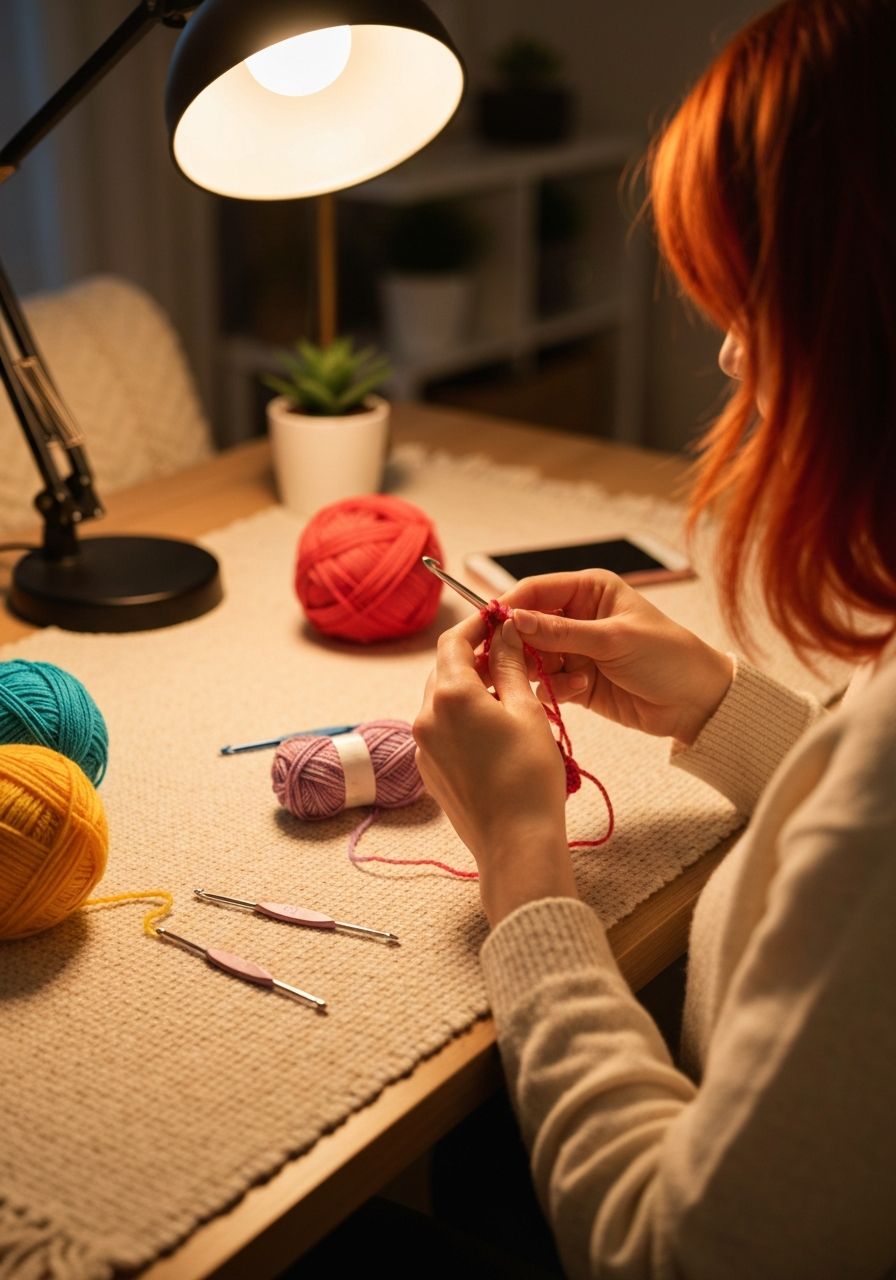
Imagine the warmth of a handmade blanket, the joy of a personalized gift, or the sheer satisfaction of bringing yarn to life with your own hands. This isn't just a dream; it's a tangible reality waiting for you, and it all begins with the right foundation. Embarking on your crochet journey is an exciting adventure, and assembling your perfect Crochet Starting Kit is the very first step. Get ready to unlock your creative potential and weave your dreams into reality!
Welcome, future crocheter! This guide is designed to demystify the initial steps, ensuring you have everything you need to embark on your crafting adventure with confidence. We’ll walk you through selecting the right tools, understanding basic terminology, and even guide you through your very first stitches, setting you up for a lifetime of beautiful creations.
Why It Matters
Starting any new hobby can feel overwhelming, and crochet is no exception. A well-chosen Crochet Starting Kit isn't just a collection of tools; it's your first investment in success and enjoyment. Trying to learn with the wrong hook, tricky yarn, or missing essential notions can quickly lead to frustration, turning a potentially joyous craft into a chore. By understanding what you need and why, you'll minimize common beginner pitfalls, build good habits from the start, and find genuine pleasure in every stitch. It's about setting yourself up for a smooth, enjoyable learning curve, allowing you to focus on the creative process rather than wrestling with unsuitable materials.
What You Need to Know
Before you dive hook-first into yarn, let's explore the fundamental components of your ultimate Crochet Starting Kit.
Crochet Hooks
Your hook is the wand that transforms yarn into fabric. Hooks come in various materials (aluminum, steel, bamboo, plastic, wood) and sizes. For beginners, a smooth, aluminum hook with an ergonomic handle is often recommended for comfort and ease of glide. Sizes are typically denoted by a letter/number in the US system (e.g., G-6, H-8, I-9) and by millimeters in the metric system (e.g., 4.0mm, 5.0mm, 5.5mm). A mid-range size like an H/8 (5.0mm) or I/9 (5.5mm) is generally a good starting point, as it works well with commonly available worsted weight yarn.
Yarn
Choosing your first yarn is exciting! For beginners, look for:
- Fiber Type: Acrylic or cotton are excellent choices. They are affordable, durable, widely available, and easy to work with. Avoid fuzzy or dark-colored yarns initially, as they make it harder to see your stitches.
- Weight: Worsted weight (also known as Medium #4) is ideal. It’s thick enough to see your stitches clearly but not so bulky that it’s cumbersome.
- Color: Light, solid colors will be your best friend. You'll be able to distinguish individual stitches and learn the mechanics much faster.
Essential Notions
These small but mighty tools will make your crochet life much easier:
- Stitch Markers: Essential for marking the beginning of a round or specific stitches. Use locking stitch markers (like safety pins) to ensure they don't fall out.
- Tapestry Needle: A blunt-tipped, large-eyed needle used for weaving in yarn tails and sewing pieces together.
- Scissors: A small pair of sharp scissors for cutting yarn.
- Measuring Tape/Ruler: For checking your gauge (stitch and row count over a specific area) and project dimensions.
Pattern Reading Basics
Crochet patterns use a universal language of abbreviations. Here are some you'll encounter:
- ch: Chain (the foundation of most projects)
- sl st: Slip Stitch (for joining or moving yarn without adding height)
- sc: Single Crochet (the shortest basic stitch)
- hdc: Half Double Crochet (mid-height stitch)
- dc: Double Crochet (a taller basic stitch)
- inc: Increase (working two stitches into one stitch to add stitches)
- dec: Decrease (working two stitches together to reduce stitches)
- MR: Magic Ring/Magic Circle (for starting projects in the round without a hole)
Your First Stitches & Project
It’s time to get hands-on! Follow these steps to learn the fundamental stitches.
-
Holding Your Hook and Yarn
There are two main ways to hold your hook: the pencil grip or the knife grip. Experiment to see which feels most natural and comfortable for you. For the yarn, drape it over your non-dominant hand's index finger to create tension, guiding it with your thumb and middle finger. Consistent tension is key for even stitches.
-
The Slip Knot
This is how you attach your yarn to the hook. Make a loop with your yarn, ensuring the working yarn (attached to the skein) is behind the tail. Insert your hook into the loop, grab the working yarn, and pull it through the loop. Pull both the working yarn and the tail to tighten the knot around your hook, but not too tightly – it should slide easily.
-
The Foundation Chain (ch)
The chain is the basis for most flat crochet projects. With a slip knot on your hook, yarn over (wrap the yarn from back to front over your hook), then pull that yarn through the loop on your hook. You've made one chain stitch! Repeat this to create a chain of desired length. Practice making chains that are consistent in size – not too tight, not too loose.
-
Single Crochet (sc)
This is often the first stitch learned. It's sturdy and creates a dense fabric.
Practice Swatch:
- Chain 11.
- Row 1: Insert hook into the 2nd chain from the hook, yarn over, pull up a loop (2 loops on hook). Yarn over, pull through both loops. (1 single crochet made). Repeat across the chain. You should have 10 sc.
- Row 2: Chain 1 (this is your turning chain, it does not count as a stitch), turn your work. Insert hook into the first sc of the previous row, yarn over, pull up a loop. Yarn over, pull through both loops. Repeat across, making 1 sc in each stitch. You should have 10 sc.
- Repeat Row 2 for 10-15 rows to create a small swatch.
-
Half Double Crochet (hdc)
A versatile stitch, taller than sc but shorter than dc, offering good drape.
Practice Swatch:
- Chain 12.
- Row 1: Yarn over, insert hook into the 3rd chain from the hook, yarn over, pull up a loop (3 loops on hook). Yarn over, pull through all 3 loops. (1 half double crochet made). Repeat across the chain. You should have 10 hdc.
- Row 2: Chain 2 (this is your turning chain, it does not count as a stitch), turn your work. Yarn over, insert hook into the first hdc of the previous row, yarn over, pull up a loop. Yarn over, pull through all 3 loops. Repeat across, making 1 hdc in each stitch. You should have 10 hdc.
- Repeat Row 2 for 10-15 rows.
-
Double Crochet (dc)
A taller, looser stitch that works up quickly and creates a more open fabric.
Practice Swatch:
- Chain 13.
- Row 1: Yarn over, insert hook into the 4th chain from the hook, yarn over, pull up a loop (3 loops on hook). Yarn over, pull through 2 loops, yarn over, pull through remaining 2 loops. (1 double crochet made). Repeat across the chain. You should have 10 dc.
- Row 2: Chain 3 (this is your turning chain, it does not count as a stitch), turn your work. Yarn over, insert hook into the first dc of the previous row, yarn over, pull up a loop. Yarn over, pull through 2 loops, yarn over, pull through remaining 2 loops. Repeat across, making 1 dc in each stitch. You should have 10 dc.
- Repeat Row 2 for 10-15 rows.
-
Starting a Project in the Round: Magic Ring & Amigurumi Basics
Many projects, especially amigurumi (crocheted toys), start in the round using a Magic Ring (MR). This technique creates a tight center hole. To make one, you essentially form a loop with your yarn, work your first stitches (e.g., 6 sc) into that loop, then pull the tail to close the hole. Once you're working in the round, you'll often use increases (inc – working two stitches into one stitch, e.g., '2 sc in next st') to expand your circle and decreases (dec – working two stitches together as one, e.g., 'sc2tog') to shape your work.
Example Round Pattern:
- Rnd 1: Make a Magic Ring, 6 sc into MR. Pull tail to close. (6 stitches)
- Rnd 2: Inc in each stitch around. (12 stitches)
- Rnd 3: (Sc in next st, inc) repeat 6 times. (18 stitches)
Use a stitch marker to mark the first stitch of each round when working in continuous spirals.
Common Mistakes to Avoid
- Inconsistent Tension: Your stitches might be too tight, making it hard to insert your hook, or too loose, resulting in a floppy fabric. Practice helps regulate this.
- Skipping Stitches or Adding Extra: This leads to uneven edges or wonky shapes. Always count your stitches at the end of each row or round. Stitch markers are your best friend!
- Choosing Challenging Yarn: Fuzzy, dark, or novelty yarns are beautiful but incredibly frustrating for beginners as they obscure the stitch definition. Stick to smooth, light-colored yarn.
- Not Swatching for Gauge: While less critical for your very first practice pieces, understanding gauge becomes vital for projects where size matters (like garments).
- Comparing Yourself to Others: Everyone starts somewhere! Embrace your unique learning journey and celebrate every single stitch you make.
Pro Tips
- Watch Video Tutorials: Seeing the stitches in action can clarify what written instructions might not.
- Practice Daily: Even 15-20 minutes a day can build muscle memory quickly.
- Start Simple: Your first projects should be squares or rectangles (dishcloths, scarves, placemats). Don't jump to complex garments or intricate amigurumi.
- Join a Community: Online forums, local groups, or social media communities offer support, inspiration, and answers to your questions.
- Label Your Hooks: If you buy a set, keep them organized. It saves time and frustration.
- Keep a Swatch Journal: Note down the hook size, yarn, and stitch you used for each practice swatch. This helps you understand how different combinations affect the fabric.
FAQ
What's the best hook size for beginners?
A mid-range hook size like H/8 (5.0mm) or I/9 (5.5mm) is generally recommended. These sizes are comfortable to hold and work well with worsted weight yarn, making it easier to see your stitches and develop consistent tension.
How do I choose yarn for my first project?
Opt for a smooth, light-colored worsted weight (Medium #4) acrylic or cotton yarn. Avoid dark colors, fuzzy textures, or very thin/thick yarns, as they can make it difficult to see your stitches and learn the basic movements.
Is it okay if my first projects aren't perfect?
Absolutely! Perfection is not the goal when you're learning. Your first few projects are for practice, building muscle memory, and understanding the mechanics of crochet. Embrace the imperfections – they are badges of your progress and part of your unique crafting story!
With your Crochet Starting Kit assembled and these foundational stitches under your belt, you're not just ready to crochet – you're ready to create magic. Every stitch you make adds to your skill set, building confidence and opening doors to endless possibilities. So grab your hook, choose your yarn, and let the rhythmic dance of fiber and hook bring your creative visions to life. Happy crocheting!