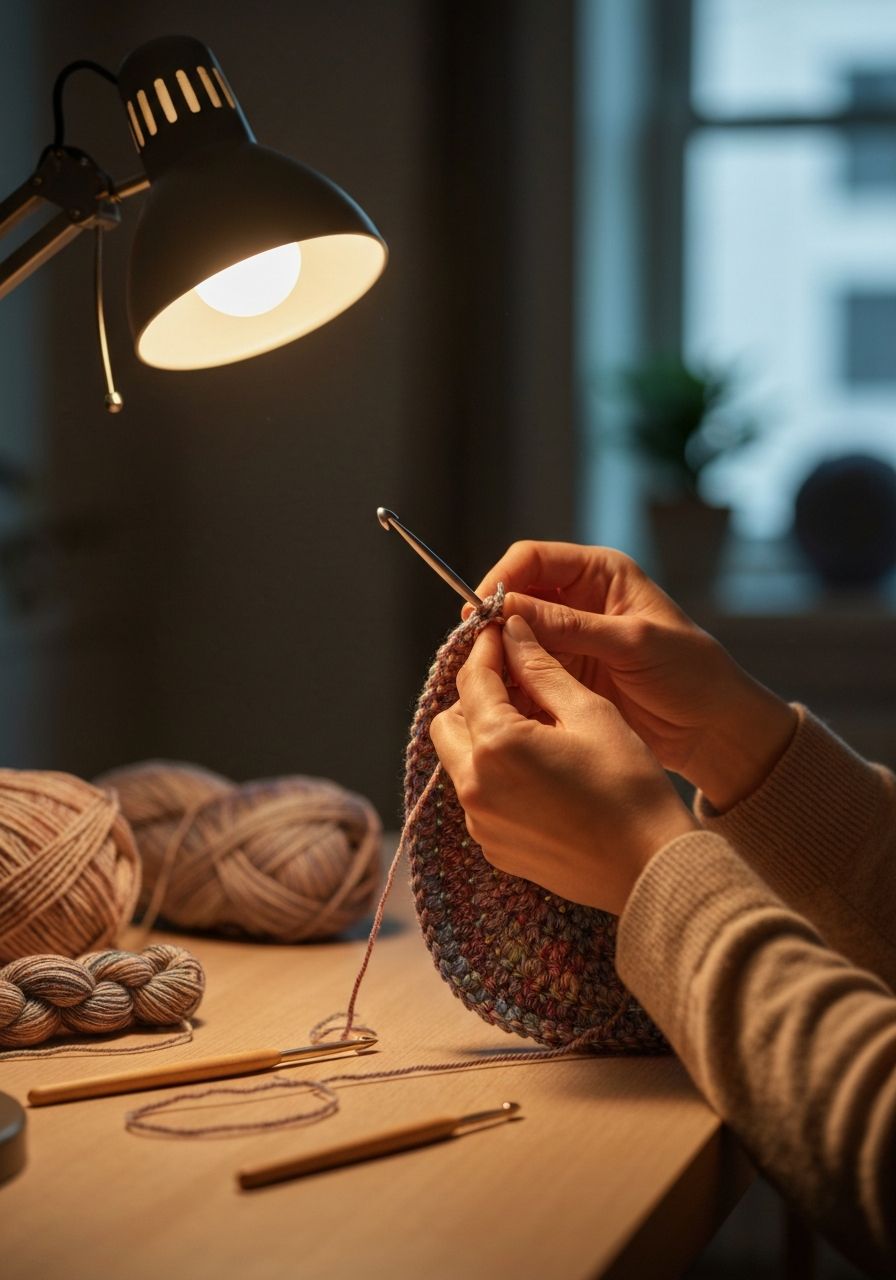
Imagine a secret weapon in your crochet arsenal, a subtle yet powerful stitch that transforms your projects from good to absolutely professional. That’s precisely what the Crochet Slip Stitch offers! It's the quiet MVP of crochet, essential for flawless finishes, invisible joins, and shaping that makes your creations truly sing. Get ready to unlock the magic of this foundational stitch and elevate every single thing you crochet, from delicate amigurumi to cozy blankets!
Why It Matters
While often overshadowed by its flashier cousins like the double crochet or the ever-popular single crochet, the slip stitch is arguably one of the most vital stitches in a crocheter's repertoire. It's the unsung hero that facilitates seamless transitions, creates sturdy edges, and can even form its own unique, dense fabric. Without a solid understanding of the slip stitch, many common patterns would be impossible to execute correctly, and your finished items might lack that polished, professional look we all strive for. Mastering this stitch opens doors to a vast array of techniques and projects, making it a cornerstone for any serious crocheter.
What You Need to Know
Before diving into the mechanics, let's cover the basics. The slip stitch is abbreviated as "sl st" in patterns. It's the shortest of all basic crochet stitches, adding almost no height to your work, which is precisely why it's so versatile for joining and moving across stitches. You'll need your trusty crochet hook and your preferred yarn. If you can make a slip knot and a chain stitch, you have all the prerequisite skills!
Mastering the Crochet Slip Stitch: Step-by-Step
The Basic Slip Stitch
Let's break down how to create this fundamental stitch, assuming you've already made a foundation chain or have stitches to work into.
- Insert Hook: Insert your crochet hook into the next designated stitch (or chain).
- Yarn Over: Wrap the yarn from back to front over your hook.
- Pull Through (Two Loops): Pull the yarn through the stitch AND immediately through the loop already on your hook. You should now have only one loop remaining on your hook.
That's it! You've made a slip stitch. Notice how flat and small it is compared to other stitches.
Using Slip Stitch to Join Rounds
One of the most common and crucial uses of the slip stitch is to join stitches, particularly when working in the round.
- To form a ring (e.g., for hats or amigurumi bases): Chain the required number of stitches (e.g., "ch 4"). Insert your hook into the very first chain you made. Yarn over, and pull the loop through that first chain AND the loop already on your hook. You've now formed a closed ring.
- To close a round: After completing the last stitch of your round (e.g., 12 sc), insert your hook into the top of the first stitch of that round. Yarn over, and pull through both the stitch and the loop on your hook. This creates a neat, almost invisible join, allowing you to seamlessly start the next round.
Using Slip Stitch for Movement
Sometimes, a pattern will instruct you to "sl st across" a certain number of stitches. This technique is used to move your working position to a different spot on your piece without adding height or bulk.
- Example: If a pattern instructs "Sl st in next 3 stitches, then work [pattern] in next stitch," you'll work a slip stitch into each of the next three stitches, effectively traveling across them without creating new fabric height, then proceed with the subsequent instructions from your new position. This is common in shaping garments or creating specific design elements.
Using Slip Stitch for Edging
A row of slip stitches around the perimeter of a project can create a wonderfully neat, firm, and almost invisible edge. It's perfect for strengthening openings like necklines or armholes, or simply providing a clean finish to a blanket or coaster.
- Technique: Work a slip stitch evenly into each stitch or along the raw edge of your project. This creates a subtle, cord-like finish that prevents stretching and adds a professional touch.
Using Slip Stitch for Seaming
When you need to join two pieces of crocheted fabric together, the slip stitch can create a surprisingly flat and sturdy seam, often less visible than a single crochet seam.
- Technique: Align the edges of your two crochet pieces (usually wrong sides together for an invisible seam, or right sides together for a more visible ridge). Insert your hook through both loops of the corresponding stitch on the first piece AND both loops of the corresponding stitch on the second piece. Yarn over, and pull through all loops on your hook. Continue this across the seam, ensuring your stitches are not too tight.
Common Mistakes to Avoid
- Too Tight Tension: This is by far the most common issue with slip stitches. Because it's a short stitch, it's easy to pull the yarn too tightly, making subsequent stitches or rounds incredibly difficult to work into. Your fabric might pucker or distort.
- Not Pulling Through All Loops: Beginners sometimes get confused and only pull through the stitch, leaving two loops on the hook, resembling a single crochet. Remember, a slip stitch means pulling through the stitch AND the loop on your hook in one smooth motion.
- Incorrect Stitch Placement for Joins: When joining rounds, ensure you're inserting your hook into the very first stitch of the round, not the chain-up (if applicable) or a random spot. Using a stitch marker in the first stitch of the round can be a lifesaver.
- Confusing it with Single Crochet: While they might look somewhat similar in their unfinished state, remember the slip stitch is shorter and serves different purposes. Always double-check your pattern's abbreviation!
Pro Tips for Perfect Slip Stitches
- Relax Your Grip: Seriously, this cannot be stressed enough. A relaxed hand and hook grip will prevent overly tight slip stitches. If you find yourself struggling, consciously loosen your tension.
- Go Up a Hook Size (Sometimes): For sections where you need to work into slip stitches later (like a slip stitch seam or a round joined with a slip stitch), try using a hook one size larger for *just* those slip stitches. This will make them easier to work into without affecting the overall gauge of your project.
- Practice on Scrap Yarn: Before integrating it into a complex project, practice making rows of slip stitches. This will help you find your rhythm and ideal tension.
- Use Stitch Markers for First Stitch: When joining rounds, place a stitch marker in the very first stitch of the round immediately after you make it. This makes it crystal clear where to insert your hook for the joining slip stitch at the end of the round.
- Understand Its Purpose: Always consider *why* the pattern is asking for a slip stitch. Is it to join, to move, to finish? Understanding its function helps you execute it with the correct tension and placement.
Frequently Asked Questions
Can I make an entire project with just slip stitches?
Absolutely! This technique is often called "Bosnian Crochet" or "Slip Stitch Crochet." It creates a very dense, sturdy, and warm fabric, perfect for items like rugs, bags, or winter accessories. It uses only slip stitches, often worked into the back loop only, to create a unique ribbed texture.
Why are my slip stitches so tight and hard to work into?
The primary culprit is almost always tension. Many crocheters naturally pull slip stitches tighter than other stitches. Focus on relaxing your grip, and as a practical tip, try making your slip stitches slightly looser than you think they should be. If you're joining rounds, consider using a larger hook for just the joining slip stitch to make it easier to work into for the next round.
Does a slip stitch count as a stitch in a pattern's stitch count?
Generally, no. When a slip stitch is used to join rounds or to move your hook to a different position, it typically doesn't count towards the stitch total for that round or row. However, if you're making a fabric composed entirely of slip stitches (Bosnian crochet), then each slip stitch does count as a stitch within the fabric itself.
The humble slip stitch might not be the star of every crochet pattern, but its importance cannot be overstated. From creating seamless garments to adding professional finishing touches, mastering this versatile stitch will undeniably elevate your crochet game. So grab your hook, relax your tension, and practice, practice, practice! You'll be wielding this secret weapon like a pro in no time, and your projects will thank you for it.