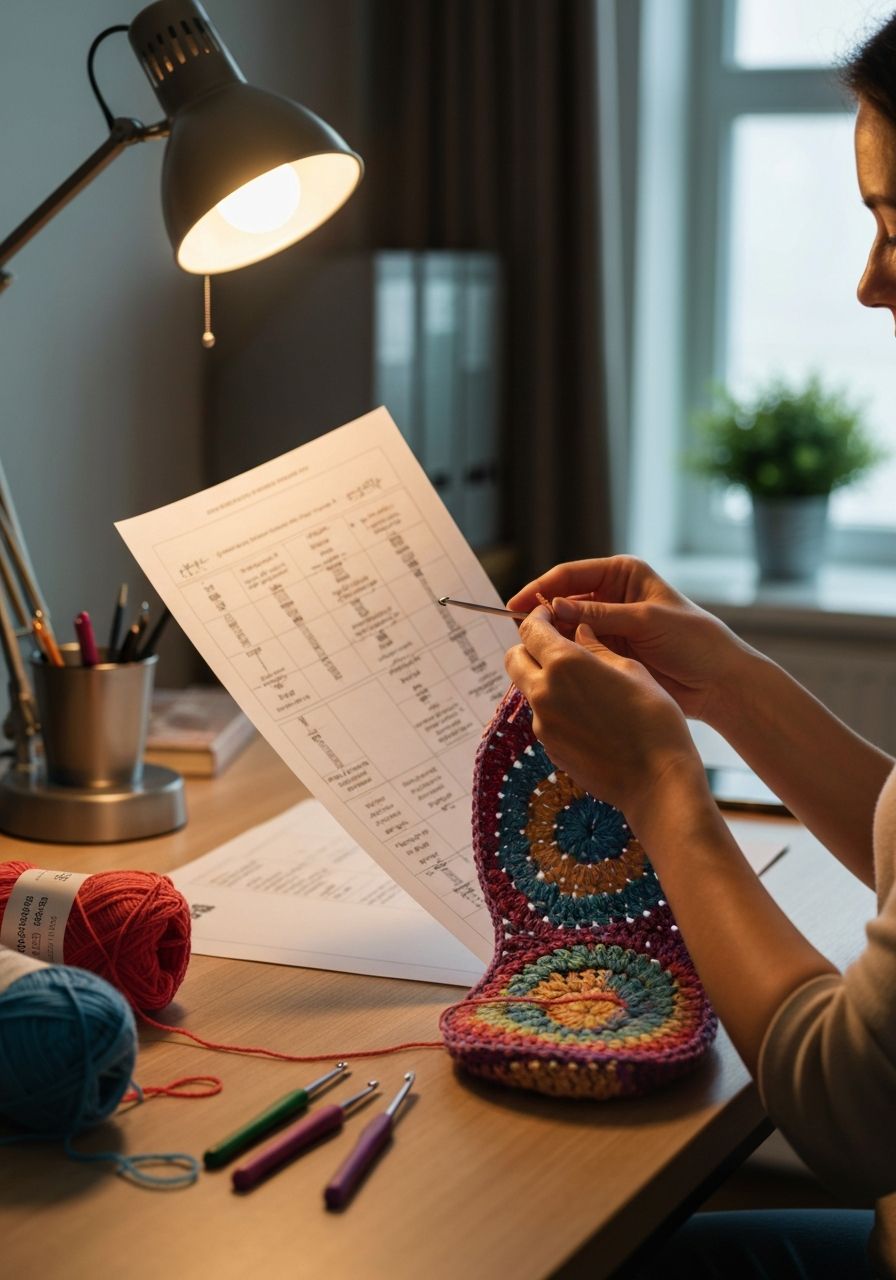
Imagine holding a ball of yarn, a simple hook, and knowing you can transform it into anything your heart desires – a cozy blanket, an adorable amigurumi, a stylish garment. The secret to unlocking this boundless creative potential, to truly bringing your visions to life, lies in mastering crochet reading patterns. It’s like learning a magical language that opens up an entire universe of designs, empowering you to move beyond basic stitches and craft intricate, beautiful pieces with confidence and joy. Get ready to embark on an exciting journey where every pattern becomes a clear roadmap to your next handmade masterpiece!
Welcome, fellow yarn enthusiast, to your ultimate guide to deciphering crochet patterns! If the thought of looking at a page full of abbreviations, numbers, and asterisks makes your head spin, don't worry – you're not alone. Many beginners find pattern reading daunting, but it's a skill that, once learned, will revolutionize your crochet experience. This article will break down everything you need to know, from understanding basic symbols to tackling complex instructions, turning confusion into creation.
Why It Matters: The Power of Pattern Reading
Why bother learning to read patterns when there are video tutorials galore? While videos are fantastic learning tools, relying solely on them limits your creative freedom and long-term growth. Here’s why mastering pattern reading is essential:
- Unlock Endless Projects: The vast majority of original designs, especially unique or complex ones, are shared as written patterns. Learning to read them means you'll never be restricted by the availability of a video tutorial again.
- Boost Your Confidence: Successfully following a written pattern gives you a profound sense of accomplishment and the confidence to tackle more challenging projects.
- Develop Deeper Understanding: Patterns force you to think about stitch placement, structure, and shaping, deepening your overall understanding of how crochet works.
- Join a Global Community: Pattern reading is a universal language among crocheters. It allows you to share, discuss, and troubleshoot projects with a worldwide community of makers.
- Customize and Create: Once you understand the mechanics, you can start adapting patterns, mixing elements, and eventually even designing your own unique creations.
What You Need to Know Before You Start
Before diving into a pattern, there are a few foundational elements you should be familiar with. Think of these as your pattern-reading toolkit:
Yarn Labels and Hook Sizes
- Yarn Weight: Labels indicate the yarn's thickness (e.g., fingering, sport, worsted, bulky). Patterns almost always specify the required yarn weight.
- Fiber Content: Acrylic, wool, cotton – this affects drape, warmth, and care.
- Hook Size: Labels recommend a range of hook sizes for the yarn. Patterns will give a specific size, often in both metric (mm) and US numbering/lettering (e.g., 5.0mm / H-8).
Gauge (Tension)
Gauge is the number of stitches and rows/rounds per inch using a specific hook and yarn. It is CRUCIAL for ensuring your finished project matches the pattern's intended size. A pattern will typically state something like: "Gauge: 16 sc and 18 rows = 4 inches (10 cm) with H/5.0mm hook."
Standard Crochet Abbreviations
This is the "secret language" of patterns. Most patterns include a list, but these are universally recognized:
- ch: chain
- sl st: slip stitch
- sc: single crochet
- hdc: half double crochet
- dc: double crochet
- tr: treble crochet (or triple crochet)
- st(s): stitch(es)
- sk: skip
- inc: increase (usually 2 stitches into one, e.g., 2 sc in next st)
- dec: decrease (working 2 stitches together, e.g., sc2tog)
- rnd(s): round(s) (for working in the round)
- row(s): row(s) (for working flat)
- yo: yarn over
- sp: space
- MR: Magic Ring (also Magic Circle or Adjustable Ring)
- "*" or "[ ]" or "( )": Indicates a section to be repeated.
- "x" or "times": How many times to repeat a section (e.g., "[sc, inc] x 6" means repeat that sequence 6 times).
Decoding Your First Crochet Pattern: A Step-by-Step Guide
1. Gather Your Supplies
Check the "Materials" section of your pattern. You'll need the specified yarn, crochet hook, scissors, a tapestry needle for weaving in ends, and often stitch markers (especially helpful for working in the round or marking specific stitches).
2. Read the Entire Pattern First
Seriously, do this! Don't just jump in. Read through from beginning to end. This gives you an overview of the project, helps you identify any unfamiliar techniques or special stitches, and alerts you to important notes (like "ch 2 does not count as a stitch"). Highlight or make notes on anything you need to look up or practice.
3. Understand Gauge
Before you even start the actual project, make a gauge swatch. Follow the pattern's instructions for the swatch (e.g., "ch 18, sc in 2nd ch from hook and across, then work 17 rows of sc"). Measure your swatch carefully to see if your stitch count and row count match the pattern's gauge over a 4-inch (10 cm) square. If your swatch is too big, use a smaller hook. If it's too small, use a larger hook. This step prevents disappointment later when your finished item is the wrong size.
4. Deciphering the Instructions
This is where the magic happens! Patterns are typically broken down by Row or Round, followed by detailed instructions and usually a stitch count in parentheses at the end.
Starting Your Project: Chain vs. Magic Ring
- Chain (ch): Used for flat projects (scarves, blankets) or foundations for working in rows. Example:
Ch 17.(This means make 17 chain stitches.) - Magic Ring (MR): Used for starting projects in the round (amigurumi, hats) to create a tight center hole. Example:
Make a MR.(This means create a magic ring.)
Reading a Row or Round
Each numbered line represents a new row or round of work. Let's look at some examples:
Example 1: Working in Rows (Flat Piece)
- Row 1: Ch 17. Sc in 2nd ch from hook and in each ch across. Turn. (16 sc)
- Row 2: Ch 1, sc in each st across. Turn. (16 sc)
- Row 3: Ch 1, *sc in first st, sk next st, dc in next st*, repeat from * to * 5 times. Sc in last st. Turn. (16 sts)
- Row 1: You start by making 17 chains. Then you work a single crochet into the second chain from your hook (skipping the first). Continue making one single crochet in each remaining chain across. "Turn" means to rotate your work so the back is facing you. The number in parentheses (16 sc) is your stitch count for that row – very important to check!
- Row 2: "Ch 1" creates a turning chain for height. "sc in each st across" means make one single crochet in every stitch from the previous row. Turn. (16 sc)
- Row 3: "*sc in first st, sk next st, dc in next st*, repeat from * to * 5 times" means you perform the sequence inside the asterisks (sc in the first stitch, skip the next, double crochet in the next) five times in a row. Then you finish the row with a single crochet in the very last stitch. Turn. (16 sts)
Example 2: Working in Rounds (Amigurumi Sphere Start)
- Rnd 1: Make a MR, 6 sc in ring. (6)
- Rnd 2: 2 sc in each st around. (12)
- Rnd 3: *Sc in next st, 2 sc in next st*, repeat from * to * 6 times. (18)
- Rnd 4: *Sc in next 2 sts, 2 sc in next st*, repeat from * to * 6 times. (24)
- Rnd 1: You create a magic ring, then work 6 single crochet stitches into it. The (6) indicates you should have 6 stitches at the end of this round.
- Rnd 2: "2 sc in each st around" means you will make two single crochet stitches into each of the 6 stitches from the previous round. Your stitch count should now be 12.
- Rnd 3: The asterisks indicate a repeat. You will "sc in the next stitch, then 2 sc in the next stitch" (this is an increase). You repeat this sequence a total of 6 times around the circle. Your stitch count for this round will be 18.
- Rnd 4: Similar to Rnd 3, you'll repeat the sequence of "sc in the next 2 stitches, then 2 sc in the next stitch" six times. This gives you 24 stitches.
Parentheses and Asterisks
These symbols are used to group instructions that need to be repeated. For example, "(sc, hdc) x 5" means you make one single crochet and one half double crochet, and you do that pair of stitches five times. "*sc, inc* repeat to end" means you perform the sequence inside the asterisks until you reach the last stitch(es) of the round/row.
Stitch Counts
Always check the stitch count at the end of each row or round. If your count is off, it means you've either missed a stitch, added an extra one, or made an error in a repeat. It's much easier to fix an error immediately than several rows later!
5. Finishing Up
Once you've completed all the rows/rounds, the pattern will instruct you to "fasten off" (cut your yarn and pull the tail through the last loop to secure it) and "weave in ends" (use your tapestry needle to hide all loose yarn tails). Some patterns will also include "assembly" instructions for putting pieces together, or "edging" instructions for adding a border.
Common Mistakes to Avoid
- Skipping the Gauge Swatch: This is the number one reason projects don't turn out the right size. Don't skip it!
- Not Reading the Whole Pattern First: You might miss crucial notes or special stitch instructions.
- Ignoring Stitch Counts: Regularly checking your stitch count prevents headaches and frogging (undoing your work) later on.
- Misinterpreting Turning Chains: Some patterns count "ch 2" as a hdc, others don't. Always check the pattern notes.
- Not Using Stitch Markers: Especially in the round, a stitch marker in the first stitch of a round is a lifesaver.
- Tight or Loose Tension: Inconsistent tension makes your fabric uneven and affects your gauge. Practice helps!
Pro Tips for Pattern Success
- Highlight as You Go: Print your pattern and use a highlighter to mark off each row or round as you complete it.
- Use a Row/Round Counter: Small digital counters or apps help you keep track without losing your place.
- Take Notes: If you modify something or have a particular challenge, write it down directly on your pattern or in a crochet journal.
- Join a Community: Online forums like Ravelry, Facebook groups, or local crochet clubs are fantastic resources for asking questions and getting help.
- Don't Be Afraid to "Frog": Sometimes, mistakes happen. It's perfectly normal and necessary to undo your work ("frog" means "rip it, rip it") to fix an error. It's part of the learning process!
- Practice New Stitches: If a pattern calls for a stitch you've never done, practice it on a small swatch before incorporating it into your project.
Frequently Asked Questions About Crochet Patterns
What if my stitch count is off?
Stop immediately! Go back to the beginning of the problematic row or round. Count your stitches carefully, looking for skipped stitches, accidental increases, or errors in your repeats. It's much easier to fix one row than to unravel an entire section.
What does "ch 1 does not count as a stitch" mean?
This means the chain stitch(es) at the beginning of a row or round are simply there to give your work the necessary height for the next stitch. You will not work into that chain stitch when you come back to it, nor will it be included in your final stitch count for that row/round. Always check the pattern notes, as some patterns *do* count the turning chain as a stitch.
How do I know which side is the right side (RS) or wrong side (WS)?
For projects worked in rows, the right side (RS) is typically the "front" or "public" side of your work, and the wrong side (WS) is the "back." Many patterns will specify which rows are RS and WS. In amigurumi or projects worked continuously in the round, there often isn't a distinct RS/WS, but the outside of your work (where the stitches look like little 'V's) is generally considered the "right side."
Learning to read crochet patterns is truly a game-changer. It transforms a seemingly complex code into a clear, concise language that empowers you to create anything you can imagine. With practice, patience, and these guidelines, you'll soon be confidently tackling patterns of all levels, expanding your crochet horizons, and enjoying the incredible satisfaction of bringing beautiful, handmade creations to life. Pick out a simple pattern, grab your hook, and start your journey today!