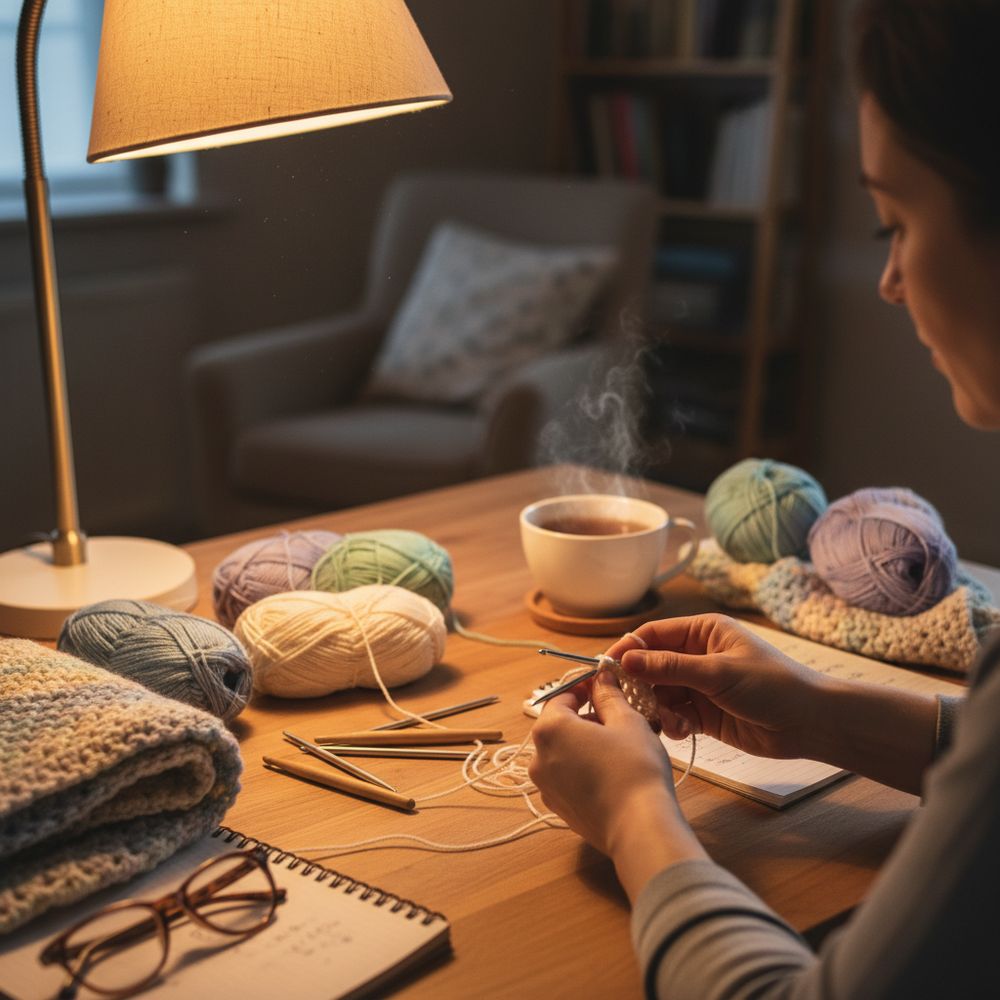
Imagine creating a beautiful, seamless crochet piece – a cuddly amigurumi, a perfectly fitted hat, or a cozy blanket square – without that annoying little hole in the center. That dream becomes your reality today as we unlock the secret to the incredible Crochet Magic Ring! This ingenious technique is the foundation for countless stunning projects, giving them a polished, professional finish that will make you beam with pride. Prepare to transform your crochet skills and open up a world of possibilities!
Welcome, fellow yarn enthusiasts! If you've ever started a crochet project in the round, like a hat or a toy, and found yourself frustrated by a small, visible gap in the center, you're not alone. Traditional methods often leave a tiny opening, no matter how tightly you pull. But fear not! The Crochet Magic Ring (also known as the adjustable ring, magic circle, or magic loop) is here to save the day. It's a simple yet revolutionary technique that allows you to create a tightly closed center, making your projects look flawlessly finished from the very first stitch. While it might seem intimidating at first glance, I promise you, it's easier than it looks, and with a little practice, you'll be working magic rings like a seasoned pro.
Why It Matters
Why should you bother learning a new technique when the 'chain 2' method exists? The answer is simple: superior results. The Crochet Magic Ring offers several significant advantages:
- No Hole, No Gap: This is the number one benefit. When you pull the tail end of the yarn tight, the ring cinches completely closed, leaving no visible hole in the center of your work. This is absolutely crucial for amigurumi (crocheted toys) where you don't want stuffing peeking out, or for hats where you want a smooth crown.
- Professional Finish: A gap-free center instantly elevates the look of your projects, giving them a polished, high-quality appearance that's hard to achieve with other starting methods.
- Versatility: Once mastered, the magic ring becomes your go-to starting point for almost any project worked in the round, from granny squares to mandalas, baskets, and even garments.
- Stronger Foundation: When properly secured, the magic ring provides a sturdy base for your subsequent rounds, ensuring your project holds its shape well.
What You Need to Know
Before we dive into the steps, let's make sure you have everything you need and understand the basics:
Materials:
- Yarn: Any type of yarn will do for practice! Worsted weight acrylic is often a good choice for beginners as it's forgiving and easy to see your stitches.
- Crochet Hook: Choose a hook size appropriate for your yarn (check the yarn label for recommendations).
- Scissors: For cutting your yarn.
- Yarn Needle: Essential for weaving in ends and securing your magic ring.
Basic Crochet Stitches:
While the magic ring itself isn't a stitch, it's the foundation for your first round of stitches. You should be familiar with:
- Slip Knot: The very first knot you make to attach yarn to your hook.
- Chain (ch): A series of loops that form a foundation.
- Slip Stitch (sl st): Used for joining, moving across stitches, or finishing.
- Single Crochet (sc): The most common stitch used in magic rings, especially for amigurumi.
- Half Double Crochet (hdc) & Double Crochet (dc): Also commonly used, but single crochet is ideal for learning the magic ring technique due to its compact nature.
Step-by-Step Guide to the Crochet Magic Ring
Let's break down the process into manageable steps. Don't worry if it doesn't look perfect the first time; practice makes perfect!
1. Setting Up Your Ring
- Hold the Yarn Tail: Take the tail end of your yarn (the end not attached to the ball) and lay it across the palm of your non-dominant hand.
- Wrap Around Fingers: Wrap the yarn around two fingers (your index and middle finger work best) of your non-dominant hand, crossing it over the back of your fingers and bringing it back across the front. The working yarn (coming from the ball) should cross over the tail end, forming an 'X' on your palm side.
- Secure the 'X': Use your thumb and ring finger to gently hold the crossing point of the yarn on your palm. This creates a stable loop.
2. Working Your First Stitches
- Insert Your Hook: Insert your crochet hook under the first strand of yarn on your fingers (the one closest to your palm), then hook the second strand (the working yarn) and pull it through. This creates a loop on your hook.
- Chain 1 (or more): Yarn over (yo) and pull through the loop on your hook. This creates your first chain stitch, which secures the ring and counts as your turning chain (it usually doesn't count as a stitch itself for single crochet). If your pattern calls for taller stitches (like hdc or dc), you'll chain more here (e.g., ch 2 for hdc, ch 3 for dc).
- Work Your First Stitches into the Ring: Now, work your pattern's specified number of stitches (e.g., 6 single crochets) into the ring. To do this, insert your hook under both strands of the yarn loop on your fingers (the ones you wrapped around), yarn over, pull up a loop, yarn over, and pull through both loops on your hook (for a single crochet). Repeat this for all required stitches. Make sure your stitches are going *around* the original yarn loop, not into a specific chain.
3. Closing the Ring
- Find the Yarn Tail: Once you've completed all your stitches for the first round (e.g., 6 sc), find the original yarn tail hanging from the center of your ring.
- Gently Pull: Holding your stitches firmly with one hand, gently pull the yarn tail. You'll see the center of your ring cinch closed, drawing all your stitches together into a tight circle.
- Join the Round (if applicable): If your pattern requires you to join the round (common for non-continuous spirals), insert your hook into the first stitch you made (not the chain 1), yarn over, and pull through both loops on your hook to make a slip stitch.
4. Securing Your Ring
This step is crucial to prevent your magic ring from unraveling over time.
- Weave in the Tail: Thread the yarn tail onto a yarn needle.
- Reinforce: Weave the tail back and forth through the base of the stitches in your first round several times, going in different directions. This distributes the tension and locks the ring in place. Avoid just weaving it in one direction, as it could still unravel.
- Trim: Snip the excess yarn tail close to your work.
Practice Pattern: Simple Flat Circle (using single crochet)
Let's put it into practice with a quick project:
- Create a Crochet Magic Ring.
- Ch 1 (does not count as a stitch).
- Work 6 sc into the magic ring.
- Gently pull the tail to close the ring tightly.
- Sl st into the first sc to join the round. (6 sc)
- Round 2: Ch 1. Work 2 sc in each stitch around. Sl st to first sc. (12 sc)
- Round 3: Ch 1. *1 sc in first stitch, 2 sc in next stitch* around. Sl st to first sc. (18 sc)
- Fasten off and weave in ends.
Common Mistakes to Avoid
It's okay to make mistakes – it's part of learning! Here are some common pitfalls and how to avoid them:
- Pulling the Wrong Yarn: Make sure you're pulling the *tail end* of the yarn to close the ring, not the working yarn coming from the ball.
- Not Securing the Tail: Skipping the step of weaving in and reinforcing the tail is a recipe for disaster. Your ring *will* loosen and open over time. Always secure it well!
- Too Loose or Too Tight: Finding the right tension takes practice. If your stitches are too loose, the ring might not close completely. If you pull too tight while making your stitches, it will be hard to insert your hook.
- Working into the Chain Instead of the Ring: Remember to insert your hook under both strands of the main loop on your fingers when making your first stitches, not into the chain-1 you made to secure the ring.
Pro Tips for Magic Ring Success
- Practice, Practice, Practice: Seriously, this is the best advice. The more you do it, the more natural it will feel. Don't be discouraged if your first few attempts are wobbly.
- Use a Larger Hook for Practice: When first learning, try using a slightly larger hook than recommended for your yarn. This makes stitches easier to see and manipulate.
- Contrast Yarn: Use a light-colored, smooth yarn for practice. It makes it easier to see the individual strands and stitches.
- Don't Be Afraid to Undo: If it's not working, gently pull out your stitches and start over. It's not a failure, it's part of the learning process.
- Alternative Method for Super Beginners: If the traditional magic ring feels too fiddly, you can start with a 'chain 2' method: chain 2, then work your first round of stitches into the first chain you made. While it leaves a tiny hole, it's a stepping stone to the magic ring and can help you get comfortable working in the round.
FAQ
Is the Magic Ring difficult for beginners?
Many beginners find the magic ring a bit tricky at first, mostly due to coordinating both hands and getting the yarn tension right. However, it's a fundamental skill that's absolutely worth learning. With a few attempts and patience, most beginners master it quickly!
Can I use any yarn with a Magic Ring?
Yes, the magic ring technique works with virtually any type of yarn – from fine lace weight to chunky super bulky. The only difference might be how many fingers you wrap the yarn around (one for fine yarn, maybe three for super bulky) to create a stable loop. Just ensure your hook size is appropriate for your chosen yarn.
What's the difference between a Magic Ring and chaining?
The main difference is the center hole. When you start with a chain (e.g., ch 2, then work into the first chain), you create a fixed ring that will always have a small hole in its center. The Crochet Magic Ring, however, is adjustable. You work your stitches into a loose loop, and then pull a tail yarn to cinch that loop completely shut, leaving no hole at all. This makes it ideal for projects where a seamless center is desired.
Congratulations! You've just unlocked one of the most powerful and satisfying techniques in crochet. The Crochet Magic Ring is truly a game-changer, elevating your projects from handmade to artisan. Remember, crochet is a journey, not a race. Embrace the learning process, be patient with yourself, and most importantly, have fun creating. With your newfound skill, a world of perfectly seamless amigurumi, hats, and more awaits your creative touch!