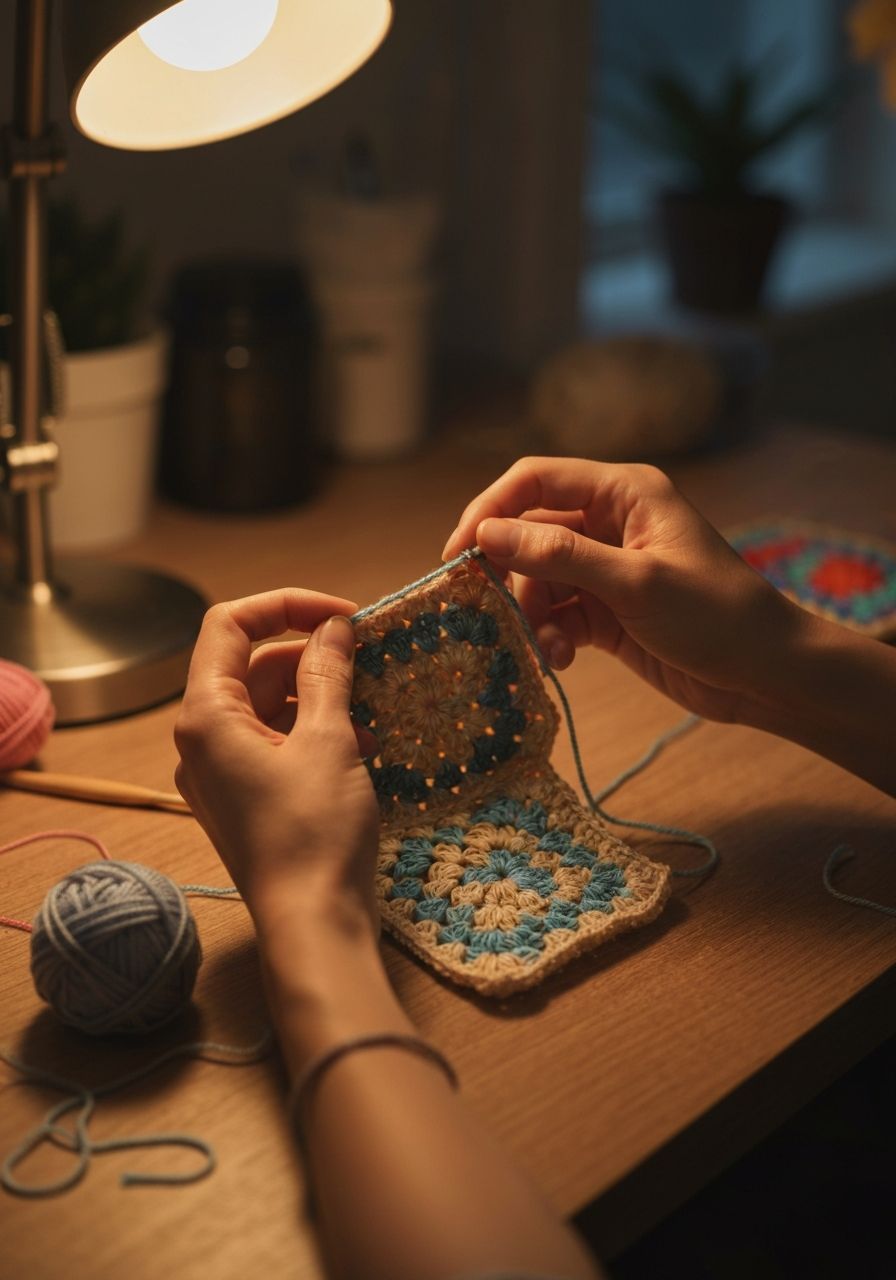
Imagine holding a completed, magnificent blanket in your hands – a vibrant tapestry woven from individual squares, each stitch a testament to your creativity. But what often stands between a pile of beautiful squares and that finished masterpiece? The daunting task of joining them! Fear not, fellow hook-wielder, because mastering crochet joining squares is not just achievable; it's a skill that will unlock a world of creative possibilities, transforming your projects from charming components into breathtaking, cohesive works of art. Get ready to banish the 'UFO' (Unfinished Objects) pile and embrace the joy of perfectly seamed crochet!
Welcome to your ultimate beginner's guide to joining crochet squares. Whether you're making a cozy granny square blanket, a stylish cardigan, or a playful pillow, the way you connect your squares can dramatically impact the final look, feel, and durability of your project. This guide will demystify the process, offering clear, step-by-step instructions for popular methods, essential tips, and common pitfalls to avoid, ensuring your next project is a seamless success.
Why It Matters: The Art of Seamless Connection
Joining isn't just a necessary evil; it's an integral part of the design process. A thoughtfully chosen and executed joining method can elevate your project from merely assembled squares to a cohesive, professional-looking piece. Here's why perfecting your joining technique is so important:
- Aesthetics: The right join can complement your squares, adding a subtle texture, a contrasting line, or an almost invisible connection that lets your square design shine.
- Durability: A strong, consistent join ensures your project withstands wear and tear, preventing gaps or weak points that could unravel over time.
- Structure and Drape: Different joining methods create varying levels of stiffness or flexibility. A flat, invisible join will result in a soft, flowing fabric, while a more textured join can add structure and definition.
- Time and Effort: While it might seem like an extra step, choosing an efficient joining method can save you time and frustration in the long run, leading to more finished projects!
What You Need to Know Before You Start
Preparation is key to successful joining. A little groundwork will make the process smoother and your results much neater.
- Block Your Squares: This is arguably the most crucial step! Blocking (wetting and shaping your squares, then letting them dry) ensures all your squares are uniform in size and shape. This makes alignment infinitely easier and results in a much neater finished project. Don't skip this!
- Choose Your Yarn Wisely: Use the same weight and fiber content yarn for joining as you used for your squares for a consistent look and feel. Sometimes, a contrasting color can be used for a decorative join, but ensure it's the same weight.
- Select Your Hook: Often, you'll use the same hook size you used for your squares. However, if your join feels too tight or too loose, try going up or down one hook size to achieve the desired tension.
- Right Sides Facing: Most joining methods involve working with the right sides (the 'pretty' side) of your squares facing each other or facing you. Consistency here is key.
- Stitch Count and Alignment: Before you begin, understand how many stitches are along each side of your squares. This will help you align them perfectly. You'll typically be joining stitch-for-stitch.
- Consistent Tension: Just like when you crochet your squares, maintaining even tension throughout your joining process is vital for a smooth, uniform seam.
Step-by-Step Guide to Popular Joining Methods
Let's dive into some of the most common and beginner-friendly ways to join your crochet squares.
Method 1: The Slip Stitch Join (Flat & Seamless)
This method creates a very flat, almost invisible seam that's excellent for projects where you want the squares themselves to be the star.
- Pros: Nearly invisible, very flat, flexible.
- Cons: Can be tight if tension is not relaxed; may require careful alignment.
- Prepare: Place your two squares with their wrong sides (WS) together and right sides (RS) facing outwards. Align the stitches perfectly along the edges you want to join.
- Start: Insert your hook into the back loop only (BLO) of the first stitch of the square closest to you AND the front loop only (FLO) of the first stitch of the square furthest from you.
- Join: Yarn over and pull a loop through all three loops on your hook (the two loops from the squares and the loop from your previous stitch, if continuing from a corner). This completes your first slip stitch.
- Continue: Repeat step 3, inserting your hook into the BLO of the next stitch on the front square and the FLO of the next stitch on the back square, then completing a slip stitch.
- Finish: Continue across the entire edge. Fasten off and weave in ends securely.
Method 2: The Single Crochet Join (Defined Ridge)
This method creates a subtle, decorative ridge that adds a nice textural element to your project. It's strong and relatively easy for beginners.
- Pros: Strong, creates a neat, visible ridge, easy to execute, adds stability.
- Cons: More visible than a slip stitch join, can add a slight bulk.
- Prepare: Place your two squares with their wrong sides (WS) together and right sides (RS) facing outwards. Align the stitches along the edges you wish to join.
- Start: Insert your hook through both loops of the first stitch of the square closest to you AND through both loops of the first stitch of the square furthest from you.
- Join: Yarn over, pull up a loop through all four loops (two from each square). You should now have two loops on your hook. Yarn over and pull through both loops on your hook (this completes your first single crochet, sc).
- Continue: Repeat step 3, inserting your hook through both loops of the next stitch on the front square and both loops of the next stitch on the back square, then completing a single crochet.
- Finish: Continue across the entire edge. Fasten off and weave in ends.
Method 3: The Whipstitch (Hand-Sewn Flat Join)
If you prefer a needle and thread approach, the whipstitch is an excellent choice for a very flat, nearly invisible seam, especially when using a matching yarn color.
- Pros: Very flat, great control, almost invisible, good for delicate joins.
- Cons: Slower than crocheted joins, requires a tapestry needle.
- Prepare: Place your two squares with their right sides (RS) together. Align the stitches along the edges you wish to join. Secure them with stitch markers if needed.
- Thread Your Needle: Cut a length of yarn (about 3-4 times the length of the seam you're joining) and thread it onto a tapestry needle. Knot one end.
- Start: Bring your needle up from the back of the first stitch on both squares, going through both loops of both squares. Pull the yarn through until the knot catches.
- Join: Insert your needle into the next aligned stitch on both squares, again going through both loops of both squares from back to front. Pull the yarn through, forming a diagonal stitch over the raw edge.
- Continue: Repeat step 4, always inserting the needle in the same direction (e.g., always from back to front) and making sure to go through corresponding stitches on both squares. Keep your tension consistent.
- Finish: Once you reach the end, secure the yarn with a few small stitches and weave in the end.
Method 4: Join-As-You-Go (JAYG) (Efficient & Seamless)
This advanced beginner technique allows you to join squares as you crochet the final round of the current square, eliminating a separate joining step.
- Pros: Highly efficient, no extra joining step, creates a seamless look.
- Cons: Requires more planning, can be tricky for absolute beginners.
The core idea of JAYG is to incorporate slip stitches (sl st) or single crochets (sc) into the final round of the square you are currently working on, connecting it directly to an already completed square.
- Prepare: Crochet your first square completely. For your second square, crochet all but its final round.
- Starting the Join: When you begin the final round of your second square, work a few stitches along the first side. When you reach a point where you want to connect to the first square (e.g., a ch-1 space or a specific stitch), make a sl st into the corresponding point on the *first square*.
- Connecting Stitches: Continue working your final round stitches on the second square. After every few stitches (or as specified by the pattern, often in ch-1 spaces or between groups of dc stitches), you will make a sl st into the corresponding stitch or space on the first square.
- Corners: When you reach a corner of the second square that needs to be joined, work part of your corner (e.g., 2 dc, then ch 1), then sl st into the corner space of the first square, then finish your corner on the second square (ch 1, 2 dc). This effectively 'chains' the corners together.
- Continue & Finish: Repeat this process along all sides you wish to join. Fasten off and weave in ends.
Common Mistakes to Avoid
Even experienced crocheters can slip up. Being aware of these common errors will help you avoid them:
- Skipping Blocking: Uneven squares are the number one cause of frustration during joining. Block, block, block!
- Inconsistent Tension: Too loose, and your seam will be gappy; too tight, and it will pucker or pull. Practice makes perfect.
- Mismatched Stitches: Not aligning your stitches correctly will lead to lopsided seams and uneven edges. Count and use stitch markers.
- Wrong Hook Size: Using a hook too big or too small can drastically affect the look and tension of your join. Test it out!
- Ignoring Corners: Corners often require special attention (e.g., an extra chain or stitch) to lie flat and look neat. Don't just plough through them.
- Not Weaving Ends Securely: Loose ends are a project killer. Weave them in well *before* you start joining, or as you go if doing JAYG.
Pro Tips for Flawless Joins
- Practice on Swatches: Before committing to your main project, make a few small squares and practice your chosen joining method.
- Use Contrasting Yarn for Practice: When practicing, use a contrasting yarn color for your join. This makes it easier to see your stitches and identify any issues.
- Stitch Markers are Your Friends: Use stitch markers to align corners and key points along the edges of your squares, especially for longer seams.
- Work on the Wrong Side for Some Joins: For methods like the slip stitch join, working on the wrong side can sometimes hide the seam even better, creating a truly invisible connection on the right side. Experiment!
- Consider the Border: Think about how your chosen join will integrate with your final border. Some joins create a perfect foundation for a border, while others might require adjustments.
- Block Again (If Needed): After all squares are joined, a final gentle blocking can help the entire piece settle, making seams lie perfectly flat and evening out any remaining slight discrepancies.
Frequently Asked Questions
Q1: Should I block my squares before joining?
A: Yes, absolutely! Blocking ensures all your squares are the same size and shape, which makes joining significantly easier and results in a much neater, more professional-looking finished project. It's truly a game-changer.
Q2: What's the best joining method for a complete beginner?
A: The single crochet join or the whipstitch are often recommended for beginners. The single crochet join creates a clear, sturdy ridge that's easy to follow, while the whipstitch uses a needle, which some find more intuitive for precise placement. Practice both to see which feels more comfortable for you.
Q3: How do I handle joining corners when multiple squares meet?
A: When joining corners where four squares meet, you'll typically work into the corner space of each square. For a slip stitch or single crochet join, you might work an extra chain stitch or single crochet into the corner space where the seams intersect to ensure it lies flat. For sewn methods, simply ensure your stitches neatly bridge the gap from all four meeting points. Refer to your pattern for specific corner instructions if applicable.
Congratulations! You've taken the first confident steps toward mastering the art of joining crochet squares. With practice and patience, you'll soon be seamlessly connecting your creations, turning piles of potential into stunning, cherished finished objects. Don't be afraid to experiment with different methods, find what works best for you, and most importantly, enjoy the rewarding process of bringing your crochet visions to life!