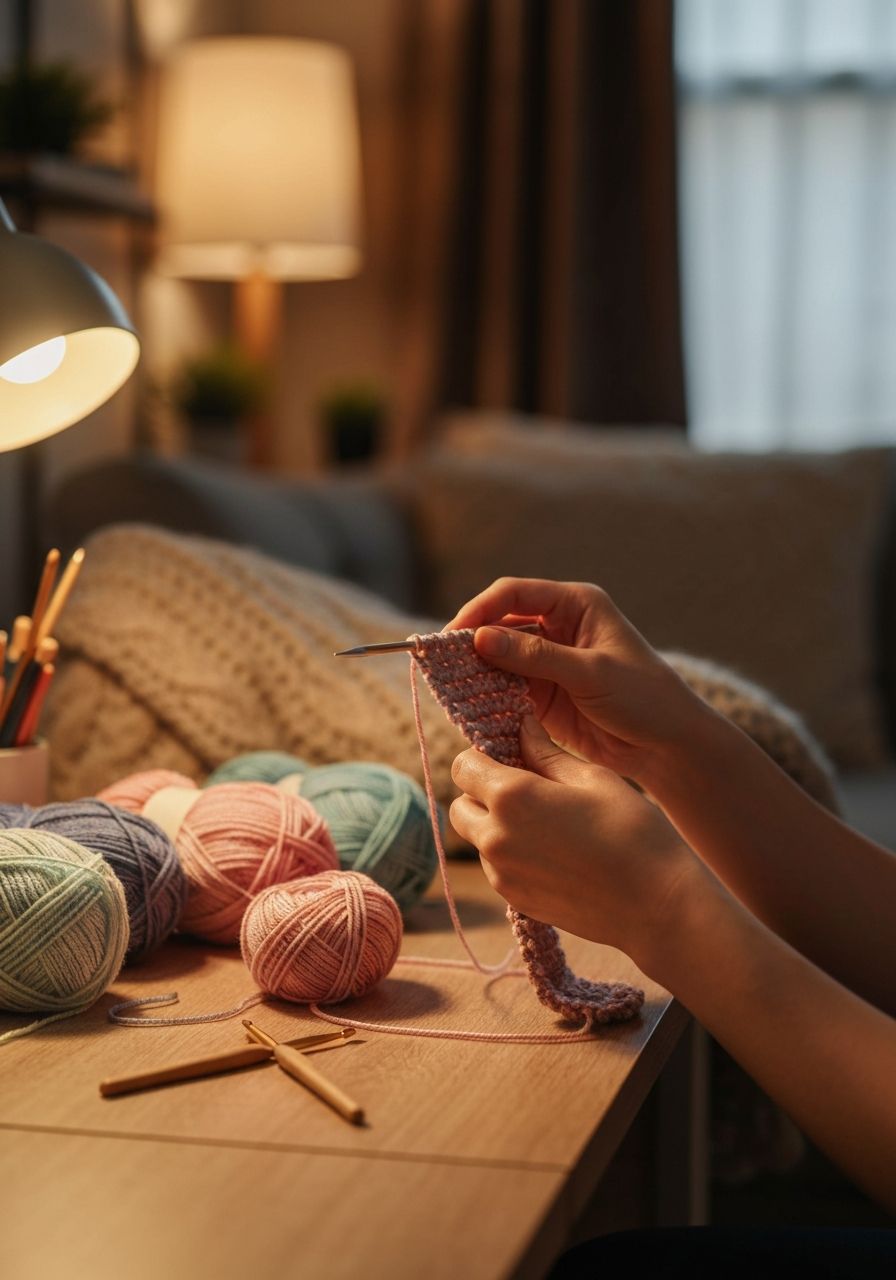
Imagine transforming a simple flat square into a beautifully curved hat, a charming amigurumi creature, or a perfectly fitted garment. That magical moment, where your hook brings fabric to life with shape and dimension, all hinges on mastering one fundamental technique: Crochet Increasing. It's the secret to expanding your fabric, creating graceful curves, and unlocking an entire universe of project possibilities. Get ready to embark on a journey that will elevate your crochet skills and empower you to craft almost anything your heart desires!
Why It Matters: The Power of Expanding Your Fabric
At its core, increasing in crochet is the art of adding more stitches to a row or round than were present in the previous one. This simple action has profound implications for your crochet projects. Without increases, your crochet fabric would largely remain flat and rectangular (or cylindrical if worked in the round without shaping). But with increases, you gain the power to:
- Create Curved Shapes: Essential for amigurumi (stuffed toys), hats, and spherical objects.
- Form Garments: Increases allow you to shape sleeves, busts, and other body contours, making clothing fit beautifully.
- Expand Flat Pieces: Think of a triangular shawl or a circular placemat – increases are what make them grow steadily outwards.
- Add Decorative Elements: Sometimes increases are used for purely aesthetic reasons, to create ruffles or interesting textures.
Mastering this technique isn't just about following a pattern; it's about understanding the mechanics of your craft, giving you the confidence to tackle more complex designs and even design your own creations.
What You Need to Know Before You Start
Before we dive into the nitty-gritty of increasing, let's ensure you have a solid foundation. You should be familiar with the basic crochet stitches:
- Chain (ch): The foundation for most projects.
- Slip Stitch (sl st): Used for joining and moving across stitches without adding height.
- Single Crochet (sc): A short, dense stitch.
- Half Double Crochet (hdc): Taller than sc, shorter than dc.
- Double Crochet (dc): A tall, open stitch.
The concept of an "increase" is universal across these stitches: it means working two (or more) stitches into a single stitch from the previous row or round. When you see "inc" in a pattern, it typically refers to working two stitches into one unless otherwise specified (e.g., "3 sc in next st").
You'll also need a crochet hook and some yarn. For practice, choose a smooth, light-colored yarn and a hook size appropriate for it (check the yarn label for recommendations). A stitch marker will also be your best friend!
Step-by-Step: Mastering the Increase
Let's break down how to perform increases using the most common crochet stitches. The principle is the same for all of them: you simply work the required number of stitches into the same stitch from the previous row/round.
How to Increase in Single Crochet (sc inc)
This is often the first increase you'll learn and is fundamental for amigurumi and tightly crocheted items.
- Identify the stitch: Locate the next stitch where you need to make an increase.
- Work the first sc: Insert your hook into the designated stitch, yarn over, pull up a loop (2 loops on hook), yarn over, pull through both loops. You've completed your first single crochet.
- Work the second sc into the SAME stitch: Without moving to the next stitch, insert your hook back into that *exact same stitch* where you just made your first single crochet.
- Complete the second sc: Yarn over, pull up a loop (2 loops on hook), yarn over, pull through both loops.
You have now created two single crochet stitches in the space where there was originally only one. This effectively adds one new stitch to your row/round.
Practice Swatch: Single Crochet Increase
- Row 1: Ch 10, sc in 2nd ch from hook and in each ch across. (9 sc)
- Row 2: Ch 1 (does not count as st), turn. Sc in first st, sc inc in next st, sc in next 6 sts, sc inc in last st. (11 sc)
- Row 3: Ch 1, turn. Sc in first 2 sts, sc inc in next st, sc in next 6 sts, sc inc in next st, sc in last st. (13 sc)
Notice how your swatch is gradually getting wider? That's the increase at work!
How to Increase in Half Double Crochet (hdc inc)
The principle is identical to single crochet, just using the hdc stitch.
- Identify the stitch: Locate the next stitch where you need to make an increase.
- Work the first hdc: Yarn over, insert hook into designated stitch, yarn over, pull up a loop (3 loops on hook), yarn over, pull through all 3 loops. This is your first hdc.
- Work the second hdc into the SAME stitch: Yarn over, insert hook back into that *exact same stitch* where you just made your first hdc.
- Complete the second hdc: Yarn over, pull up a loop (3 loops on hook), yarn over, pull through all 3 loops.
Now you have two half double crochet stitches in one previous stitch.
Practice Swatch: Half Double Crochet Increase
- Row 1: Ch 10, hdc in 2nd ch from hook and in each ch across. (9 hdc)
- Row 2: Ch 2 (does not count as st), turn. Hdc in first st, hdc inc in next st, hdc in next 6 sts, hdc inc in last st. (11 hdc)
- Row 3: Ch 2, turn. Hdc in first 2 sts, hdc inc in next st, hdc in next 6 sts, hdc inc in next st, hdc in last st. (13 hdc)
How to Increase in Double Crochet (dc inc)
You guessed it – work two double crochet stitches into the same stitch. Yarn over twice for the first part of the stitch, just like a regular double crochet, but repeat the entire dc process in the *same* stitch.
Increasing in the Round: Creating Flat Circles
When working in the round, increases are crucial for creating flat circles, which form the base of hats, coasters, and amigurumi heads. The trick is to space your increases evenly to maintain a smooth, flat shape rather than a wavy or cupped one.
Most flat circles start with a Magic Ring or Ch 2 method, followed by a set number of stitches (e.g., 6 sc, 10 hdc, 12 dc). Subsequent rounds then add an equal number of stitches, evenly distributed.
Example: Flat Single Crochet Circle
- Round 1: Start with a Magic Ring (or ch 2, 6 sc in 2nd ch from hook). Work 6 sc into the ring. Join with sl st to first sc. (6 sc)
- Round 2: Ch 1. Work 2 sc in each stitch around (6 sc inc). Join with sl st. (12 sc)
- Round 3: Ch 1. *Work 1 sc in first stitch, then 2 sc in next stitch (sc inc)*. Repeat from * to * 6 times around. Join with sl st. (18 sc)
- Round 4: Ch 1. *Work 1 sc in first 2 stitches, then 2 sc in next stitch (sc inc)*. Repeat from * to * 6 times around. Join with sl st. (24 sc)
You'll notice a pattern: in each round, you increase by the initial stitch count (6 in this case). The number of regular stitches *between* increases grows by one each round.
- Round 2: sc inc in every stitch (0 sc between increases)
- Round 3: 1 sc, sc inc (1 sc between increases)
- Round 4: 2 sc, sc inc (2 sc between increases)
- Round 5: 3 sc, sc inc (3 sc between increases)
This consistent pattern ensures your circle remains flat.
Common Mistakes to Avoid
Even experienced crocheters can slip up, but being aware of these common pitfalls will help you avoid them:
- Missing a Stitch: Accidentally skipping a stitch where an increase was meant to be, leading to a narrower project than intended.
- Incorrect Stitch Count: Failing to count stitches after each increase round can throw off your entire project's shape.
- Working Too Tightly: While tension is good, working increases too tightly can make the fabric stiff and difficult to work into later.
- Forgetting Stitch Markers: Especially in the round, it's easy to lose track of the beginning of a round or the specific stitches where increases should occur.
- Confusing Inc with Dec: An increase adds stitches; a decrease removes them. Make sure you're doing the right one!
Pro Tips for Perfect Increases
- Count, Count, Count: Always count your stitches at the end of each row or round, especially when increasing. This is the single most important habit for accuracy.
- Use Stitch Markers: Place a stitch marker in the first stitch of each round when working in the round. If your pattern has regular increases, you can even mark the increase stitches themselves.
- Practice Swatches: Before starting a major project, make a small swatch to practice the increase technique with your chosen yarn and hook. It helps get your tension right.
- Read the Pattern Carefully: Pay close attention to where the pattern tells you to increase. "Sc inc" means two single crochets in one stitch, but sometimes patterns specify "3 sc in next st" for a sharper increase.
- Invisible Increase (Advanced Note): For amigurumi or projects where you want a very smooth fabric without tiny gaps, look into the "invisible increase" technique (often abbreviated as "inv inc"). While not essential for beginners, it's a great skill to learn once you're comfortable with basic increases.
Frequently Asked Questions About Increasing
What's the difference between an increase and a decrease?
An increase adds stitches to your fabric, making it wider or larger. A decrease removes stitches, making your fabric narrower or smaller. They are opposite techniques used for shaping.
How do I know where to increase?
Your pattern will explicitly tell you where to increase. Look for abbreviations like "inc," "2 sc in next st," "3 dc in next st," or specific instructions like "increase 1 stitch at each end of row." For flat circles, the increases are evenly spaced around the round.
Can I increase with any crochet stitch?
Yes, the principle of working two or more stitches into a single stitch from the previous row/round applies to virtually all basic crochet stitches (sc, hdc, dc, tr, etc.). The specific instructions will vary slightly based on how you form each stitch, but the concept remains the same.
You've taken a significant step today towards mastering the art of crochet! Crochet increasing is a gateway to creating a world of three-dimensional wonders, from cozy wearables to adorable toys. Remember, every master was once a beginner, and consistent practice is your key to success. Don't be afraid to unravel, re-read, and try again. Your hook is now a magic wand, ready to bring endless shapes and designs to life. Happy crocheting!