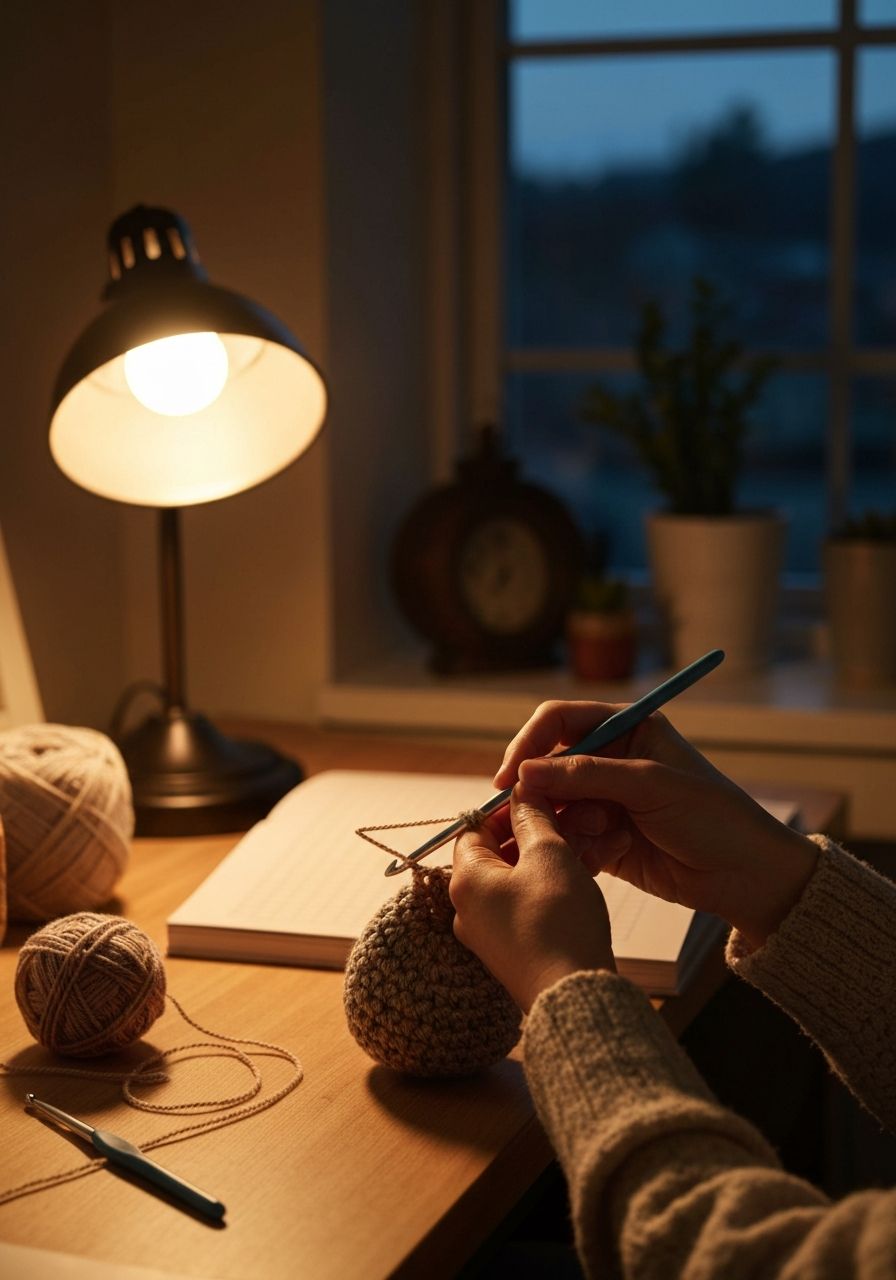
Imagine the pure joy of perfectly formed stitches, the satisfying drape of a beautifully crafted fabric, and the immense pride of creating something truly unique, exactly as you envisioned. That feeling of bringing your creative vision to life often begins with one crucial choice: understanding your crochet hook sizes. Don't let the array of hooks overwhelm you; instead, let this guide empower you to unlock your full creative potential and craft stunning pieces with confidence and ease.
Welcome, fellow fiber artist! If you're new to the wonderful world of crochet, the sheer variety of hooks can seem a bit daunting. You might wonder if one hook is truly different from another, or why a pattern specifies a certain size. The truth is, your crochet hook is your most essential tool, and choosing the right one is fundamental to the success and beauty of your projects. This comprehensive beginner's guide will demystify crochet hook sizes, helping you understand their importance, how to read them, and how to select the perfect hook for any project.
Why It Matters: The Impact of Your Crochet Hook Size
Think of your crochet hook as the conductor of your yarn orchestra. The size of that conductor dictates the tempo and harmony of your stitches. Here's why getting it right is so crucial:
-
Gauge and Tension: This is arguably the most critical factor. Gauge refers to the number of stitches and rows per inch (or centimeter) in a crocheted fabric. Using a hook that's too large for your yarn will result in loose, gappy stitches and a fabric that might be too flimsy. Conversely, a hook that's too small will create a dense, stiff fabric, potentially making your project too small or difficult to work with. Matching the pattern's specified gauge is key to achieving the intended finished size and look.
-
Fabric Drape and Texture: The hook size directly influences how your finished item will feel and hang. A larger hook with a thinner yarn creates a more open, airy, and flexible fabric, perfect for garments like shawls or lightweight blankets. A smaller hook with the same yarn will produce a denser, sturdier fabric, ideal for items needing more structure, like bags or amigurumi.
-
Project Success: Most patterns recommend a specific hook size to ensure your project turns out the correct dimensions. If you don't match the gauge, your sweater might be too big or too small, your amigurumi toy might be oddly shaped, or your blanket might run out of yarn prematurely. Adhering to the recommended hook size (or adjusting it to meet gauge) prevents these frustrating surprises.
-
Crocheter Comfort: Believe it or not, the right hook size also impacts your comfort. Using a hook that's too small for your yarn can lead to hand strain and fatigue as you struggle to pull the yarn through tight stitches. A hook that feels comfortable in your hand and works smoothly with your chosen yarn makes the entire crocheting process more enjoyable.
What You Need to Know: Understanding Your Tools
Before you dive into projects, let's get acquainted with the different ways crochet hooks are measured and what they're made of.
Crochet Hook Sizing Systems
The world of crochet uses a few different systems to size hooks. It's helpful to be familiar with them all:
-
Metric (mm): This is the most universal and precise system. Hooks are measured by the diameter of their shaft in millimeters (e.g., 2.0mm, 5.0mm, 8.0mm). This is the most reliable measurement and is often listed first on hooks and in patterns.
-
US Letter/Number: Common in American patterns, this system uses a combination of letters (for larger hooks) and numbers (for smaller steel hooks). For example, you'll see hooks labeled B/1, H/8, K/10.5, etc. The challenge here is that there isn't always a direct, consistent correlation across brands, especially with older hooks, although most modern hooks will list the metric equivalent.
-
UK/Canadian: This older system uses numbers, but they run in reverse order to the US system (larger numbers often mean smaller hooks). It's less common in new patterns but good to be aware of if you encounter vintage patterns.
Always prioritize the metric (mm) size if given, as it's the most accurate and consistent across brands and regions.
Material Matters: What Your Hook is Made Of
Crochet hooks come in a variety of materials, each offering a different feel and experience:
-
Aluminum: Very common, affordable, lightweight, and smooth. Great for most yarns.
-
Steel: Typically used for very small hooks (often called "thread hooks") and fine yarns or crochet thread. They are strong and durable.
-
Plastic/Acrylic: Lightweight, inexpensive, and come in fun colors. Can sometimes have more "drag" on the yarn than metal hooks.
-
Bamboo/Wood: Warm to the touch, lightweight, and have a slight grip that can be helpful for slippery yarns. Some crocheters find them more comfortable for extended periods.
-
Ergonomic: These hooks often have a larger, softer handle made of rubber or plastic designed to reduce hand fatigue. They are a favorite for many, especially those with arthritis or hand pain.
The Anatomy of a Crochet Hook
Understanding the parts of your hook can help you identify different styles:
-
Head/Hook: The very tip that catches the yarn. Can be "inline" (where the head is in line with the shaft, like Susan Bates hooks) or "tapered" (where the head is narrower than the shaft, like Boye hooks). Each style has its fans; try both to see what you prefer!
-
Throat: The indentation just below the head where the yarn rests after being caught. A shallow throat holds yarn less securely; a deep throat holds it more firmly.
-
Shaft: The smooth part of the hook where your active loops sit. The diameter of the shaft determines the stitch size, hence the "hook size."
-
Grip/Handle: Where you hold the hook. Can be a simple extension of the shaft or an ergonomically designed handle.
Decoding Your Crochet Hook: A Practical Guide
Now that you know the basics, let's put it into practice.
-
Reading the Label on Your Hook
Most modern crochet hooks will have their size stamped or printed on the handle. Always look for the metric (mm) size first, as it's the most reliable. For example, a common label might read "H/8 - 5.0mm." This tells you it's a US H hook, which is size 8, and measures 5.0 millimeters in diameter. If you have an older hook with no marking, you can purchase a hook gauge tool to measure it accurately.
-
Understanding Yarn Weights and Recommended Hooks
Yarn also has a "weight" or thickness, usually indicated by a number on the yarn label (0 to 7, or even higher for jumbo). This number gives you a general idea of the yarn's thickness and, crucially, a recommended range of hook sizes. Always check the yarn label for its suggested hook size! Here's a quick reference:
- 0 - Lace: 1.5mm - 2.25mm (steel hooks)
- 1 - Fingering/Super Fine: 2.25mm - 3.5mm (B-E US)
- 2 - Sport/Fine: 3.5mm - 4.5mm (E-G US)
- 3 - DK/Light Worsted: 4.5mm - 5.5mm (G-I US)
- 4 - Worsted/Medium: 5.0mm - 6.0mm (H-J US) - Excellent for beginners!
- 5 - Bulky/Chunky: 6.0mm - 8.0mm (J-L US)
- 6 - Super Bulky/Super Chunky: 8.0mm - 12.0mm (L-P US)
- 7 - Jumbo: 12.0mm and larger (Q+ US)
While these are general guidelines, the yarn label will give you the most specific recommendation for that particular yarn.
-
The Importance of Gauge Swatches (and How to Make One!)
This is where everything comes together! A gauge swatch is a small sample of the stitch pattern used in your project, worked with your chosen yarn and hook. It's the only way to ensure your finished item will be the correct size. Most patterns will include a "Gauge" section, for example: "16 sc and 18 rows = 4 inches (10 cm) with 5.0mm (H) hook."
How to make a simple single crochet gauge swatch:
- Choose your yarn and the hook size recommended in your pattern (or on your yarn label for a basic swatch).
- Chain 17. (This gives you a few extra stitches on either side of your measuring area, making it easier to measure accurately.)
- Row 1: Sc in 2nd ch from hook and in each ch across. (You should have 16 sc.)
- Row 2: Ch 1 (does not count as a stitch), turn. Sc in each sc across. (16 sc.)
- Repeat Row 2 until you have 10 rows total.
- Measure: Lay your swatch flat. Using a ruler or measuring tape, measure the width of 16 stitches across the middle of your swatch. Then measure the height of 10 rows in the middle.
Adjusting your hook based on your swatch:
- If your swatch is larger than the pattern's gauge (e.g., your 16 sc measure more than 4 inches), your stitches are too loose. Go down half a hook size (e.g., from 5.0mm to 4.5mm) and make another swatch.
- If your swatch is smaller than the pattern's gauge (e.g., your 16 sc measure less than 4 inches), your stitches are too tight. Go up half a hook size (e.g., from 5.0mm to 5.5mm) and make another swatch.
It might seem like an extra step, but making a gauge swatch will save you hours of potential frustration later!
Common Mistakes to Avoid
Even experienced crocheters can fall into these traps. Awareness is key!
-
Ignoring the Pattern's Recommended Hook Size: The pattern designer chose that hook size for a reason! It's usually to achieve a specific gauge, drape, and finished dimension. Always start with their recommendation.
-
Skipping the Gauge Swatch: We can't stress this enough. "It'll probably be fine" is the enemy of perfectly sized projects. Just make the swatch!
-
Assuming All "H/8" Hooks Are Identical: While metric sizes are generally consistent, there can be slight variations in US letter/number hooks, especially between different brands or older vs. newer hooks. Always double-check the millimeter size if you have doubts.
-
Using a Hook That's Uncomfortable: If your hand cramps or aches, your hook might be too small for your tension, or the material/style isn't right for you. Don't be afraid to try different hooks until you find one that feels good.
Pro Tips for Hook Sizing Success
-
Invest in a Good Starter Set: A set of aluminum hooks ranging from 3.0mm to 6.0mm (or US D to J) is an excellent investment for beginners, as these cover many common yarn weights.
-
Try Different Materials and Styles: Your "perfect hook" is personal. Experiment with inline vs. tapered, aluminum vs. wood, and standard vs. ergonomic handles to find what works best for your hands and tension.
-
Keep a Reference Chart Handy: Print out or save a hook conversion chart (metric, US, UK) on your phone. It's invaluable for deciphering patterns.
-
Label Unmarked Hooks: If you acquire hooks without clear markings, use a hook gauge tool to identify their size and label them with a permanent marker or a small piece of tape.
-
Don't Be Afraid to Deviate (Thoughtfully): Once you understand gauge, you can intentionally alter hook sizes to achieve a desired effect. Want a lacier scarf? Go up a hook size. Need a stiffer basket? Go down a hook size. This is where creative freedom truly begins!
Frequently Asked Questions
Can I use any hook size with any yarn?
While you physically *can* insert any hook into any yarn, it doesn't mean you *should*. Using a hook that's drastically different from the yarn's recommended size will result in a fabric that is either too loose and flimsy (large hook, small yarn) or too stiff and dense (small hook, large yarn). Always aim for a hook size within the recommended range for your yarn to achieve balanced stitches and proper drape.
What's the best hook size for beginners?
For most beginners, an H/8 (5.0mm) or I/9 (5.5mm) hook paired with a worsted weight (category 4) acrylic or cotton yarn is ideal. This combination is easy to hold, and the stitches are large enough to see clearly, making it easier to learn the basic movements and identify your stitches.
How do I know if my hook is too big or too small?
You'll know by looking at and feeling your fabric. If your hook is too big, your stitches will look loose, gappy, and inconsistent, and the fabric will likely be too floppy. If your hook is too small, your stitches will be very tight and difficult to work, the fabric will be stiff and rigid, and your hand might start to ache from the effort of pulling the yarn through.
Mastering crochet hook sizes is a fundamental step in becoming a confident and skilled crocheter. It's not just about matching numbers; it's about understanding how your tools interact with your yarn to create the fabric you envision. Armed with this knowledge, you are now ready to tackle any pattern, experiment with different yarns, and embark on countless fulfilling crochet adventures. Happy hooking!