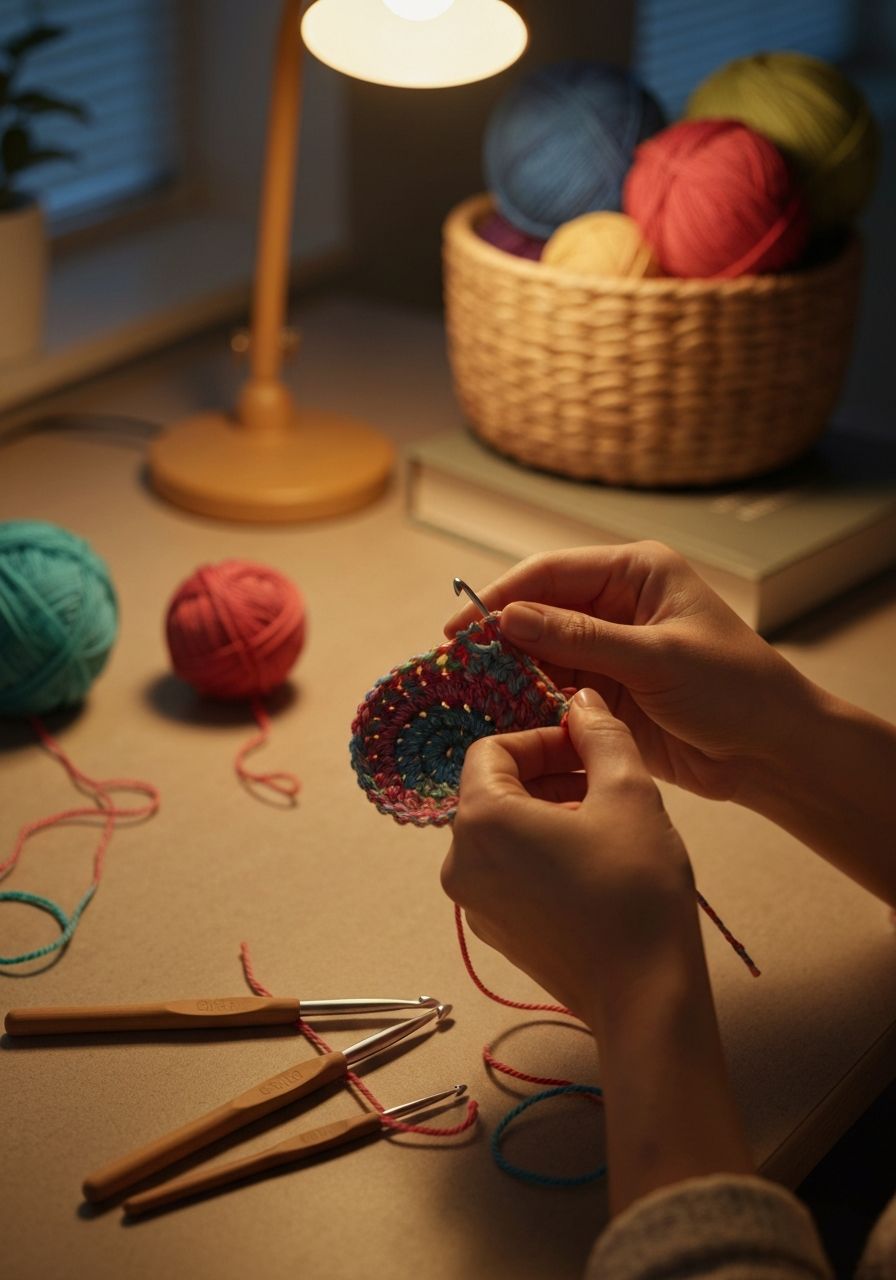
Imagine pouring hours of love and effort into a stunning crochet blanket, only to find it's half the size it should be – or a beautiful garment that just doesn't fit. Heartbreaking, right? What if I told you there's a simple, magical step that can prevent all that frustration and guarantee your projects turn out exactly as envisioned? It's called the Crochet Gauge Swatch, and it’s the secret weapon every successful crocheter uses to ensure their creations are perfectly sized, beautifully consistent, and truly wearable.
For beginners, the idea of a gauge swatch might seem like an extra, unnecessary step, but trust me, it's the foundation of successful crochet. This comprehensive guide will demystify the crochet gauge swatch, explaining what it is, why it's so important, and how to create and measure one with confidence. By the end, you'll feel empowered to tackle any pattern, knowing your finished piece will be exactly what you hoped for.
Why It Matters
Skipping the gauge swatch is like baking a cake without measuring the ingredients – you might get lucky, but more often than not, you’ll end up with a disappointing result. Here’s why the crochet gauge swatch is non-negotiable for most projects:
- Accurate Sizing: This is the biggest reason. If your project is a garment, a hat, or anything that needs to fit, gauge is critical. A slight difference in your tension can mean the difference between a sweater that's too tight or too baggy, or a baby blanket that's too small for its crib.
- Correct Yarn Usage: An incorrect gauge means you're using more or less yarn than the pattern estimates. This can lead to running out of yarn mid-project or having significant amounts left over, both of which are frustrating and wasteful.
- Achieving Desired Look and Feel: Gauge isn't just about size; it also dictates the fabric's density, drape, and overall appearance. A looser gauge might result in a floppy, open fabric, while a tighter gauge could create a stiff, dense one. Matching the pattern's gauge ensures your finished item has the intended texture and drape.
- Consistency Across Projects: Once you understand your personal tension and how to adjust for gauge, you'll be able to confidently tackle any pattern, knowing you have the tools to make it consistent with the designer's vision.
What You Need to Know
Before you dive into making your first swatch, let's cover some essential terminology and concepts.
What is Gauge?
In crochet, gauge refers to the number of stitches and rows (or rounds) within a specific measurement, typically 4x4 inches (10x10 cm). A pattern will state its required gauge, for example: "16 sc and 18 rows = 4x4 inches (10x10 cm)". This means that when you crochet using the specified yarn and hook, 16 single crochet stitches worked over 18 rows should measure 4 inches by 4 inches.
Understanding Gauge Instructions:
- Stitch Count: The first number (e.g., "16 sc") tells you how many stitches should fit horizontally into the specified width (e.g., 4 inches).
- Row/Round Count: The second number (e.g., "18 rows") tells you how many rows or rounds should fit vertically into the specified height (e.g., 4 inches).
- Stitch Used: The pattern will also specify which stitch to use for the swatch (e.g., "sc in rows," "dc in rounds," or "stitch pattern repeat"). Always make your swatch using the stitch pattern indicated.
- Measurement Unit: Most patterns provide both inches and centimeters. Choose whichever you are more comfortable with.
Essential Tools for Swatching:
- The Yarn Specified in the Pattern: Or a very similar substitute in terms of fiber content, weight, and ply.
- The Hook Size Specified in the Pattern: This is your starting point. You might need to go up or down a size.
- A Reliable Ruler or Tape Measure: Must have clear markings for inches and/or centimeters.
- Stitch Markers (Optional but Helpful): To mark your 4-inch (or desired) measurement for easier counting.
How to Make and Measure Your Crochet Gauge Swatch
Let's walk through the process step-by-step. For this example, we'll assume a pattern calls for a gauge of "16 sc and 18 rows = 4x4 inches (10x10 cm)" using a H/5.0mm hook.
1. Gather Your Supplies
Get the recommended yarn and crochet hook from your pattern. Grab your ruler or tape measure. Scissors are good to have on hand for fastening off.
2. Read the Pattern's Gauge Information Carefully
Locate the gauge section in your pattern. Note the hook size, the stitch type (e.g., single crochet, double crochet), and the exact stitch and row count for the specified measurement (e.g., "16 sc and 18 rows = 4x4 inches"). This is your target.
3. Crochet Your Swatch
Your swatch needs to be larger than the stated measurement (e.g., 4x4 inches) to allow for accurate measurement away from the edges, which can sometimes be inconsistent. Aim for a swatch that's at least 6x6 inches (15x15 cm).
Using our example gauge (16 sc per 4 inches):
- Chain: Chain enough stitches to comfortably exceed your target width. Since 16 sc = 4 inches, for a 6-inch width, you'll need about (16/4)*6 = 24 stitches. Add one chain for the turning chain if working single crochet. So, Ch 25.
- Row 1: Sc in 2nd ch from hook and in each ch across. (24 sc). Ch 1, turn.
- Rows 2-30 (or until large enough): Sc in each sc across. (24 sc). Ch 1, turn.
- Finish: Fasten off, leaving a tail. Weave in your ends.
Making it slightly bigger (e.g., 30 rows instead of just 27 for a 6-inch height based on 18 rows per 4 inches) gives you more room to measure accurately.
4. Block Your Swatch (Optional but Recommended)
Blocking is the process of wetting or steaming your finished crochet fabric to relax the fibers and set the stitches. For many projects, especially garments or lace, blocking is essential for the final drape and size. If your pattern recommends blocking the finished item, block your swatch in the same way before measuring. This gives you the most accurate representation of the final fabric.
5. Measure Your Swatch
Lay your finished swatch flat on a hard, even surface. Do not stretch or manipulate it. Place your ruler or tape measure directly over the middle of the swatch, ensuring it's not too close to the uneven edges.
- Measure Stitches: Count the number of stitches within a 4-inch (or specified) horizontal span. If you have stitch markers, place one at the start of your 4-inch mark and another at the end to make counting easier. Count full stitches.
- Measure Rows: Count the number of rows within a 4-inch (or specified) vertical span. Again, count full rows.
Compare your stitch and row counts to the pattern's stated gauge.
6. Adjust Your Hook Size
This is where the magic happens! Based on your measurements, you'll adjust your hook size:
- If your swatch has TOO MANY stitches/rows (meaning your swatch is too small/dense): Your tension is too tight. Go up to a larger hook size (e.g., from H/5.0mm to I/5.5mm or J/6.0mm). A larger hook will create looser stitches and a larger fabric.
- If your swatch has TOO FEW stitches/rows (meaning your swatch is too large/loose): Your tension is too loose. Go down to a smaller hook size (e.g., from H/5.0mm to G/4.0mm or F/3.75mm). A smaller hook will create tighter stitches and a smaller fabric.
Once you adjust your hook, you must crochet a new swatch with the new hook size and measure again. Repeat this process until your swatch matches the pattern's gauge as closely as possible.
Common Mistakes to Avoid
- Skipping the Swatch Entirely: The most common and most detrimental mistake. Don't do it for projects where size matters!
- Measuring Too Close to the Edges: The first and last stitches/rows of a swatch can be a bit wonky. Always measure in the middle for accuracy.
- Not Making the Swatch Large Enough: A tiny swatch (e.g., exactly 4x4 inches) is harder to measure accurately. Always aim for a larger swatch.
- Ignoring the Row Count: While stitch count often gets more attention (for width), row count is equally important for the length and overall shape of your project.
- Measuring While Stretching the Fabric: Always lay your swatch flat and relaxed. Stretching will give you an artificially high stitch/row count.
- Using a Different Yarn or Hook Without Re-swatching: Even subtle differences in yarn brand, fiber, or hook style can alter your gauge. If you deviate, swatch again.
Pro Tips
- Label Your Swatches: Keep a little tag with each swatch noting the hook size used, yarn, and the resulting gauge. This is incredibly helpful for future projects or if you need to adjust again.
- Swatch in the Round: If your project is primarily worked in the round (like a hat or certain amigurumi), it's best to make your swatch in the round. Your tension can differ between working flat and in the round.
- Swatch the Main Stitch Pattern: If your pattern uses a complex or textured stitch pattern throughout, make your swatch using that specific stitch pattern, not just basic single or double crochet.
- Wash and Dry Your Swatch: For garments, wash and dry your swatch exactly as you intend to wash and dry the finished item. Some fibers grow or shrink significantly after washing.
- Don't Frog Immediately: Keep your successful swatch. It serves as a physical reference for your target gauge and can be useful if you need to double-check anything later.
FAQ
Do I *really* need to make a swatch every time?
For fitted garments, blankets, or projects where specific dimensions are critical, absolutely yes! For simpler items like dishcloths or scarves where size isn't a huge concern, you might get away with skipping it once you're an experienced crocheter and familiar with your tension for certain yarns. But for beginners, it's always recommended.
My gauge is almost right, can I just adjust as I go?
While experienced crocheters might try to "wing it" with minor discrepancies, it's not recommended for beginners or for projects where precision is key. Small differences compound over a large project, leading to significant sizing issues. It's always better to take the time to re-swatch.
What if my row gauge is right but my stitch gauge isn't (or vice versa)?
This can happen! Often, adjusting your hook size will affect both. If you find one is perfect and the other is off, you'll need to decide which is more critical for your project. For width-based items (like a sweater body), prioritize stitch gauge. For length-based items (like a scarf), prioritize row gauge. Sometimes it's a slight compromise, or you might need to try a different yarn or even slightly adjust the pattern's stitch count if you're very confident.
The Crochet Gauge Swatch might feel like a hurdle at first, but it's truly your best friend in the world of crochet. It’s an investment of a little time that pays off immensely in satisfaction, accuracy, and joy. By embracing the swatch, you're not just making a small piece of fabric; you're building confidence, honing your skills, and ensuring that every stitch you make contributes to a perfect, beautifully finished project. Happy swatching, and happy crocheting!