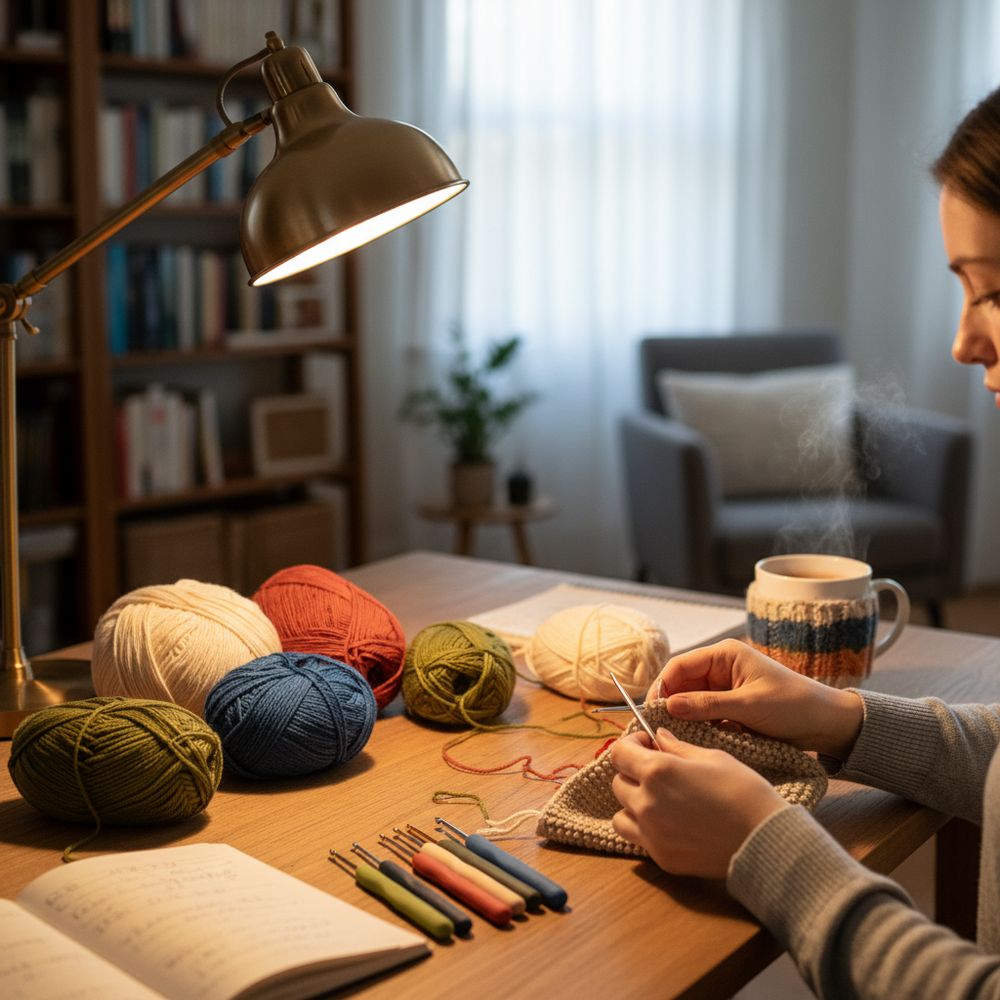
Imagine the thrill of creating something beautiful with your own hands – a cozy scarf, a cute amigurumi, a stunning blanket. You're working along, stitches flowing, when suddenly... disaster strikes! A skipped stitch, a wonky edge, a mysterious hole appears, and your heart sinks. Before you throw your hook across the room, take a deep breath. Every single crocheter, from absolute beginner to seasoned expert, has been there. The good news? Mastering crochet fixing mistakes isn't just possible; it's a superpower that will transform your crafting journey from frustrating to wonderfully fulfilling! Get ready to unravel your worries and crochet with newfound confidence.
Welcome, fellow yarn enthusiasts! This beginner's guide is your essential toolkit for navigating the inevitable bumps in your crochet path. We'll demystify the process of identifying errors, teach you the most effective ways to undo your work, and equip you with the knowledge to correct common problems. Forget the fear of imperfection; embrace the learning curve, and let's turn those 'oops' moments into opportunities for growth and even better projects!
Why It Matters
Learning how to fix mistakes is more than just a troubleshooting skill; it's a fundamental part of becoming a confident and competent crocheter. Here's why it's so crucial:
- Saves Time and Yarn: Instead of scrapping an entire project or a large section, you can often fix a small error, saving precious crafting hours and preventing yarn waste.
- Boosts Confidence: Knowing you can recover from a mistake reduces anxiety and encourages you to try new, more complex patterns without fear of irreversible errors.
- Improves Understanding: The act of examining your stitches to find an error, then carefully undoing and redoing, deepens your understanding of stitch anatomy and how crochet fabric is constructed.
- Ensures Quality: Correcting errors leads to neater, more consistent, and ultimately more beautiful finished projects that you'll be proud to show off.
- Reduces Frustration: Replacing despair with a clear plan of action makes the learning process much more enjoyable and sustainable.
What You Need to Know
Before we dive into the 'how-to' of fixing, let's establish some foundational knowledge that will make error identification and correction much easier.
- Anatomy of a Stitch: Every crochet stitch, whether it's a chain (ch), single crochet (sc), half double crochet (hdc), or double crochet (dc), has distinct parts. Most importantly, you'll see a 'V' shape at the top of the stitch, formed by two loops (front loop and back loop). Understanding this 'V' is key to counting stitches and identifying where your hook should go. Below the 'V' is the stitch 'post' or 'body'.
- Counting Stitches: This is paramount! Always count the 'V's at the very top of your row or round. Don't count the turning chain (unless specified by the pattern to count as a stitch) or the loop currently on your hook. Consistent counting prevents most shaping errors.
- Tension: This refers to how tightly or loosely you hold your yarn and work your stitches. Consistent tension is vital for an even fabric. Too tight, and your work will be stiff and difficult to work into. Too loose, and it will be gappy and floppy. Both can lead to incorrect gauge and wonky project dimensions.
- Tools for Fixing:
- Your Hook: Essential for tinking (un-crocheting stitch by stitch).
- Stitch Markers: Invaluable for marking the beginning of rounds, specific stitches, or saving your live loop when frogging.
- Tapestry Needle: Useful for weaving in ends, but also for carefully picking out errant strands if yarn splits during frogging.
How to Fix Common Crochet Mistakes
Let's get practical! Here are the core techniques and strategies for correcting those pesky errors.
Understanding Your Stitches to Spot Errors
Before you can fix a mistake, you need to recognize it. Regularly compare your work to the pattern instructions and examine the fabric. Look for:
- Inconsistent Stitch Height: Are all your sc, hdc, or dc stitches roughly the same height?
- Uneven Edges: Are your straight edges actually straight, or are they curving inwards/outwards? This often points to incorrect stitch counts.
- Gaps or Bumps: These can indicate missed stitches or accidental increases.
- Wrong Stitch Type: Did you accidentally work a dc instead of an hdc?
When you spot something amiss, count your stitches for the current and previous rows/rounds. This is often the quickest way to confirm an error.
The Art of Tinking (Un-crocheting Stitch by Stitch)
Tinking (knitting spelled backward, but applicable to crochet) is the precise method of undoing your work one stitch at a time. It's perfect for correcting small errors, like a single missed stitch, a wrong stitch type, or a minor tension issue in the last few stitches.
- Identify the Incorrect Stitch: Pinpoint the exact stitch you need to undo.
- Insert Your Hook: With the working loop still on your hook, carefully insert your hook into the stitch *below* the working loop. This means pushing your hook from front to back, catching the top two loops (the 'V') of the stitch that sits directly under your active loop.
- Gently Pull: With your hook now inserted into the previous stitch, gently pull the working loop (the one currently on your hook) until it comes out of the stitch you just completed.
- Repeat: You've now returned to the previous stitch, and the loop from that stitch is on your hook. Repeat steps 2 and 3 until you've unraveled back to just before your error.
- Re-crochet: Once you're at the point of the mistake, simply re-crochet the stitches correctly.
Embracing the Frog (Unraveling Multiple Rows)
Frogging (because you 'rip-it, rip-it') is the act of unraveling a larger section of your work quickly. This is your go-to method for significant errors like a large section of incorrect stitch count, major tension problems across several rows, or when you simply want to start a section over.
- Identify Stopping Point: Decide how far back you need to unravel. This is crucial.
- Remove Hook: Carefully pull your hook out of the active loop. Immediately secure this loop with a stitch marker, or re-insert your hook if you're only frogging a very small section. This prevents further, accidental unraveling.
- Pull the Yarn: Locate the yarn tail that is connected to your yarn ball. Gently but firmly pull this yarn. You'll see your stitches unravel rapidly.
- Stop Past the Mistake: Continue pulling until you've unraveled just past the point where the mistake occurred.
- Re-insert Your Hook: Now for the tricky part. Look for the last 'live' loop – this will be the top of the last *correct* stitch you want to keep. Insert your hook into this loop from front to back. Make sure the loop isn't twisted. Give a gentle tug on the working yarn to secure it on your hook. You are now ready to continue crocheting from that point.
Identifying and Correcting Common Stitch Count Errors
- Too Few Stitches (Missed Stitch/Decrease):
- How it looks: Your fabric will start to narrow, or you'll see a noticeable gap where a stitch should be. Your stitch count will be lower than the pattern specifies.
- Correction: The most straightforward way for beginners is to tink or frog back to the row where the stitch was missed. Once you're at that point, simply re-crochet the section, ensuring you work into every stitch as required by the pattern.
- Too Many Stitches (Accidental Increase):
- How it looks: Your fabric will start to widen, or you might see a small bump where an extra stitch was created. Your stitch count will be higher than the pattern specifies. This often happens by working into the same stitch twice, or by mistakenly working into a turning chain or a space that isn't a stitch.
- Correction: Again, tink or frog back to the row where the extra stitch was made. Re-crochet the section, carefully counting and ensuring you only work one stitch into each stitch (unless the pattern calls for an increase).
Tackling Tension Inconsistencies
Uneven tension is a common beginner struggle, leading to wavy edges, inconsistent fabric texture, and projects that don't match the intended size.
- Causes: Holding the yarn too tightly or too loosely, inconsistent grip on the hook, or rushing.
- How to Identify: Your fabric might look lumpy in one section and gappy in another, or the edges of your work might be noticeably tighter or looser than the center.
- Correction:
- Practice, Practice, Practice: The more you crochet, the more consistent your tension will naturally become.
- Relax Your Grip: If your hand or wrist aches, you're likely holding too tightly. Try to loosen your grip on both the hook and the yarn.
- Experiment with Hook Holds: There are various ways to hold your hook (pencil grip, knife grip). Find what's most comfortable and allows for smooth yarn flow.
- Check Your Yarn Flow: Ensure the yarn feeds smoothly from your skein or ball without snagging.
- Consider Hook Size: If your tension is consistently too tight, try going up a hook size. If it's consistently too loose, try going down a hook size.
Common Mistakes to Avoid
Prevention is always better than cure! Here are some pitfalls to steer clear of:
- Not Counting Stitches Regularly: This is the number one cause of shaping errors. Count at the end of every row or round, especially if the pattern specifies a stitch count.
- Ignoring Mistakes: A small mistake rarely fixes itself and often compounds into a much larger, harder-to-fix problem later on. Address it as soon as you spot it.
- Working into the Wrong Loop/Space: Be mindful of whether the pattern specifies working into both loops, the front loop only, or the back loop only. Mistakenly working into a turning chain can also add extra stitches.
- Incorrect Chain Count at Beginning of Row/Round: Turning chains contribute to the height of your rows. Getting this wrong can lead to uneven edges.
- Pulling Yarn Too Hard When Frogging: While frogging is quick, pulling too aggressively can stretch or even break your yarn, especially delicate or novelty fibers. Be gentle.
Pro Tips
- Use Stitch Markers Liberally: Mark the first stitch of a round, the beginning of a repeat, or any critical stitch. They are your best friends for keeping track.
- Good Lighting is Essential: Working in poor light makes it incredibly difficult to see stitch definition and spot errors.
- Take Breaks: If you're feeling frustrated or tired, step away from your project for a bit. A fresh perspective often helps you spot a mistake you overlooked.
- Don't Be Afraid to Frog: Every expert crocheter frogs! It's not a sign of failure but a sign of dedication to a quality finished product. Think of it as an integral part of the creative process.
- Practice Swatches: When learning a new stitch or working with new yarn, make a small swatch first. This allows you to practice, gauge your tension, and make mistakes without impacting your main project.
- Watch Video Tutorials: Sometimes, seeing a technique demonstrated visually can click better than written instructions. There are countless free tutorials online for identifying and fixing common crochet errors.
Frequently Asked Questions
Is it normal to make mistakes when crocheting?
Absolutely, 100% yes! Making mistakes is a universal experience in crochet, from beginners to seasoned pros. It's how we learn, refine our skills, and grow as crafters. Don't let it discourage you; embrace it as part of the journey!
How do I know if I've made a mistake?
Often, your project won't match the pattern's description or visual. Look for uneven edges, holes where there shouldn't be any, inconsistent fabric texture, or if your stitch count for a row or round doesn't match the pattern. Trust your instincts – if something looks 'off,' it probably is.
When should I frog versus tink?
Use 'tinking' (unraveling stitch by stitch) for small errors that occurred in the last few stitches or the current row – like a single wrong stitch type or a minor tension issue. Use 'frogging' (unraveling multiple rows quickly) for larger errors, significant stitch count discrepancies across several rows, or when you need to re-do a whole section due to major tension or shaping issues.
You now possess the knowledge and techniques to tackle those crochet mishaps with confidence! Remember, every stitch, every mistake, and every correction is a step in your crafting journey. Embrace the process, be patient with yourself, and soon you'll be fixing mistakes like a pro, creating beautiful, flawless projects you'll cherish. Happy hooking!