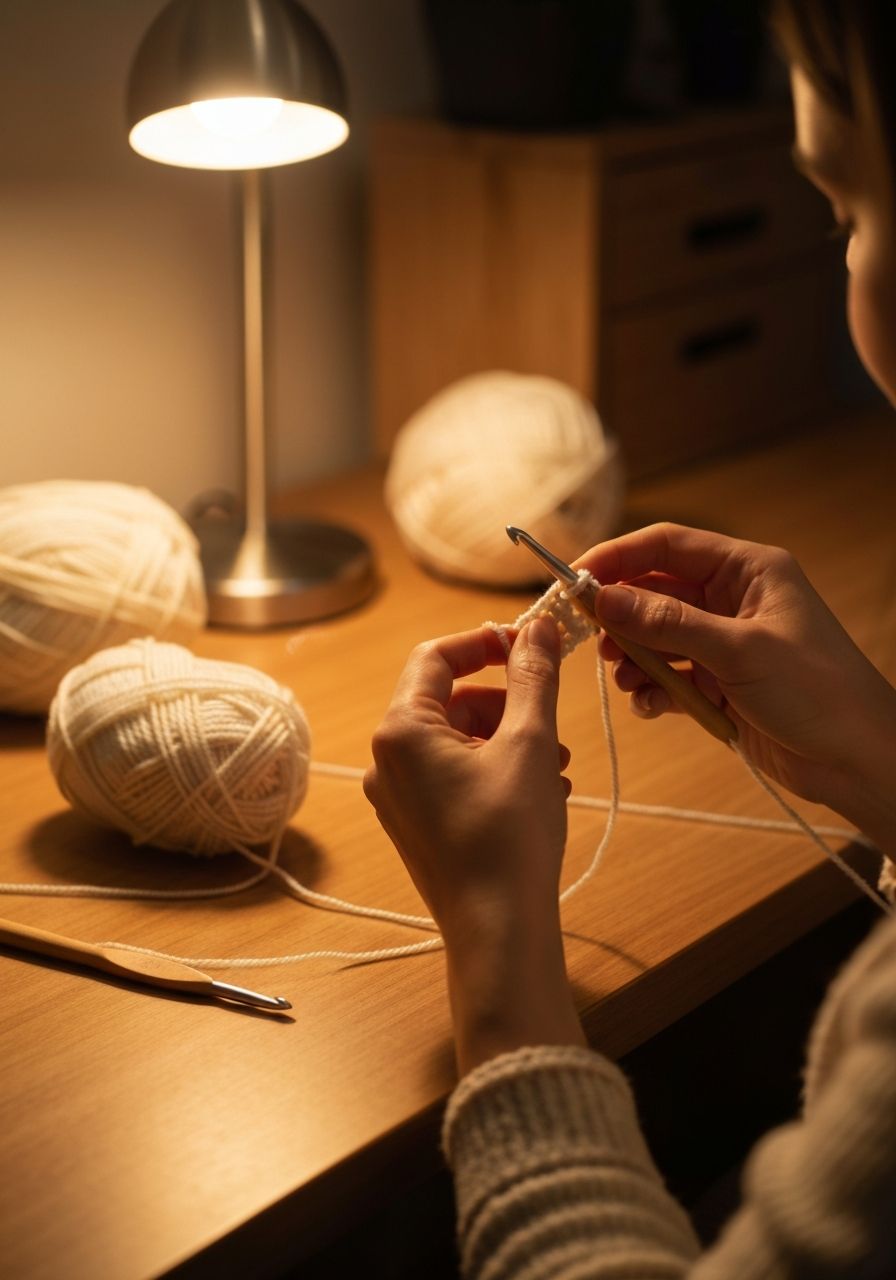
Imagine transforming a flat piece of fabric into a cuddly amigurumi animal, a perfectly fitted hat, or a garment that drapes just right. This isn't magic; it's the power of shaping, and one of the most fundamental techniques in your arsenal for achieving this is Crochet Decreasing. Get ready to unlock a whole new dimension in your crochet journey, moving beyond simple rectangles and squares to create intricate curves, tapers, and contours that will bring your projects to life!
Why It Matters: The Magic of Shaping Your Crochet Creations
Crochet isn't just about creating flat squares or long scarves. While those are wonderful starting points, the true artistry often lies in the ability to manipulate the fabric into three-dimensional forms. Decreasing stitches is the essential technique that allows you to reduce the number of stitches in a row or round, causing your work to narrow, curve inwards, or taper. Without decreasing, your hats would be straight tubes, your amigurumi would be shapeless blobs, and your sweaters would lack the elegant lines of sleeves and necklines. It's the secret sauce that gives your projects structure, realism, and a professional finish, making your handmade items truly stand out.
What You Need to Know Before You Start Decreasing
Before diving into the mechanics of decreasing, it's helpful to have a solid grasp of some basic crochet stitches and concepts. You should be comfortable with:
- Chain (ch): The foundation for most projects.
- Slip Stitch (sl st): Used for joining and moving across stitches.
- Single Crochet (sc): The simplest and most common stitch.
- Half Double Crochet (hdc): A slightly taller, denser stitch.
- Double Crochet (dc): A taller stitch often used for speed or drape.
Understanding the anatomy of a stitch – specifically the "V" at the top of each stitch, consisting of a front loop and a back loop – will be crucial, especially for the invisible decrease. You'll also want to pay attention to your tension. Consistent tension is key to making your decreases blend seamlessly into your fabric, preventing unsightly bumps or holes.
Mastering Common Crochet Decrease Techniques
There are several ways to decrease, each suitable for different stitches and desired effects. Let's break down the most common ones:
Single Crochet Decrease (sc2tog/sc dec): The Foundation
This is the most basic decrease and a fundamental skill. It effectively turns two single crochet stitches into one, reducing your stitch count by one.
- Insert your hook into the next stitch.
- Yarn over and pull up a loop (you should have 2 loops on your hook).
- Without yarning over again, insert your hook into the next stitch (the one after the first).
- Yarn over and pull up a loop (you should now have 3 loops on your hook).
- Yarn over and pull through all 3 loops on your hook.
You have now completed one single crochet decrease (sc2tog). It creates a slight "bump" on the fabric, which is perfectly fine for many projects, especially those worked in rows.
Invisible Single Crochet Decrease (inv dec or sc inc dec): For Seamless Amigurumi
The invisible decrease is a game-changer for amigurumi and any project where you want a smooth, nearly undetectable decrease. It's worked only through the front loops of the stitches.
- Insert your hook into the front loop only of the next stitch.
- Still working in the front loops, insert your hook into the front loop only of the next stitch (the one after the first). You should have two front loops on your hook.
- Yarn over and pull through both front loops on your hook (you should have 2 loops on your hook).
- Yarn over and pull through the remaining 2 loops on your hook.
This decrease creates a much neater, less noticeable reduction, which is why it's a favorite for toys and other projects where a smooth finish is desired.
Half Double Crochet Decrease (hdc2tog/hdc dec)
Similar to the single crochet decrease, the hdc2tog reduces two half double crochet stitches into one.
- Yarn over.
- Insert your hook into the next stitch.
- Yarn over and pull up a loop (you should have 3 loops on your hook).
- Yarn over.
- Insert your hook into the next stitch (the one after the first).
- Yarn over and pull up a loop (you should now have 5 loops on your hook).
- Yarn over and pull through all 5 loops on your hook.
This creates a subtle decrease in height and width, perfect for garments or accessories made with hdc.
Double Crochet Decrease (dc2tog/dc dec)
The dc2tog combines two double crochet stitches into one, reducing both height and stitch count.
- Yarn over.
- Insert your hook into the next stitch.
- Yarn over and pull up a loop (3 loops on hook).
- Yarn over and pull through 2 loops (2 loops on hook). You've started the first dc but not finished it.
- Yarn over.
- Insert your hook into the next stitch (the one after the first).
- Yarn over and pull up a loop (4 loops on hook).
- Yarn over and pull through 2 loops (3 loops on hook). You've started the second dc but not finished it.
- Yarn over and pull through all 3 loops on your hook.
This technique is excellent for shaping in projects worked with double crochet, such as blankets, scarves, or garment pieces.
Practice Exercise: A Simple Cone
Let's try a quick practice piece to solidify your decreasing skills. We'll make a tiny cone, perfect for demonstrating how decreasing creates shape.
- Magic Ring: Create a magic ring and work 6 single crochet (sc) stitches into it. Pull the tail to close. (6 stitches)
- Round 1: Sc in each stitch around. (6 stitches)
- Round 2: *Sc in the next stitch, sc2tog* repeat 2 times. (4 stitches)
- Round 3: *Sc2tog* repeat 2 times. (2 stitches)
- Fasten off, leaving a tail. Use your hook or a tapestry needle to weave the tail through the remaining 2 stitches and pull tight to close the hole. Weave in ends.
See how your flat ring quickly transformed into a little cone? That's the power of decreasing!
Common Mistakes to Avoid When Decreasing
- Missing Loops: Especially with sc2tog, ensure you pull through all three loops on your hook at the end, or you'll accidentally skip a stitch.
- Incorrect Yarn Over: For hdc2tog and dc2tog, remember to yarn over at the correct points as you build up the stitch.
- Too Tight Tension: Decreases naturally pull stitches together. If your tension is too tight, your fabric can pucker or become rigid. Try to keep a relaxed grip.
- Skipping Stitches by Mistake: A decrease takes up two stitches but only counts as one in the subsequent row/round. Make sure you don't accidentally skip the stitch immediately following a decrease if your pattern doesn't call for it.
- Inconsistent Decrease Type: If a pattern specifies "invisible decrease," don't substitute a regular sc2tog, or your fabric will look different.
Pro Tips for Flawless Decreasing
- Use Stitch Markers: When working in rounds, especially with complex patterns or amigurumi, a stitch marker at the beginning of each round will help you keep track of your stitch count and where to place your decreases.
- Practice, Practice, Practice: Like any new skill, decreasing takes practice. Don't be discouraged if your first few attempts aren't perfect.
- Read Your Pattern Carefully: Some patterns will explicitly state "sc2tog" or "inv dec." Others might just say "dec." If it's for amigurumi, assume invisible unless otherwise specified.
- Count Your Stitches: After each row or round where you've decreased, always count your stitches to ensure you have the correct number. This catches mistakes early.
- Consider Yarn Type: Smooth yarns tend to show stitches, including decreases, more clearly. Fuzzy or textured yarns can be more forgiving if you're still perfecting your technique.
Frequently Asked Questions About Crochet Decreasing
What's the difference between sc2tog and inv dec?
The main difference lies in their appearance. An sc2tog (single crochet two together) is worked through both loops of two stitches and often creates a small, noticeable bump or ridge. An inv dec (invisible decrease) is worked only through the front loops of two stitches and results in a much smoother, less visible decrease, making it ideal for amigurumi or projects where a seamless look is desired.
When should I use a decrease?
You use decreases whenever you need to reduce the stitch count in your work. This is essential for: creating the top of a hat, shaping amigurumi body parts (like heads, limbs, snouts), tapering sleeves or waistlines in garments, forming curves, or closing up openings in projects like bags or baskets.
My decreases look messy, what am I doing wrong?
Messy decreases often stem from inconsistent tension or not pulling through all the necessary loops. Ensure your tension is even throughout the decrease stitch. For sc2tog, confirm you're pulling through all three loops at the final step. For inv dec, make sure you're only grabbing the front loops. Practice is key to developing consistent technique and neat decreases.
Congratulations! You've just taken a massive leap in your crochet journey. Understanding and mastering Crochet Decreasing opens up a world of possibilities, allowing you to move beyond flat pieces and start creating truly shaped, three-dimensional masterpieces. Keep practicing, keep exploring, and soon you'll be shaping your crochet creations with confidence and flair!