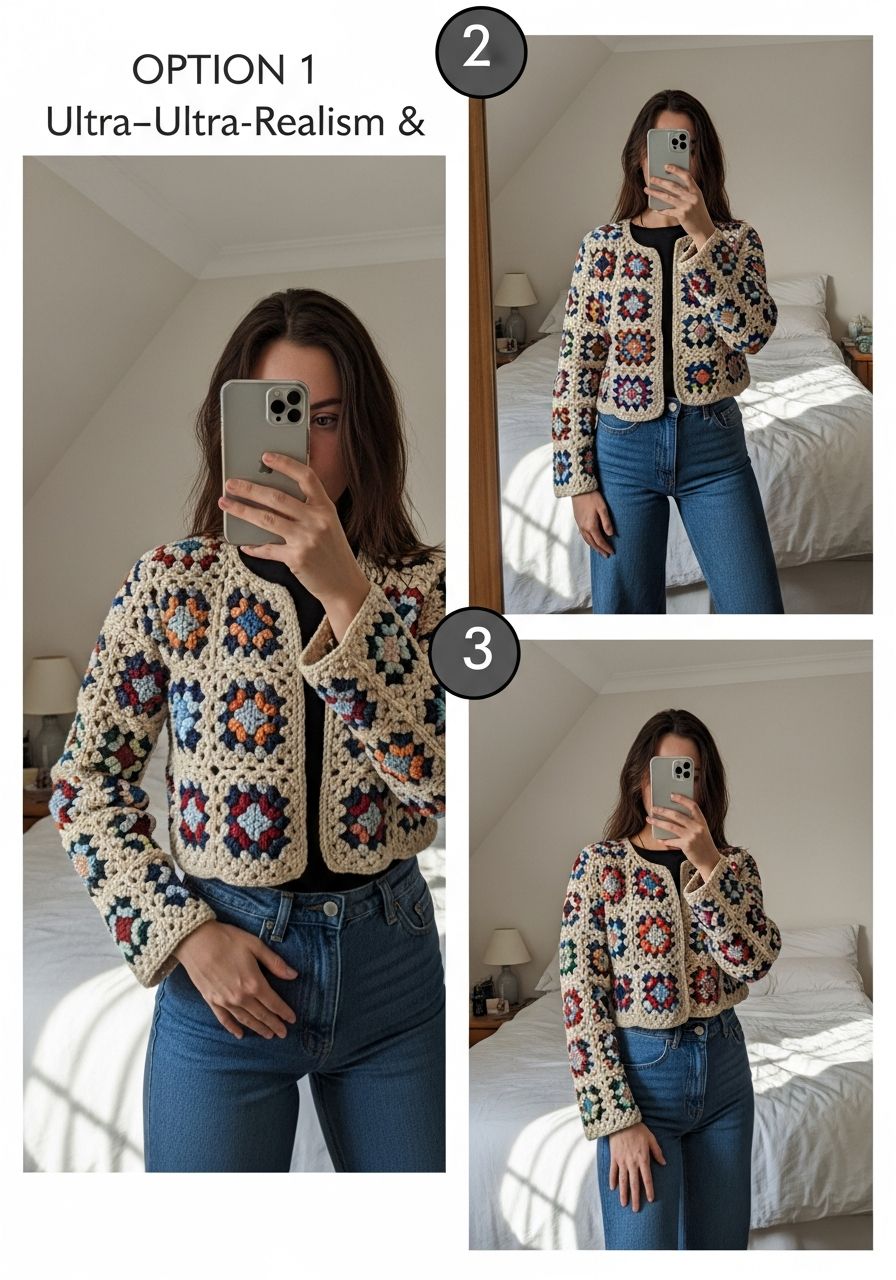
Imagine stepping out in a garment that perfectly blends comfort, style, and your unique handmade touch – a piece that turns heads and sparks conversations. Picture yourself effortlessly pairing it with your favorite jeans or a flowy dress, feeling confident and chic. That's the magic of creating your own Crochet Crop Jacket, and with this free pattern, you're about to embark on a delightful journey to craft a versatile wardrobe staple that you'll cherish for seasons to come!
Welcome, fellow fiber artists, to an exciting new adventure in your crochet journey! Today, we're diving into the world of wearable fashion with a fabulous free pattern for a stylish and comfortable crochet crop jacket. Whether you're a seasoned crocheter looking for a quick and satisfying project or an ambitious beginner ready to tackle your first garment, this guide is designed to walk you through every stitch. We'll cover everything from selecting the perfect yarn to mastering the techniques that bring this chic jacket to life. Get ready to transform a simple skein of yarn into a statement piece!
Why You'll Love This Pattern
- Fashion-Forward Design: This crop jacket is designed with modern trends in mind, making it a versatile piece you can dress up or down.
- Customizable Fit: Learn how to easily adjust the length and width to perfectly suit your body and preferred style.
- Skill-Building Project: Perfect for intermediate crocheters, or adventurous beginners, it introduces garment construction without being overly complex.
- Comfort & Style: Made with a soft, draping stitch, this jacket is comfortable to wear and adds a unique, handmade touch to any outfit.
- Free & Detailed: Enjoy a comprehensive, step-by-step pattern completely free, complete with helpful tips and FAQs.
- Versatile Layering Piece: Ideal for transitional weather or as an extra layer over dresses, tops, or tanks.
Materials Needed
- Yarn: Worsted weight (Aran/Category 4) yarn, approximately 800-1000 yards (730-915 meters) for size S/M. (e.g., Lion Brand Wool-Ease, Caron One Pound, or your preferred acrylic/wool blend).
- Crochet Hook: H/5.0mm, or size needed to obtain gauge.
- Tapestry Needle: For weaving in ends and seaming.
- Scissors: For cutting yarn.
- Stitch Markers: A few are helpful for marking rows and seams.
- Measuring Tape: Essential for checking gauge and sizing.
Gauge & Sizing
Gauge: 13 hdc stitches x 10 rows = 4" x 4" (10 cm x 10 cm) using H/5.0mm hook, blocked.
Important: Achieving the correct gauge is crucial for your jacket to turn out the intended size. Take the time to make a gauge swatch before you begin. If your swatch is too small (more stitches/rows per 4 inches), try a larger hook. If your swatch is too large (fewer stitches/rows per 4 inches), try a smaller hook.
Sizing Notes: This pattern is written for a women's size Small/Medium (S/M), designed to fit a bust circumference of 32-36 inches (81-91 cm). Instructions for adjusting length and width are provided within the pattern. To customize, measure your back width, desired sleeve length, and overall jacket length.
Abbreviations
- ch: chain
- st(s): stitch(es)
- sl st: slip stitch
- sc: single crochet
- hdc: half double crochet
- dc: double crochet
- inc: increase (usually 2 stitches in one)
- dec: decrease (working 2 stitches together)
- FO: fasten off
- WS: wrong side
- RS: right side
- sk: skip
- [...]: repeat instructions in brackets
- (...): total stitch count for the row/round
Step-by-Step Pattern
This jacket is constructed in separate pieces: a Back Panel, two Front Panels, and two Sleeves. These pieces are then seamed together and finished with a ribbed edging.
Back Panel
The back panel is worked flat in rows.
- Chain 50.
- Row 1 (RS): Hdc in 3rd ch from hook and in each ch across. (48 hdc)
- Row 2: Ch 2 (counts as 1st hdc), turn. Hdc in each st across. (48 hdc)
- Rows 3-30 (or until piece measures 12 inches / 30 cm from beginning): Repeat Row 2.
- FO, leaving a long tail for seaming.
Front Panels (Make 2)
Each front panel is worked flat in rows, identical to each other.
- Chain 22.
- Row 1 (RS): Hdc in 3rd ch from hook and in each ch across. (20 hdc)
- Row 2: Ch 2 (counts as 1st hdc), turn. Hdc in each st across. (20 hdc)
- Rows 3-30 (or until piece measures 12 inches / 30 cm from beginning, matching back panel length): Repeat Row 2.
- FO, leaving a long tail for seaming.
Sleeves (Make 2)
The sleeves are worked flat in rows and then seamed, or they can be joined and worked in the round if you prefer. We'll describe flat construction here.
- Chain 38.
- Row 1 (RS): Hdc in 3rd ch from hook and in each ch across. (36 hdc)
- Row 2: Ch 2 (counts as 1st hdc), turn. Hdc in each st across. (36 hdc)
- Rows 3-4 (working flat): Repeat Row 2.
- Row 5 (Decrease Row): Ch 2, turn. Hdc in next st, hdc2tog, hdc in each st until last 3 sts, hdc2tog, hdc in last 2 sts. (34 hdc)
- Rows 6-7: Ch 2, turn. Hdc in each st across. (34 hdc)
- Repeat Rows 5-7 six more times. You should have (22 hdc) after the last decrease row.
- Continue in hdc for another 2-3 rows without decreasing (or until sleeve measures desired length from cuff to shoulder, typically 16-17 inches / 40-43 cm for a full-length sleeve from the underarm). Ensure both sleeves are the same length.
- FO, leaving a long tail for seaming.
Assembly
- Shoulder Seams: Lay the Back Panel flat, RS up. Place one Front Panel on top of the Back Panel, RS down, aligning the top edges. Using your tapestry needle and the long tail from the Front Panel (or a new piece of yarn), seam along the top 20 stitches from the outer edge inwards. Repeat for the second Front Panel, leaving a space in the center for the neck opening.
- Side Seams: With RS together, align the side edges of the Front Panels to the Back Panel. Seam from the bottom edge upwards, leaving an armhole opening of approximately 7-8 inches (18-20 cm) from the top (shoulder seam). Use stitch markers to mark the top of your armhole before seaming.
- Sleeve Seams: Fold each sleeve lengthwise, RS together. Seam along the long edge to create a tube.
- Attaching Sleeves: With the jacket still inside out (WS out), align the top of a sleeve seam with the bottom of the armhole opening. Carefully align the top of the sleeve with the shoulder seam. Using your tapestry needle, sew the sleeve into the armhole opening, easing it gently if needed. Repeat for the second sleeve.
Edging (Optional but Recommended)
The edging adds a polished finish to your jacket. We'll create a simple ribbed border.
- Join yarn with a sl st at the bottom corner of one front panel, RS facing.
- Round 1: Ch 1, sc evenly around the entire opening of the jacket (bottom hem, up one front panel, around the neck, down the other front panel). Place approximately 1 sc per hdc row along the vertical edges and 1 sc per stitch along the bottom and neck edges. Join with sl st to first sc.
- Ribbing Setup: Ch 8 (or desired width of ribbing).
- Row 1 (Ribbing): Sc in 2nd ch from hook and in next 6 chs. (7 sc)
- Row 2 (Ribbing): Sl st into the next 2 sc along the jacket opening (this joins your ribbing strip to the jacket body). Turn.
- Row 3 (Ribbing): Sc in back loop only (BLO) of each of the 7 sc of the ribbing strip. Ch 1, turn.
- Row 4 (Ribbing): Sc in BLO of each of the 7 sc. Turn.
- Repeat Rows 2-4 all the way around the entire jacket opening. When you reach the beginning, sl st the ends of the ribbing together using a tapestry needle or sl sts.
- FO and weave in all remaining ends.
Pro Tips
- Read the Entire Pattern First: Before picking up your hook, read through all the instructions to get a clear overview of the project.
- Check Your Gauge! I can't stress this enough. It's the most common reason for sizing issues.
- Use Stitch Markers: Mark the start of rows, specific stitches for shaping, or armhole openings during assembly. They are incredibly helpful.
- Weave in Ends as You Go: This saves you a lot of time and effort at the end of the project.
- Blocking is Your Friend: After your jacket is complete, gently wash and block it according to your yarn's instructions. Blocking helps even out stitches, relax the fabric, and gives your garment a professional finish.
- Customize Your Length: To make the jacket longer or shorter, simply add or subtract rows from the Back and Front Panels before fastening off. Just be sure to keep the number of rows consistent between panels.
- Adjust Sleeve Length: Similarly, for longer or shorter sleeves, add or subtract rows before the final decrease section.
Frequently Asked Questions
Can I use a different yarn weight?
Yes, you can, but be aware that it will significantly alter your gauge and potentially the drape and size of the finished jacket. If you use a different weight, you will need to adjust your hook size and stitch count accordingly to achieve your desired measurements. Always make a large gauge swatch!
How do I make the jacket larger or smaller?
To adjust the width, you'll need to modify the starting chain for the Back and Front Panels, ensuring you maintain an even number of stitches for the hdc rows. For every 4 stitches you add or subtract in the starting chain, you'll generally adjust the width by about 1 inch (2.5 cm). Remember to adjust the shoulder seam width accordingly. For length, simply add or subtract rows from the main body panels and sleeves.
What does it mean to 'work in the back loop only' (BLO)?
When you look at the top of a crochet stitch, you'll see two loops forming a 'V'. The loop closest to you is the front loop (FL), and the one further away is the back loop (BL). To work in BLO, you insert your hook only under that back loop. This creates a ribbed effect, perfect for edgings and cuffs.
Congratulations, you've now got all the tools and knowledge to create your very own stylish crochet crop jacket! This pattern is a canvas for your creativity, so don't hesitate to experiment with colors, add pockets, or even integrate different stitch patterns for unique textures. We can't wait to see your beautiful creations. Happy crocheting!