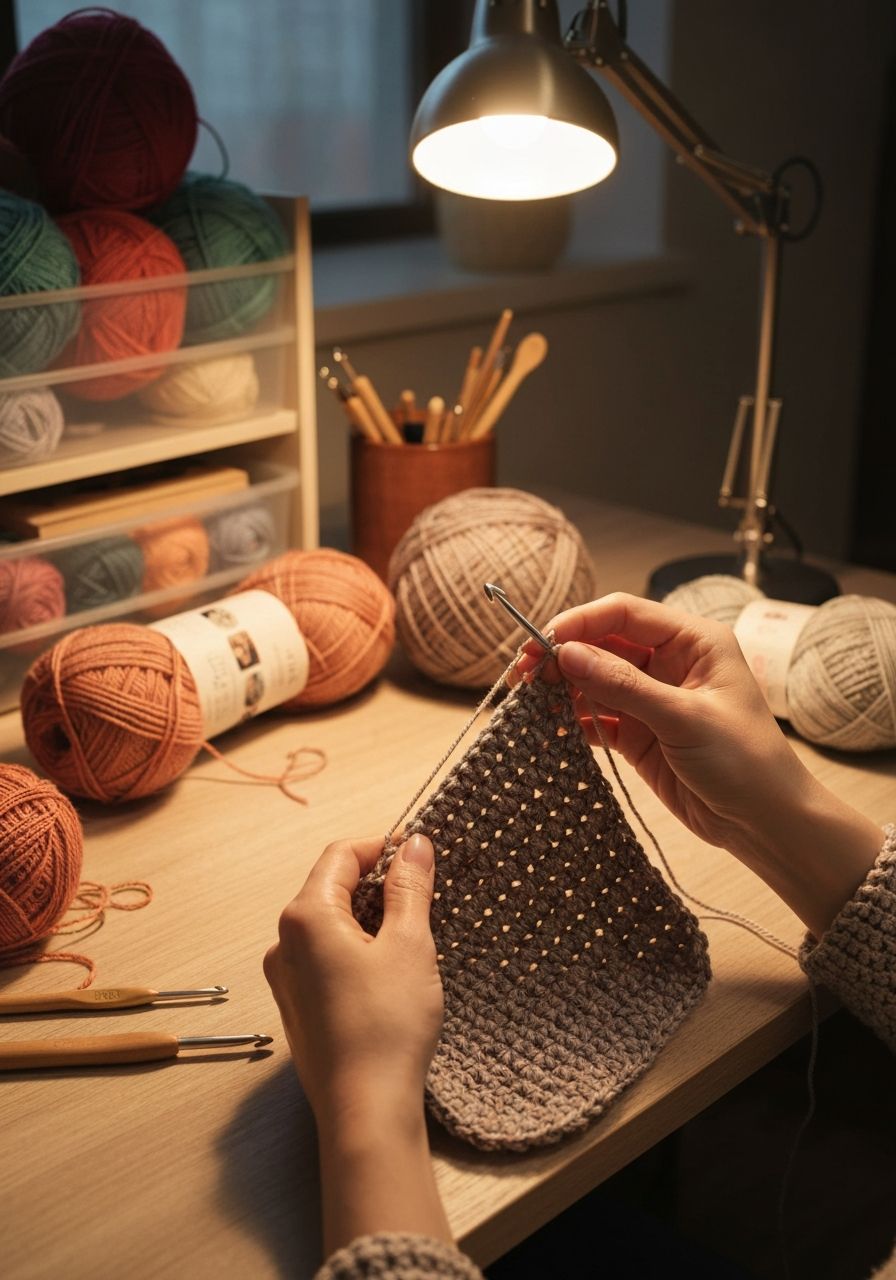
Imagine finally finishing a crochet project, holding it up, and realizing it's perfectly symmetrical, exactly the right size, and looks just like the picture in the pattern. That incredible feeling of accomplishment and pride comes from mastering a fundamental skill: crochet counting stitches. Forget the frustration of lopsided blankets or garments that don't fit; with a bit of practice and this guide, you'll gain the confidence to create stunning, consistent pieces every single time. Get ready to unlock a new level of precision and joy in your crochet journey!
Welcome, fellow yarn enthusiasts! As a beginner crocheter, the world of stitches, patterns, and endless possibilities can be both exciting and a little daunting. One of the earliest hurdles many new crocheters face is accurately counting stitches and rows. It might seem like a small detail, but it's the bedrock of almost every successful crochet project. This comprehensive guide is designed to demystify stitch counting, offering clear explanations, practical tips, and simple exercises to help you build a strong foundation. Let's learn to count our way to crochet success!
Why It Matters: The Foundation of Flawless Crochet
Why bother with all this counting? Isn't crocheting supposed to be relaxing? While it absolutely is, a little attention to stitch count goes a long way in preventing headaches down the line. Here's why mastering this skill is non-negotiable for any serious crocheter:
- Accuracy & Consistency: Every pattern relies on specific stitch counts. If your count is off, your project will likely be the wrong size, shape, or even have visible errors. Consistent counting ensures your work matches the pattern's design, leading to beautifully finished items.
- Troubleshooting Made Easy: When you know how to count, it's much easier to spot mistakes early. Instead of unraveling an entire project, you can identify where you went wrong a few rows back and correct it efficiently.
- Following Patterns Confidently: Understanding how to count stitches and rows empowers you to tackle more complex patterns. You'll decode instructions like "Sc 20" or "Dc in next 10 stitches" with ease, opening up a world of advanced projects.
- Sizing & Fit: For wearable items like sweaters, hats, or scarves, accurate stitch counts are crucial for achieving the correct fit and drape. No one wants a hat that's too tight or a sweater that's lopsided!
- Saving Time & Yarn: Constantly unraveling (frogging) because of miscounts wastes both your precious time and yarn. Counting diligently from the start saves you from frustration and ensures your materials are used effectively.
What You Need to Know Before You Count
Before we dive into the counting techniques, let's review some basic principles and tools that will make your life easier:
- Identify Your Stitches: Each stitch has a unique appearance. A single crochet (sc) looks different from a double crochet (dc). Knowing what each stitch looks like from the top, front, and back will help you identify what to count.
- The "V" Top: Most stitches, when viewed from above, form a small "V" shape. This "V" is typically what you'll count as one stitch.
- Turning Chains: At the end of a row, you'll often chain a certain number of stitches (e.g., ch 1 for sc, ch 2 for hdc, ch 3 for dc) to bring your yarn to the correct height for the next row. Patterns will specify whether this turning chain counts as a stitch or not. Always check!
- Stitch Markers: These are your best friends! Stitch markers are small clips or rings that you can place in specific stitches to mark the beginning or end of a row/round, a particular stitch count, or a repeat section. They are invaluable for keeping track.
- Good Lighting: Trying to count in dim light is a recipe for errors. Ensure you have adequate lighting to clearly see your stitches.
- Consistent Tension: While not directly about counting, consistent tension makes your stitches uniform and much easier to identify and count.
Mastering the Art of Stitch Counting: A Step-by-Step Guide
Let's get practical! Grab your hook and yarn, and let's practice counting different types of stitches and rows.
1. Counting Chain Stitches (ch)
The foundation chain is where it all begins. It's often the trickiest to count initially.
- Chain Practice: Make a slip knot and chain 15 stitches.
- Identify the V: Look closely at your chain. Each chain stitch forms a small "V".
- Count from the Hook: Starting from the second chain from your hook (the loop on your hook doesn't count as a stitch), count each "V" away from your hook.
- Tip: The first chain you make after your slip knot can be hard to see. Some crocheters find it easier to count the bumps on the back of the chain.
2. Counting Single Crochet (sc) Stitches
Single crochet stitches are dense and relatively easy to count once you know what to look for.
- Practice Swatch: Chain 11. Sc in the 2nd ch from hook and in each ch across. (You should have 10 sc). Ch 1, turn.
- Identify the V: Look at the top edge of your row. Each single crochet stitch has a distinct "V" shape.
- Count from Right to Left (if right-handed): Start from the first stitch on your right (or left if left-handed) and count each "V" across the row.
- The First and Last Stitch: Be careful not to skip the very first stitch or accidentally add an extra stitch at the end. Always ensure your hook goes into the correct spot.
- Exercise: Work 3 more rows of sc. In each row, ch 1, turn, sc in each stitch across. Practice counting your 10 stitches at the end of each row.
3. Counting Half Double Crochet (hdc) Stitches
Hdc stitches are a bit taller than sc and have a slightly different look at the top due to the yarn over.
- Practice Swatch: Chain 12. Hdc in the 2nd ch from hook and in each ch across. (You should have 11 hdc). Ch 2, turn.
- Identify the V: Similar to sc, look for the "V" on top of each stitch. Hdc often have a small horizontal bar visible above the "V" which can also help identify them.
- Turning Chain Consideration: For hdc, the turning chain of 2 often counts as the first hdc stitch in the row. If it does, you would skip the first actual stitch and work into the second. Read your pattern carefully!
- Exercise: Work 3 more rows of hdc. In each row, ch 2 (counts as hdc), turn, skip first stitch, hdc in each stitch across. You should have 11 stitches (including the turning chain). Count carefully!
4. Counting Double Crochet (dc) Stitches
Double crochet stitches are taller and have a more open look, making their "V" tops quite clear.
- Practice Swatch: Chain 13. Dc in the 3rd ch from hook and in each ch across. (You should have 11 dc). Ch 3, turn.
- Identify the V: The "V" at the top of a dc stitch is usually very distinct.
- Turning Chain Consideration: For dc, the turning chain of 3 almost always counts as the first dc stitch. You will then typically skip the first actual stitch below the turning chain and work into the second.
- Exercise: Work 3 more rows of dc. In each row, ch 3 (counts as dc), turn, skip first stitch, dc in each stitch across. You should have 11 stitches (including the turning chain).
5. Counting Rows and Rounds
Counting rows is essential for consistent height, while counting rounds is key for shaping in circular projects.
- Counting Rows:
- Lay your flat swatch down.
- Look for the distinct horizontal lines or ridges created by each row of stitches.
- For single crochet, each row creates a clear horizontal bar. For taller stitches like dc, you might look for the gaps between the stitch posts.
- Count these lines or ridges. If you used turning chains that count as a stitch, remember that the first row of stitches you worked into your foundation chain is usually considered Row 1.
- Counting Rounds (in a Magic Ring/Circle):
- Work a simple circle: Magic ring, ch 1, 6 sc into ring. Sl st to first sc. (Round 1: 6 sc)
- Ch 1, 2 sc in each stitch around. Sl st to first sc. (Round 2: 12 sc)
- To count rounds, look at the center of your work. The first ring of stitches is Round 1. The next ring of stitches built on top of the first is Round 2.
- Visually separate the concentric circles of stitches. Each distinct circle is a round.
- Tip: Place a stitch marker in the first stitch of each new round, especially for spiral patterns, to easily keep track.
Common Mistakes to Avoid
Even experienced crocheters can make these common counting errors:
- Skipping the First or Last Stitch: This is arguably the most frequent mistake. Always ensure you work into the very first stitch of the row and the very last stitch (which might be a turning chain from the previous row if it counts as a stitch).
- Counting Turning Chains Incorrectly: Not all turning chains count as a stitch. If the pattern says "ch 1, turn, sc in first stitch," the chain does NOT count. If it says "ch 3, turn, skip first stitch, dc in next," the chain DOES count. Always follow the pattern's instructions carefully.
- Inconsistent Tension: If your stitches are sometimes tight and sometimes loose, it can distort their appearance, making them harder to identify and count consistently.
- Counting the Loop on Your Hook: The loop currently on your hook is an active loop, not a completed stitch. Never count it when tallying your stitches.
- Not Using Stitch Markers: Especially for long rows or complex patterns, not marking key stitches (like the first/last stitch of a row, or stitch repeats) is a recipe for losing count.
Pro Tips for Perfect Counts
- Count Frequently: Don't wait until you've finished an entire project to count. Count at the end of every row or round, or even after a specific repeat section.
- Use Stitch Markers Liberally: Place a marker in the first and last stitch of each row. For large projects, mark every 10th or 20th stitch.
- Count Aloud: Saying the numbers out loud can help you focus and prevent your mind from wandering.
- Develop a Counting Rhythm: As you become more comfortable, you'll develop a natural rhythm for identifying and counting stitches without too much effort.
- Practice, Practice, Practice: The more you crochet and count, the more intuitive it will become. Make small swatches dedicated just to counting.
- Look for the "Back Bump": When working into a foundation chain, sometimes working into the "back bump" (the small horizontal bar on the back of the chain) can create a neater edge that's easier to count later.
- Take Breaks: If you're tired or frustrated, step away. Come back with fresh eyes, and your counting will likely be more accurate.
Frequently Asked Questions About Counting Stitches
Do I count the turning chain as a stitch?
It depends on the pattern! Always check the pattern notes. Generally, a ch 1 for single crochet does NOT count as a stitch, while a ch 2 for half double crochet or a ch 3 for double crochet OFTEN DOES count as the first stitch. If it counts, you will usually skip the first actual stitch of the row.
What should I do if my stitch count is off in the middle of a project?
Don't panic! If you're off by only one or two stitches, you might be able to subtly increase or decrease in the next row to correct it, but this can sometimes distort the fabric. The best practice, especially for beginners, is to "frog" (unravel) back to where your count was correct. This ensures the integrity of your project.
How often should I recount my stitches?
It's best to count at the end of every single row or round. For very long rows, you might even pause halfway through to check your progress. It's much easier to fix a mistake from the last row than to unravel several rows or rounds later.
Learning to accurately count your crochet stitches is a foundational skill that will transform your crafting experience. It might feel tedious at first, but with practice, it will become second nature, allowing you to create beautiful, precise projects with confidence and joy. So grab your hook, count those stitches, and unleash your inner crochet master!