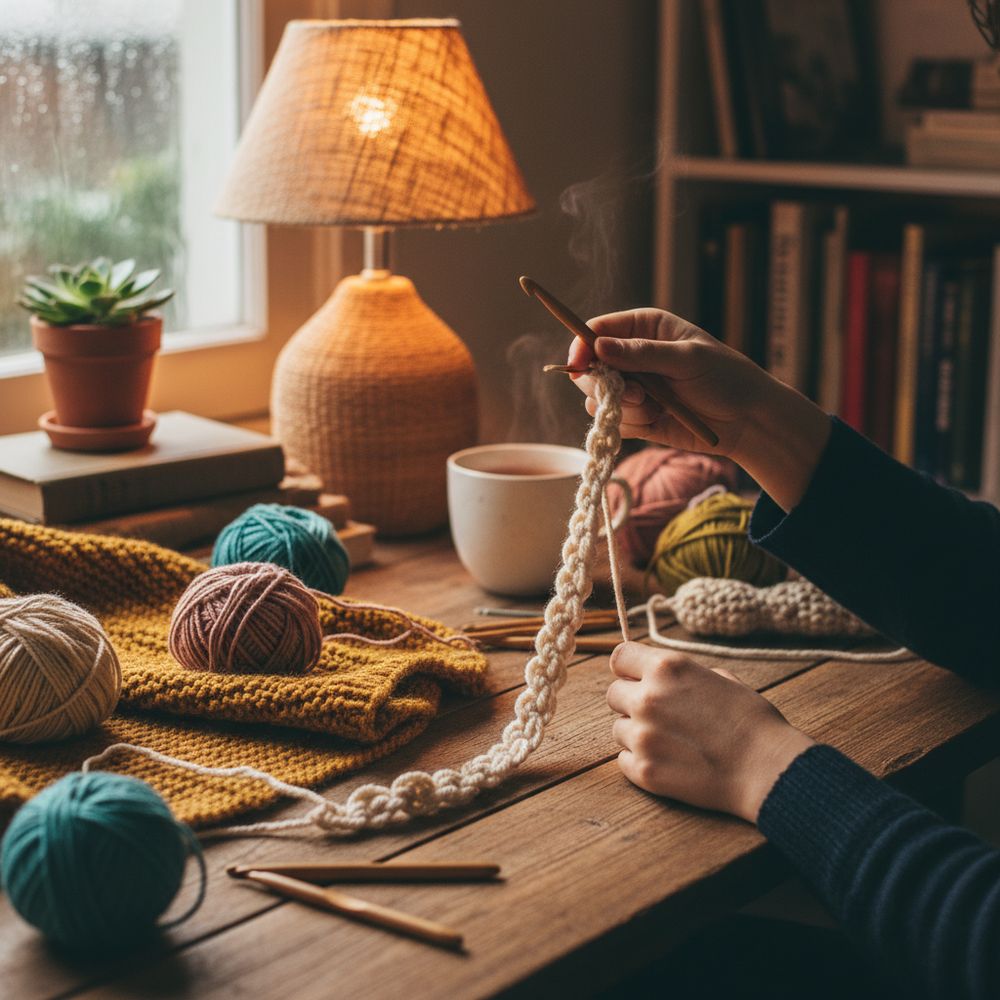
Imagine holding a single strand of yarn, a simple hook, and with a few twists and turns, transforming it into the very first building block of a cozy blanket, a stylish scarf, or an adorable amigurumi creature. That magical beginning starts with the Crochet Chain Stitch. It’s the foundational whisper that brings your creative visions to life, a rhythmic dance of hook and fiber that feels incredibly empowering once you master it. Get ready to embark on a delightful journey into the world of crochet, where every stitch is a step closer to crafting something truly beautiful with your own hands!
The chain stitch, often abbreviated as “ch,” is quite literally the starting point for almost every crochet project. Before you can create intricate patterns or complex shapes, you need a solid base, and that's exactly what the chain stitch provides. It's the sturdy spine from which all other stitches will grow, the initial row that sets the stage for your entire fabric. Think of it as learning your ABCs before writing a novel; without the chain, the rest of the crochet alphabet can't be formed.
Why It Matters
You might be wondering, “It's just a simple loop, why is it so important?” The truth is, the chain stitch is far more than just a starting point; it's a versatile workhorse in the crochet world. Here’s why mastering it is absolutely crucial for any aspiring crocheter:
- The Foundation of Most Projects: Whether you’re working flat in rows or in the round for a seamless tube, a foundation chain is almost always your very first step. It establishes the width of your project and gives you a row of loops to work your first “real” stitches into.
- Turning Chains: When you finish a row and need to start a new one, you’ll often create a “turning chain.” This short chain brings your hook up to the correct height for the next row of stitches, preventing your fabric from pulling or bunching at the edges. The number of chain stitches in a turning chain depends on the height of the stitch you're about to make (e.g., 1 ch for single crochet, 2 ch for half double crochet, 3 ch for double crochet).
- Creating Spaces and Openwork: Chain stitches aren't just for foundations; they're also used within projects to create gaps, lace patterns, buttonholes, or decorative elements. “Chain spaces” are integral to many openwork designs and intricate stitch patterns.
- Shaping and Design: Chains can be used to form loops for edgings, straps for bags, or even structural elements in amigurumi. They are incredibly adaptable and appear in countless ways throughout patterns.
What You Need to Know Before You Begin
Before you dive into making your first chain, let’s ensure you have everything you need and understand some basic concepts.
Tools of the Trade: Hook and Yarn
- Crochet Hook: These come in various sizes, indicated by letters (US) or numbers (metric). For beginners, a medium-sized hook (like an H/5.0mm or I/5.5mm) is often easiest to handle.
- Yarn: Start with a smooth, light-colored yarn in a worsted weight (#4). Light colors make it easier to see your stitches, and worsted weight is a good middle-ground that's not too thin or too thick. Avoid novelty yarns or very dark colors for your first attempts.
Holding Your Hook and Yarn
There are two primary ways to hold a crochet hook:
- Pencil Grip: Hold the hook like you would a pencil, with your thumb and forefinger resting on the flat “thumb rest” of the hook.
- Knife Grip: Hold the hook like you would a knife, with the handle resting in your palm.
Experiment to see which feels most comfortable for you. For holding the yarn, you’ll typically wrap it around a finger (often the pinky or index finger of your non-dominant hand) to create tension. This tension is crucial for consistent stitches.
The Slip Knot: Your True Starting Point
Before you can make a chain, you need a slip knot on your hook. This is the very first loop that secures your yarn to the hook.
- Take the tail end of your yarn and cross it over the working yarn (the yarn coming from the ball) to form a loop.
- Insert your hook into the loop from front to back.
- Catch the working yarn with your hook and pull it through the loop.
- Pull both the tail end and the working yarn to tighten the knot around your hook, but not too tightly. The loop on your hook should be able to slide easily.
Mastering the Crochet Chain Stitch: Step-by-Step
With your slip knot ready, let's make your first chain stitch!
Step 1: Get Ready with Your Slip Knot
Ensure you have a slip knot on your hook, and the loop can move freely without being too loose or too tight. Your working yarn should be coming from the back of your hook, over your index finger (or however you wrap it for tension).
Step 2: Yarn Over (YO)
This is a fundamental movement in crochet. With your hook pointing downwards (or slightly towards you), bring the working yarn from back to front over your hook. The hook “catches” the yarn. Some people prefer to move the hook under the yarn, but the result is the same: the yarn is now draped over your hook.
Step 3: Pull Through the Loop
Once you have yarn over your hook, gently rotate your hook so that its “head” (the pointy part) is facing downwards. This helps it slide smoothly. Now, pull the yarn you just “yarned over” through the original loop that was on your hook. One new loop remains on your hook. Congratulations, you’ve just made one chain stitch!
Step 4: Repeat for Your Foundation Chain
To make more chain stitches, simply repeat Steps 2 and 3. Each time you pull through a loop, you create a new chain and establish a new working loop on your hook. Continue chaining until you have a small string of stitches. Don't worry about perfection initially; focus on the motion and building rhythm.
Practice Exercise: Building a Simple Swatch
Let's put your new skill to the test and create a small swatch:
- Make a slip knot and chain 10 stitches. (Ch 10)
- Now, to work into this chain, we'll make single crochet (sc) stitches. Skip the first chain from your hook (this is your turning chain for single crochet).
- Insert your hook into the center of the 2nd chain from your hook.
- Yarn over and pull up a loop (you now have two loops on your hook).
- Yarn over and pull through both loops on your hook. You’ve made your first single crochet!
- Repeat steps 3-5 in each remaining chain across your foundation chain. You should have 9 single crochet stitches.
- Practice making a new chain for your next row: Chain 1, then turn your work. Now repeat steps 3-5, working into the tops of the single crochet stitches from the previous row.
Common Mistakes to Avoid
As a beginner, it's easy to fall into a few common traps when making chain stitches. Don’t get discouraged; recognizing them is the first step to fixing them!
- Chains That Are Too Tight: If your chains are very stiff and difficult to work into, you’re likely holding your yarn or pulling your stitches too tightly. This can make your entire project rigid and frustrating to crochet.
- Chains That Are Too Loose: Conversely, if your chains are overly big and floppy, your tension is too relaxed. This can lead to a fabric that’s too airy, inconsistent, and lacks structure.
- Inconsistent Tension: One of the biggest challenges for beginners is maintaining even tension. Some chains might be tight, others loose. This results in an uneven foundation that makes subsequent rows difficult and can distort your fabric.
- Twisted Foundation Chains: When you work your first row of stitches into a foundation chain, it’s common for the chain to twist. This makes it hard to find the correct loop to insert your hook into, and can lead to a wonky first row.
- Not Counting Accurately: It's easy to lose count of your chains, especially if you're distracted. An incorrect starting chain count will throw off your entire project.
Pro Tips for Perfect Chains
Ready to elevate your chain stitch game? These insider tips will help you create beautiful, consistent foundations every time.
- Practice, Practice, Practice: There’s no substitute for repetition. Make long chains while watching TV, listening to a podcast, or just relaxing. The muscle memory will build, and your stitches will naturally become more even.
- Use a Larger Hook for Foundation Chains: If you find it difficult to insert your hook into your foundation chain when working your first row, try using a hook one size larger specifically for the foundation chain. Once you've chained, switch back to your project's recommended hook size for the rest of your work.
- Don't Pull the Loop on Your Hook Too Tight: Before you yarn over to make a new chain, ensure the loop on your hook is not cinched down. It should be loose enough for the hook to slide easily. This helps prevent overly tight chains.
- Count as You Go (and Double Check): For longer chains, count in segments (e.g., “1, 2, 3, 4, 5 – okay, that’s 5” then “6, 7, 8, 9, 10 – that’s 10”). You can also place stitch markers every 20 or 50 chains to help keep track.
- Relax Your Grip: Many beginners grip their hook and yarn too tightly out of nervousness. Try to relax your hands and shoulders. A relaxed grip contributes to more consistent tension and prevents hand fatigue.
- Identify the “V”: When looking at your chain, you’ll see a series of “V” shapes on the front. These are the top loops you’ll typically work into. On the back, you’ll see a “back bump” or “ridge.” Sometimes patterns will specify working into the back bump for a neater edge.
- Don't Be Afraid to Undo It: If your chain looks wonky or you’ve miscounted, don’t hesitate to pull out your hook and unravel (“frogging” in crochet terms). It’s part of the learning process, and it’s always better to start with a good foundation.
Frequently Asked Questions About the Chain Stitch
What's the difference between a foundation chain and a turning chain?
A foundation chain is the initial row of chain stitches that establishes the width of your project and provides the base for your first row of “working” stitches. A turning chain is a short chain made at the beginning of a new row (after turning your work) to bring your hook up to the correct height for the stitches you're about to make in that row. It ensures your edges remain straight and even.
How do I know how many chains to make?
The pattern you are following will always tell you exactly how many chains to make for your foundation. If you’re designing your own project, you’ll need to calculate based on your desired width and stitch count, often by making a “gauge swatch” first to see how many stitches fit into a certain measurement.
My chains are curling, is that normal?
Yes, it's completely normal for a long foundation chain to curl initially! Don't worry about it. Once you start working your first row of stitches into the chain, the weight and structure of those stitches will usually straighten it out. If it’s still very curled, ensure your tension isn’t too tight.
The Crochet Chain Stitch is more than just a technique; it’s your gateway to a world of creativity and relaxation. With practice, patience, and these tips, you’ll soon be creating beautiful, consistent chains that form the perfect foundation for all your crochet dreams. So grab your hook and yarn, take a deep breath, and let the rhythmic motion of chaining guide you into the wonderful art of crochet. Happy hooking!