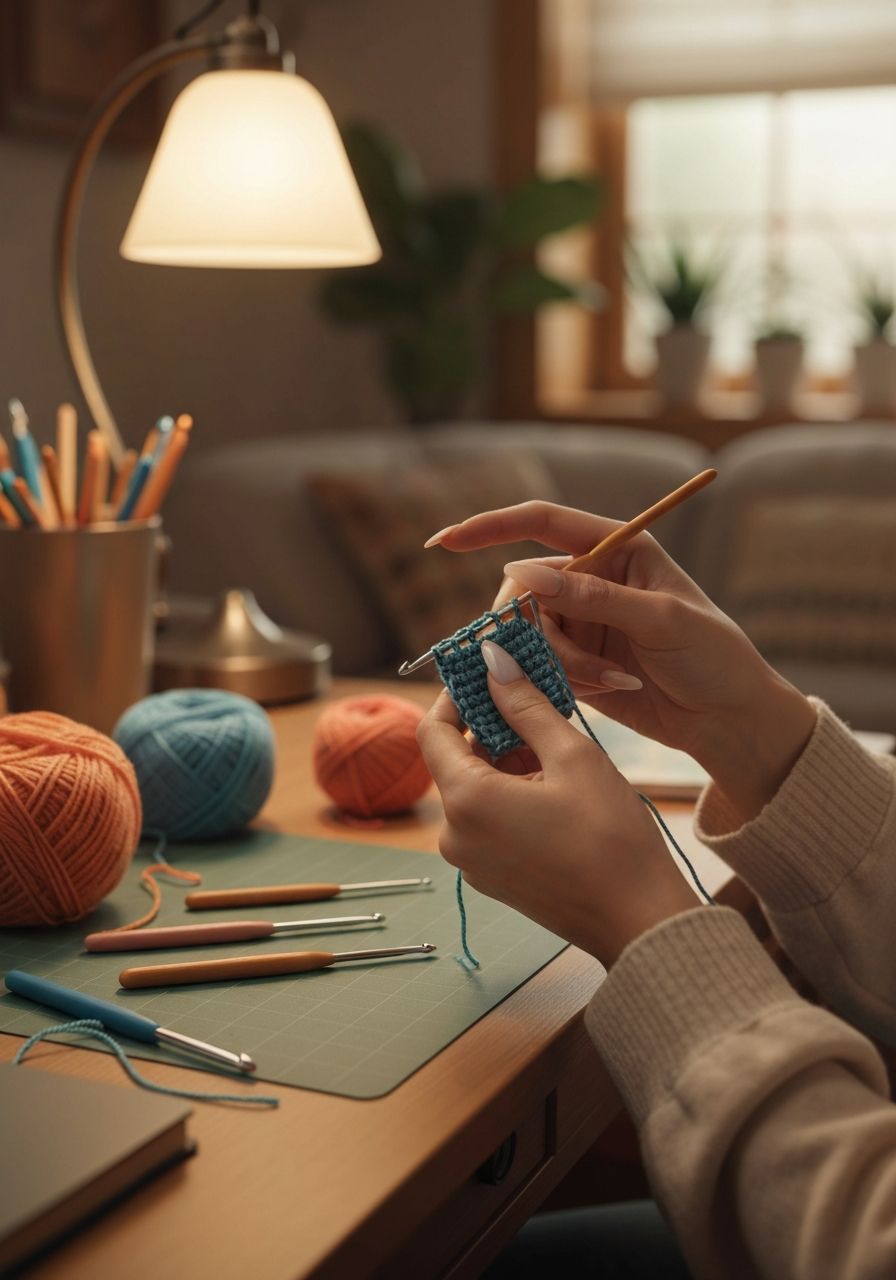
Imagine the cozy warmth of a handmade blanket, the satisfaction of gifting a unique creation, or the quiet joy of transforming a simple strand of yarn into something beautiful with your own two hands. That incredible journey begins right here, right now, with mastering your very first Crochet Beginner Projects. Get ready to unlock a world of creativity, relaxation, and endless possibilities, one stitch at a time!
Welcome, aspiring crocheter! This comprehensive guide is designed to be your steadfast companion as you embark on the delightful journey of learning to crochet. We’ll demystify the basics, introduce you to essential tools and stitches, and walk you through three simple, satisfying projects perfect for building your skills and confidence. Forget intimidating patterns; we're starting with achievable wins that will have you hooked in no time. Let's make some yarn magic!
Why It Matters
Learning crochet is more than just picking up a new hobby; it's an investment in your well-being and creativity. Here’s why diving into beginner projects is so incredibly rewarding:
- Stress Relief and Mindfulness: The repetitive motion of crochet can be incredibly meditative, helping to calm the mind and reduce stress. It’s a wonderful way to practice mindfulness and focus.
- Sense of Accomplishment: There's immense satisfaction in seeing a project come to life, stitch by stitch. Completing even a small beginner item provides a tangible sense of achievement.
- Creative Outlet: Crochet offers boundless opportunities for self-expression. From choosing yarn colors to selecting stitch patterns, every project is a chance to let your creativity shine.
- Handmade Gifts: Once you master a few basics, you'll be able to create heartfelt, personalized gifts for friends and family that are cherished far more than anything store-bought.
- Community Connection: The crochet community is vibrant and supportive. Sharing your progress, asking for advice, and connecting with fellow crafters can be a deeply enriching experience.
- Skill Building: Starting with simple projects helps you build a strong foundation of fundamental techniques, preparing you for more complex patterns down the line. It's about learning to walk before you run!
What You Need to Know
Before you even make your first stitch, gathering the right tools and understanding some basic terminology will set you up for success. Don't worry, you don't need much to get started!
Essential Supplies:
- Yarn: For beginners, worsted weight (also known as 4-ply or medium weight) acrylic or cotton yarn is ideal. It’s readily available, affordable, and easy to see your stitches with. Choose a light color initially, as dark yarns can make it harder to distinguish stitches.
- Crochet Hook: Hooks come in various sizes (indicated by letters and/or millimeters). A common beginner size is H/5.0mm or I/5.5mm, which pairs well with worsted weight yarn. You might prefer an ergonomic handle for comfort.
- Scissors: Any small pair of sharp scissors will do for snipping yarn tails.
- Tapestry Needle: Also called a yarn needle, this blunt-tipped needle is essential for weaving in loose ends at the end of your project, giving it a neat, finished look.
- Stitch Markers: These handy little clips help you keep track of specific stitches or the beginning/end of rounds, especially when working in the round. Paper clips can work in a pinch!
Basic Stitches and Concepts:
Crochet patterns use abbreviations. Here are the core stitches you'll learn:
- Slip Knot: The very first loop you make on your hook to begin crocheting.
- Chain (ch): The foundation of most crochet projects, forming a series of connected loops.
- Slip Stitch (sl st): A very short stitch used to join rounds, move across stitches without adding height, or finish off.
- Single Crochet (sc): One of the most fundamental stitches, creating a dense, firm fabric.
- Half Double Crochet (hdc): Taller than a single crochet but shorter than a double crochet, offering a bit more drape.
- Double Crochet (dc): A taller stitch that creates a looser, more open fabric.
- Increase (inc): Making two (or more) stitches into a single stitch space, which widens your fabric.
- Decrease (dec): Working two (or more) stitches together to form one, which narrows your fabric.
- Working in Rows: Crocheting back and forth, turning your work at the end of each row.
- Working in the Round: Crocheting continuously in a circle, often starting with a magic ring or a chain loop.
Your First Crochet Beginner Projects: Step-by-Step
Let's put those basic stitches into practice with some fantastic beginner-friendly projects. Remember, consistency in tension comes with practice, so don't fret if your first attempts aren't perfect!
Project 1: The Simple Crochet Dishcloth (Flat Piece)
This project is perfect for practicing your chain and single crochet stitches while working in flat rows. You'll create a practical item for your home!
- Materials: Worsted weight cotton yarn (any color), H/5.0mm crochet hook, scissors, tapestry needle.
- Pattern:
- Make a Slip Knot and place it on your hook.
- Chain (ch) 21. This forms your starting chain. Be careful not to make these too tight.
- Row 1: Insert your hook into the 2nd chain from the hook. Yarn over (yo), pull up a loop (2 loops on hook). Yarn over, pull through both loops (1 loop on hook). You've just made your first single crochet (sc). Continue to sc in each chain across the row. You should have 20 sc. Chain 1 (ch 1), then turn your work. (The ch 1 at the end of the row acts as a turning chain and does NOT count as a stitch.)
- Row 2: Insert your hook into the first sc of the previous row (the one directly below your turning chain). Sc in each sc across the row. You should still have 20 sc. Ch 1, turn.
- Repeat Row 2 for a total of 20 rows, or until your dishcloth is square.
- Finish: At the end of your last row, cut your yarn, leaving a 6-inch tail. Yarn over and pull the tail completely through the loop on your hook to secure (this is called fastening off). Use your tapestry needle to weave in both the starting tail and the finishing tail neatly into your dishcloth.
Project 2: Beginner Coasters (Working in the Round)
Time to tackle working in the round and learning how to increase! These coasters make great gifts.
- Materials: Worsted weight cotton yarn, H/5.0mm crochet hook, scissors, tapestry needle, stitch marker.
- Pattern:
- Make a Magic Ring. (Alternatively, ch 2 and work all Rnd 1 stitches into the 2nd ch from hook).
- Round 1: Ch 1 (does not count as a stitch). Work 6 single crochet (sc) stitches into the magic ring. Gently pull the tail of the magic ring to close the center hole. Join with a slip stitch (sl st) to the first sc to close the round. (6 sc)
- Round 2: Ch 1. Work 2 sc into each sc around. (This is an increase). Join with a sl st to the first sc. (12 sc) Place a stitch marker in your first stitch of each new round to help you keep track!
- Round 3: Ch 1. *1 sc in the next sc, 2 sc in the next sc* (this is 'sc, inc'). Repeat from * to * around. Join with a sl st to the first sc. (18 sc)
- Round 4: Ch 1. *1 sc in the next 2 sc, 2 sc in the next sc* ('sc, sc, inc'). Repeat from * to * around. Join with a sl st to the first sc. (24 sc)
- Finish: At the end of Round 4, cut your yarn, leaving a 6-inch tail. Fasten off. Weave in both tails with your tapestry needle.
Project 3: Simple Scarf (Using Different Stitches)
This project will help you practice longer rows and introduce you to the half double crochet stitch, creating a slightly looser fabric than single crochet.
- Materials: Worsted weight acrylic yarn (a solid color is easiest to see stitches), J/6.0mm crochet hook, scissors, tapestry needle.
- Pattern (using Half Double Crochet):
- Make a Slip Knot and place it on your hook.
- Chain (ch) 16. This determines the width of your scarf.
- Row 1: Yarn over (yo), insert hook into the 3rd chain from the hook. Yo, pull up a loop (3 loops on hook). Yo, pull through all 3 loops on hook. You've made your first half double crochet (hdc). Hdc in each remaining chain across the row. You should have 14 hdc. Ch 2, turn. (The ch 2 at the end of the row acts as a turning chain and usually counts as the first hdc in some patterns, but for this beginner pattern, it does NOT count as a stitch.)
- Row 2: Yo, insert hook into the first hdc of the previous row (the one directly below your turning chain). Hdc in each hdc across the row. You should still have 14 hdc. Ch 2, turn.
- Repeat Row 2 until your scarf reaches your desired length (e.g., 60-80 rows for an adult scarf, or about 60 inches long).
- Finish: At the end of your last row, cut your yarn, leaving a 6-inch tail. Fasten off. Weave in both the starting tail and the finishing tail. For a polished look, you can add fringe to the ends if you wish!
Common Mistakes to Avoid
Every crocheter makes these mistakes at the beginning; it's part of the learning process! Knowing them can help you troubleshoot.
- Inconsistent Tension: Your stitches might be too tight (hard to get your hook into) or too loose (gaps appearing). Practice helps regulate this. Try to relax your hands and grip on the hook and yarn.
- Missing Stitches: A common culprit for crooked edges in flat projects is accidentally skipping the first or last stitch of a row, or working into the turning chain itself when you shouldn't. Always count your stitches at the end of each row!
- Not Counting Stitches: This is crucial, especially when increasing or decreasing. A stitch count at the end of each row or round ensures your project stays the right size and shape.
- Using the Wrong Hook Size for Yarn: While patterns specify hook sizes, sometimes your personal tension might require a different size. If your fabric is too stiff, go up a hook size; if it’s too floppy, go down.
- Giving Up Too Soon: Crochet takes practice. Your first few attempts might look wonky, and that’s perfectly normal! Don't get discouraged; every stitch you make improves your skill.
Pro Tips
Accelerate your learning and make your crochet journey even more enjoyable with these insights:
- Practice, Practice, Practice: Consistency is key. Even 15 minutes a day can make a huge difference in developing muscle memory.
- Watch Video Tutorials: Seeing stitches formed in real-time can be incredibly helpful. Websites like YouTube are treasure troves of free tutorials for every stitch imaginable.
- Use Stitch Markers Liberally: Especially when learning to work in the round, a stitch marker in the first stitch of each round can save you a lot of frustration.
- Don't Be Afraid to Unravel (Frog It!): If you make a mistake, it's okay to pull out your stitches and start again. This is called 'frogging' (rip it, rip it!). It’s a vital part of the learning process.
- Start with Light-Colored, Smooth Yarn: Variegated, dark, or novelty yarns (like fuzzy ones) can hide stitches, making them difficult for beginners to see.
- Join a Crochet Community: Online forums, Facebook groups, or local craft meetups can offer encouragement, advice, and a sense of belonging.
FAQ
Q: How long does it take to learn basic crochet?
A: Most beginners can learn the foundational stitches (chain, slip stitch, single crochet) within a few hours to a few days of dedicated practice. Mastering tension and reading patterns takes a bit longer, but you'll be making simple projects very quickly!
Q: What's the easiest stitch to learn first?
A: After the essential slip knot and chain stitch, the single crochet (sc) is widely considered the easiest and most fundamental stitch to master. It forms a sturdy, dense fabric and is the building block for many other stitches.
Q: Can I really make gifts as a beginner?
A: Absolutely! The simple dishcloths, coasters, and scarves outlined in this guide are fantastic, thoughtful, and genuinely useful gifts that any beginner can create. Handmade items carry a special charm that store-bought gifts can't match.
You've taken the first exciting step on your crochet adventure! With your supplies ready, basic stitches understood, and three beginner projects under your belt, you're well on your way to becoming a confident crocheter. Remember to be patient with yourself, celebrate every completed stitch, and enjoy the creative process. The world of yarn is vast and wonderful, and you now have the skills to explore it. Happy crocheting!